Why Does Sauce Separate After Reheating? How to Fix It
Learn why reheated sauce turns oily, watery, or grainy, which gentle fixes can bring it back together, and when food safety means you should discard it.
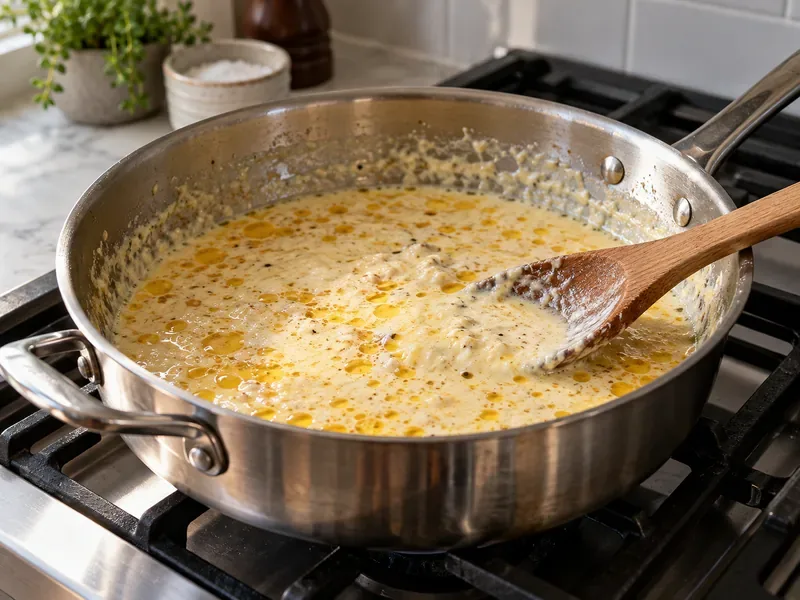
A sauce usually separates after reheating because heat, time, or evaporation has disrupted the way its ingredients are held together. A sauce made from fat droplets suspended in water can split into oily beads and a thin liquid; a dairy or egg sauce may instead turn grainy as proteins clump. Often you can improve the texture by warming it gently and whisking in a little liquid, but a badly curdled or overheated sauce may not return to its original silkiness.
Many sauces are emulsions: mixtures in which tiny droplets of one liquid, often oil or melted butter, are dispersed through another, such as water, stock, vinegar, or milk. Mustard, egg yolk, cream, cheese, starch, or other ingredients can help stabilize those droplets. When the mixture breaks, fat gathers into larger beads or a slick instead of staying evenly dispersed. The sauce may look oily, watery, curdled, or grainy.
Not every change is a broken emulsion. A sauce that thickens in the refrigerator because butterfat firms up may become smooth again as it warms. A layer of clear liquid on top of yogurt-based sauce can be whey, while a flour-thickened sauce can become lumpy if its starch has set unevenly. Look at the texture and ingredients before choosing a fix.
Often, yes, if the sauce is separated but not scorched or badly curdled. Take it off the heat first. A very hot sauce is harder to bring back together. Then choose the approach that fits the sauce:
Warm the sauce over low heat, stirring or whisking steadily. Add a small splash of warm milk, cream, stock, or water, depending on the recipe, and whisk until the liquid is incorporated before adding more. A tablespoon at a time is a useful starting point for a small serving. Avoid boiling it while you work. If the sauce is lumpy, an immersion blender may smooth mild separation, but blending cannot undo scorched flavors or fully reverse proteins that have curdled.
Remove the pan from the burner and whisk in a teaspoon of warm water, stock, or another compatible liquid. Add it gradually. If that does not work, start with a teaspoon of warm water in a clean bowl and slowly whisk the broken sauce into it. The fresh water gives the fat new liquid to disperse through. For a pan sauce, a small knob of cold butter whisked in off the heat can sometimes restore a glossy texture, especially if the sauce is not extremely hot.
Stir thoroughly over low heat and loosen a thick sauce with a little water, stock, or pasta water. If fat has pooled, whisk while adding the liquid gradually. For lumps caused by flour or starch, a blender or strainer can help with texture. Do not add extra flour directly to a hot, broken sauce; it can create more lumps. If the sauce tastes scorched, transfer the unburned portion to a clean pan without scraping the bottom.
These are repair techniques, not guarantees. A sauce that has split severely, developed rubbery egg curds, or acquired a burned taste may remain imperfect. It can still work stirred into a casserole or pasta if its flavor is sound and it has been handled safely.
For leftovers, texture and food safety are separate concerns. FDA guidance says to reheat leftovers to 165°F (74°C), checked with a food thermometer, and to bring leftover sauces, soups, and gravies to a boil before serving. Refrigerate perishable leftovers within two hours, or within one hour when the air temperature is above 90°F (32°C). Discard food that has been left out too long; whisking, boiling, or blending cannot make unsafe food safe. See the FDA’s food-safety guidance for leftovers and sauces.
If the sauce smells sour or otherwise off, has visible mold, or was stored outside safe time limits, discard it. Do not taste it to check. If it is simply separated but smells and tastes as expected, and it was stored and reheated safely, you can try a gentle repair. A smooth result is a quality improvement, not proof that the food is safe.
For future batches, cool and refrigerate leftovers promptly in shallow containers, reheat a small portion slowly, and stir while it warms. If a particular sauce repeatedly separates, consider keeping it refrigerated without its final butter, cream, cheese, or egg addition and finishing that component when serving. That may preserve a better texture, although the best method depends on the recipe.
In most cases, separation is a sign that the sauce’s structure has been stressed. Gentle heat and patient whisking can restore many sauces, but prevention—reheating slowly, adding moisture as needed, and avoiding long boils—is the more reliable way to keep them smooth.
Sources: University of California Cooperative Extension, Soups and Sauces food-freezing guidance; U.S. Food and Drug Administration, food-safety guidance for leftovers; USDA Food Safety and Inspection Service, Leftovers and Food Safety.
Learn why reheated sauce turns oily, watery, or grainy, which gentle fixes can bring it back together, and when food safety means you should discard it.
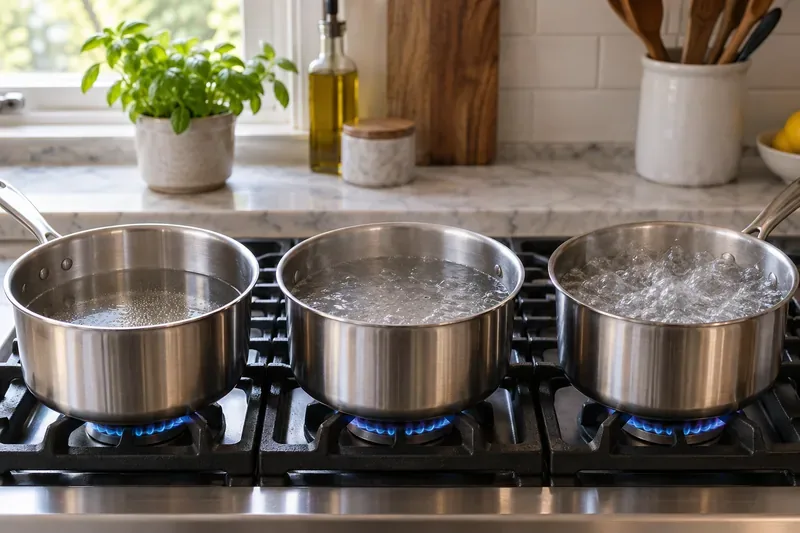
Learn how poaching, simmering, and boiling differ by bubbling, heat, texture, and best use—plus when to check food temperature for safety.
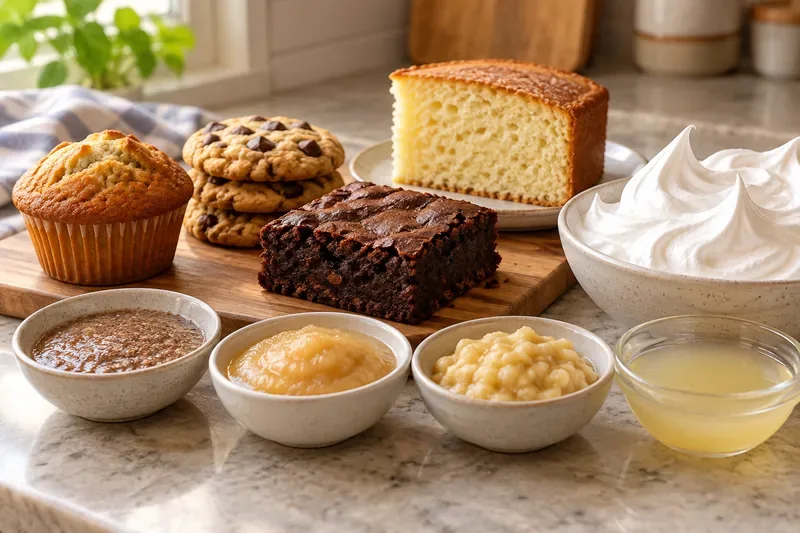
Find egg substitutes for muffins, cookies, brownies, cakes, meringues, and more. Compare flax, fruit purée, yogurt, tofu, aquafaba, and baking replacers.
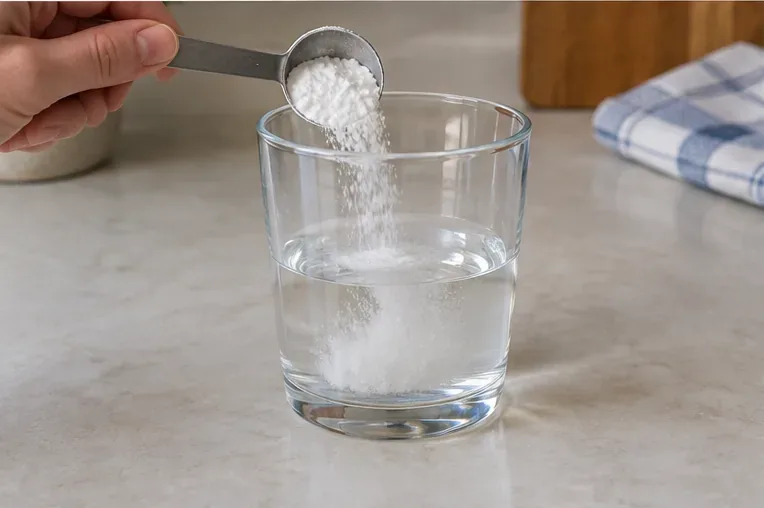
Test baking powder in minutes with warm water, learn what vigorous bubbling means, why powder loses strength, and when replacing it is the better choice.
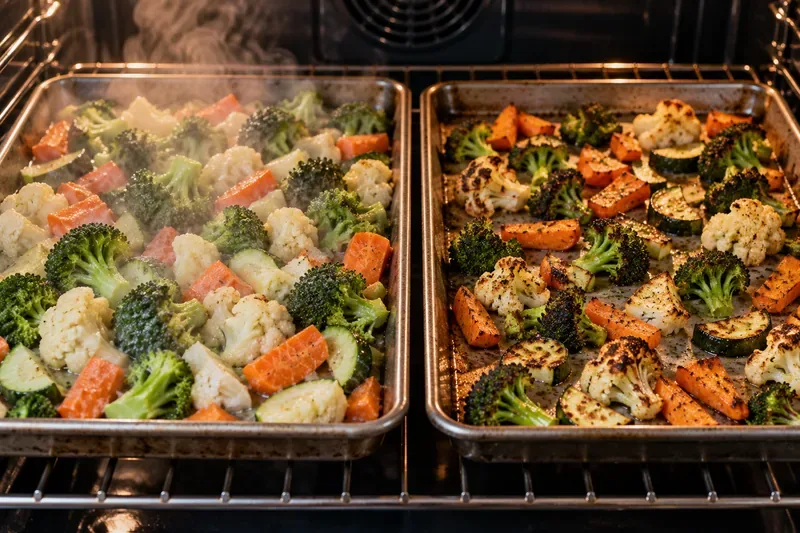
Learn why roasted vegetables turn soft and steamy instead of deeply browned, how to correct moisture, crowding, heat, and airflow, and how to judge the result.
Plan autumn school lunches with a hypothetical family example, flexible prep choices, storage timing, and safe ways to keep perishable food cold.
Plan an October kids’ party with a practical food allergy checklist for caregiver communication, labels, Halloween candy, cross-contact, and emergency readiness.