Why Does Sauce Separate After Reheating? How to Fix It
Learn why reheated sauce turns oily, watery, or grainy, which gentle fixes can bring it back together, and when food safety means you should discard it.
Poaching, simmering, and boiling all cook food in hot liquid, but they differ in how much the liquid moves. Poaching is the gentlest: the liquid is hot with little or no bubbling. Simmering keeps a steady flow of small bubbles. Boiling creates vigorous bubbles throughout the pot. Choose among them based on how delicate the food is, how quickly it needs to cook, and whether you want the liquid to stay clear or reduce.
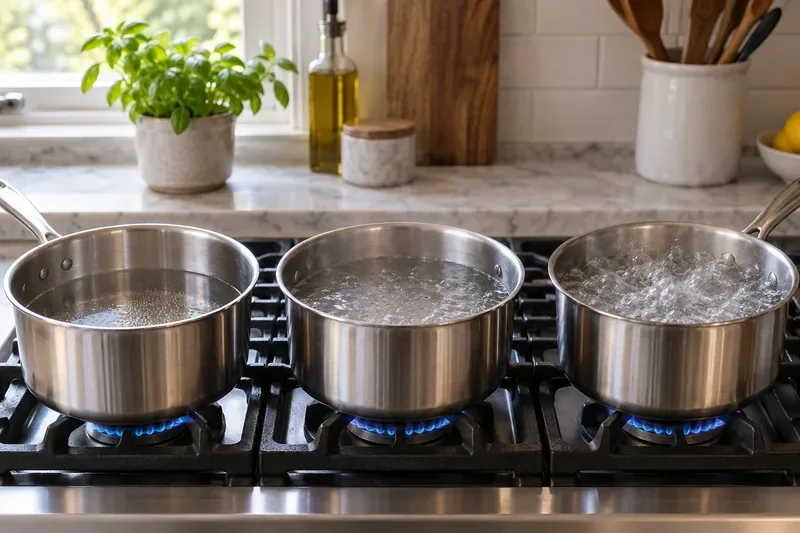
The easiest way to tell them apart is to watch the surface and the food. At a poach, the liquid barely moves. At a simmer, bubbles rise and break gently. At a full boil, bubbles rise rapidly across the surface and churn the contents. The methods form a continuum rather than three exact temperature settings, and recipes may use slightly different terms.
| Method | What the liquid looks like | Best fit | Main tradeoff |
|---|---|---|---|
| Poaching | Hot, mostly still; few or no bubbles breaking at the surface | Delicate eggs, fish, chicken breast, fruit | Gentle texture and less breakage, but requires attention to avoid undercooking |
| Simmering | Small bubbles rise steadily; the surface moves softly | Soups, stocks, sauces, beans, stews, tougher cuts | Even, controlled cooking, but takes longer than a hard boil |
| Boiling | Large, continuous bubbles churn the liquid | Pasta, some vegetables, and tasks that call for strong heat | Fast, active cooking, but can break delicate food or cloud a broth |
Poaching cooks food in hot liquid that is kept below an active simmer or at its very lowest edge. The liquid might be water, broth, milk, wine, or a lightly flavored mixture. You should see little surface disturbance: tiny bubbles may cling to the pan or rise now and then, but they should not toss the food around.
This low agitation is useful when shape and tenderness matter. A whole fish fillet, an egg, or a ripe pear can split or fray if strong currents knock it against the pan. Poaching also gives the cook more control over delicate proteins. The cost is that it is not a “set it and forget it” method: a burner that is too high can turn a quiet poach into a simmer, and one that is too low may not cook the center in the time the recipe expects.
For a simple poach, warm enough liquid to surround the food, lower the ingredient in carefully, and adjust the heat until the surface remains calm. A thermometer can help you learn your stove, but the recipe’s time and doneness cues still matter. If you poach meat, poultry, seafood, or eggs, check food safety separately; gentle-looking liquid does not guarantee a safe center.
A simmer is a controlled, gentle boil. Small bubbles rise from the bottom and break at the surface, while the liquid circulates without aggressively tossing ingredients. It is hotter and more active than poaching, but quieter than a rolling boil. Exploratorium’s cooking guidance describes a gentle simmer as a lazy break on the surface and cautions that meat can become dry from overcooking even when surrounded by liquid.
Simmering is a flexible default for soups, stocks, tomato sauce, beans, and stews. The movement helps heat the pot evenly and lets flavors mingle, while the reduced agitation keeps ingredients more intact than a hard boil. Tougher cuts can soften during a longer simmer, but lean meat can still dry out if cooked too long. Keep the lid partly on or off depending on whether you want to retain liquid or let the sauce concentrate.
To set one, bring the liquid up to a boil, then turn the heat down until only small bubbles rise intermittently or steadily. Stove knobs are not standardized, so “medium-low” is not a universal setting. Watch the pot after lowering the flame: a simmer should persist, but ingredients should not bounce around.
A rolling boil is vigorous bubbling across the surface, with large bubbles continuously rising and breaking. For pure water at sea-level pressure, the boiling point is about 212°F (100°C). A pot of broth or salted water can boil at a slightly different temperature because dissolved ingredients change the liquid, and local air pressure also affects the boiling point. Once a liquid is boiling in an ordinary open pot, turning up the burner mostly makes evaporation and bubbling more vigorous; it does not keep raising the liquid far above its boiling point.
Boiling works well when the recipe benefits from active heat or when the food can withstand strong movement. Pasta is commonly cooked in boiling water; some vegetables are briefly boiled to soften them. But bubbles can knock eggs apart, break delicate fish, or make a stock cloudy by pushing particles through the liquid. If a soup or sauce only needs to cook through, a simmer is often easier to control.
If the recipe says “bring to a boil, then simmer,” that is intentional: use the boil to heat the pot quickly, then reduce the burner so the food cooks gently for the rest of the time. If the ingredients are fragile, reduce the heat sooner. If the liquid stops moving and the food is not cooking as expected, raise it gradually rather than jumping straight to a rolling boil.
No. The surface tells you the cooking method, not whether the center of meat, poultry, seafood, or an egg dish has reached a safe temperature. FoodSafety.gov recommends using a food thermometer for foods with specified minimum internal temperatures. Its current chart lists 145°F (63°C) for fish, 165°F (74°C) for poultry, and 160°F (71°C) for egg dishes such as quiche; raw eggs should be cooked until the yolk and white are firm. Follow the chart and any applicable rest-time directions for the specific food. Do not assume a quick boil makes a thick piece safe, or that a gentle poach cannot cook food through.
For exact temperature guidance, see FoodSafety.gov’s safe minimum internal temperature chart. For a practical explanation of why overcooking can dry meat even in liquid, consult the Exploratorium’s Science of Cooking guidance.
Look first at the ingredient, then at the pot. If the food is delicate, keep the liquid quiet and poach. If it needs time in a moving but controlled liquid, simmer. If it can handle vigorous movement or the recipe depends on it, boil. You can change methods as the dish cooks: bring liquid to a boil to get started, then lower it to a simmer. The right choice is the gentlest level of activity that cooks the food as the recipe intends.
Learn why reheated sauce turns oily, watery, or grainy, which gentle fixes can bring it back together, and when food safety means you should discard it.
Learn how poaching, simmering, and boiling differ by bubbling, heat, texture, and best use—plus when to check food temperature for safety.
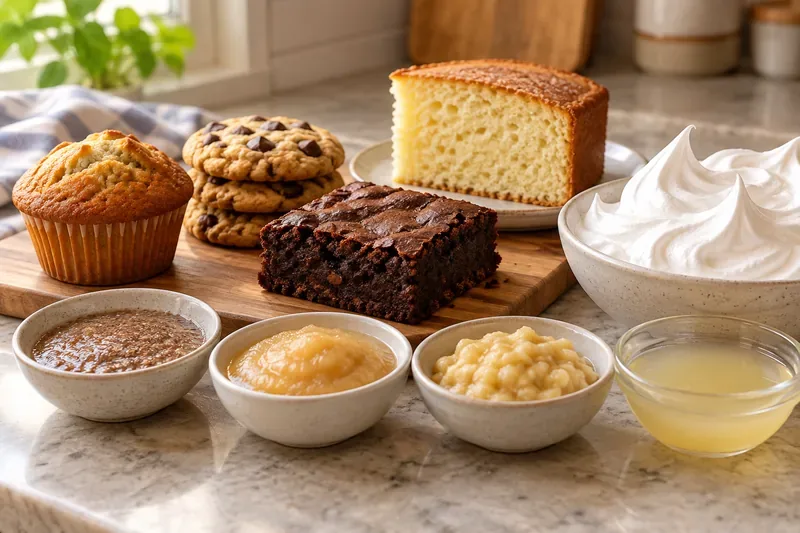
Find egg substitutes for muffins, cookies, brownies, cakes, meringues, and more. Compare flax, fruit purée, yogurt, tofu, aquafaba, and baking replacers.
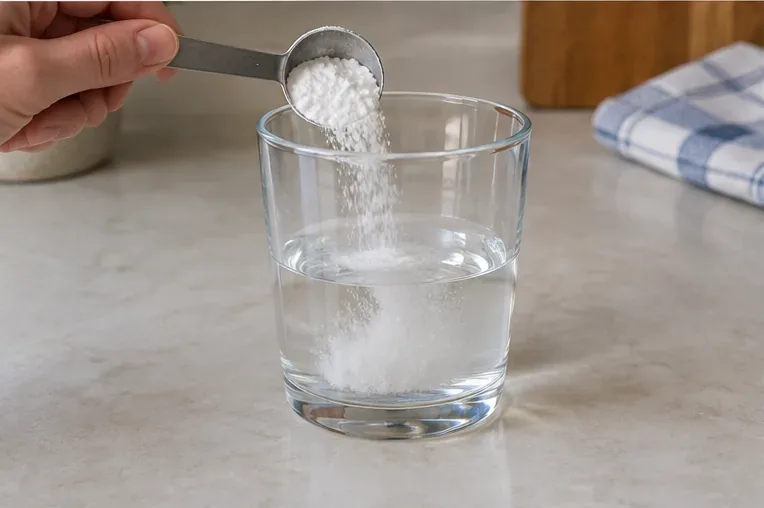
Test baking powder in minutes with warm water, learn what vigorous bubbling means, why powder loses strength, and when replacing it is the better choice.
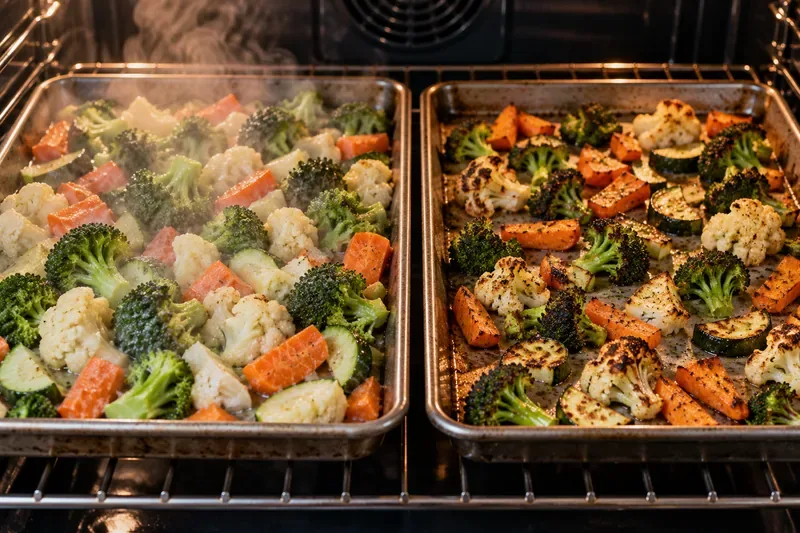
Learn why roasted vegetables turn soft and steamy instead of deeply browned, how to correct moisture, crowding, heat, and airflow, and how to judge the result.
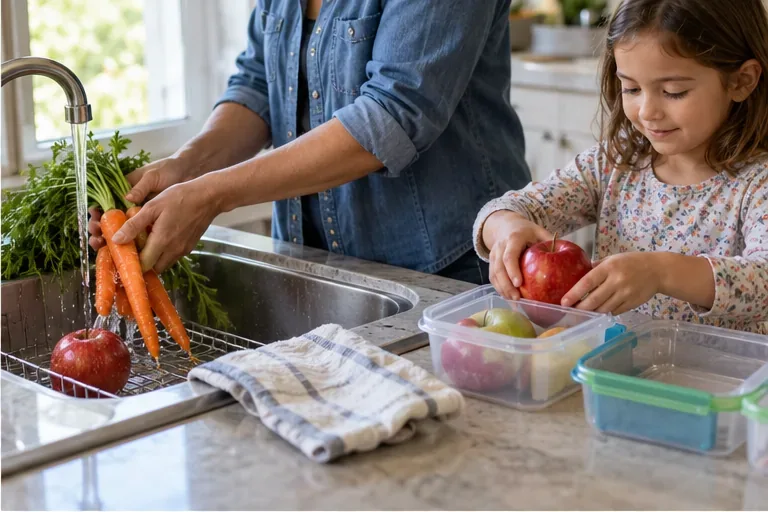
Plan autumn school lunches with a hypothetical family example, flexible prep choices, storage timing, and safe ways to keep perishable food cold.
Plan an October kids’ party with a practical food allergy checklist for caregiver communication, labels, Halloween candy, cross-contact, and emergency readiness.