Why Does Sauce Separate After Reheating? How to Fix It
Learn why reheated sauce turns oily, watery, or grainy, which gentle fixes can bring it back together, and when food safety means you should discard it.
Illustrative example (hypothetical): Jordan is a caregiver with a busy school week ahead and about half an hour free on Sunday. Their elementary-school-age child, Sam, brings lunch from home and usually eats cold food at school. This invented scenario is a planning example, not a real family’s experience or a tested meal plan. It shows how to decide what to prepare early, what to leave until the night before, and when a quick midweek refresh is safer and more practical.
For Jordan, the most workable choice is a small “mix-and-match” setup rather than five fully assembled lunches. Sunday prep can cover the first few days: check the school’s food rules, choose a handful of familiar foods, wash sturdy produce, and prepare a safe-to-store component. More delicate items and later-week portions can be assembled fresh or prepared in a short second session. The right balance depends on refrigerator space, the child’s preferences, whether the school has a fridge or microwave, food allergies, and how long lunch sits before it is eaten.
Before shopping, Jordan checks the calendar: which days include after-school activities, which mornings are rushed, and whether Sam can refrigerate or reheat lunch. A lunch that works on a normal Tuesday may not work on a field-trip day. The school handbook matters too: some schools restrict particular foods or require special packaging, and allergy procedures vary by school. For a child with a diagnosed allergy, follow the family’s care plan and school instructions; do not rely on a generic online lunch list.
Instead of planning a different recipe for each day, make a short list of options in three practical groups:
These are flexible categories, not a nutritional prescription or a required portion formula. The USDA’s weekly meal-planning guidance likewise encourages planning around foods a household enjoys, what is already on hand, and what fits its budget. Jordan writes down two mains, a few produce options, and one backup instead of buying ingredients for five ambitious recipes.
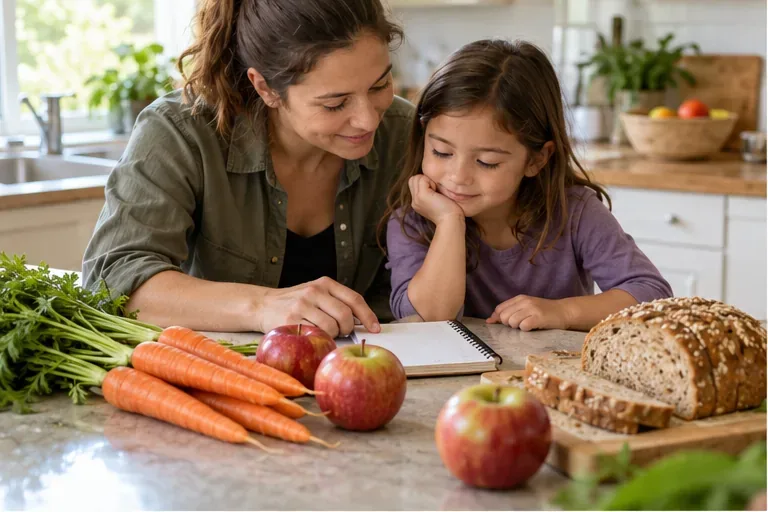
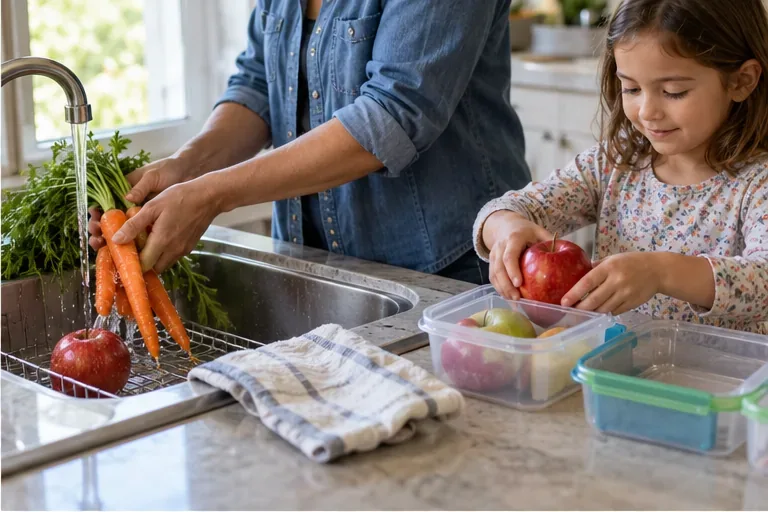
Jordan starts with tasks that save time without making food soggy or leaving it in storage too long. A short prep session might include washing whole produce, portioning dry snacks into clean containers, cooking one ingredient for the first part of the week, and checking that the lunch bag and cold packs are ready. Raw meat and poultry should be kept separate from ready-to-eat foods, utensils, and cutting surfaces; prepare vegetables and fruit on a clean surface before handling raw meat, or use separate boards and clean them between tasks.
Some items are better left whole until the night before. Whole apples, pears, oranges, and sturdy vegetables need little preparation; cutting them early can affect texture and adds another perishable item to manage. Keep dips and wet ingredients in a separate small container. If Sam dislikes a food once it softens, Jordan leaves that item uncut or packs it separately instead of preparing it days ahead.
Meal prep is not an all-or-nothing choice. A Sunday batch can simplify Monday through Wednesday, while a ten-minute Wednesday check can refresh fruit, wash another vegetable, and move a safe refrigerated component into the next day’s lunch. This reduces the pressure to make Sunday’s food last all week.
For many cooked leftovers, federal storage guidance gives a refrigerator window of three to four days when held at 40°F (4°C) or below; exact storage times differ by food. Refrigerate perishable food promptly, within two hours of cooking or serving, and sooner in hot conditions. If making food for the end of the week, use a suitable freezer option only when the food freezes and thaws well, or prepare a fresh component midweek. Do not assume every salad, cooked dish, or cut fruit keeps equally well. Check the FoodSafety.gov Cold Food Storage Chart for the specific food, and follow package directions where applicable.
Jordan sets out a few combinations Sam can choose from. One day might use a turkey or hummus sandwich with carrots and an apple; another might use a thermos meal if the school permits it; a third could use beans, crackers, cucumber, and fruit. Autumn can bring convenient local options such as apples, pears, squash, or root vegetables, but availability differs by region, so there is no universal fall produce list. The point is to pair foods the child recognizes with one or two alternatives, not to turn lunch into a daily negotiation.
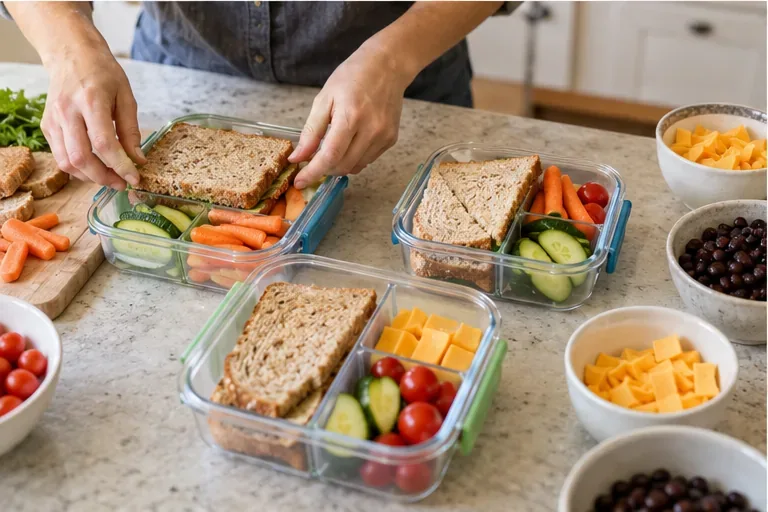
Pre-portioning can reduce morning decisions, but fully assembling every lunch can take more refrigerator space and may affect texture. A component approach keeps bread, fillings, dry snacks, and produce in separate containers until needed. It is also easier to swap a disliked item or adjust the plan when school activities change. If the family prefers ready-to-grab boxes, assemble only the next day’s lunch at night and refrigerate it promptly.
Invite the child to help with age-appropriate tasks: choose between two fruits, put crackers into a container, or place a note beside a lunch box. An adult should handle knives, hot pans, and food-safety decisions. Wash hands with soap and water before preparing food, clean counters and containers, and avoid reusing packaging that was meant for one-time use. FoodSafety.gov’s school-lunch guidance covers handwashing, separating foods, chilling, and packing.
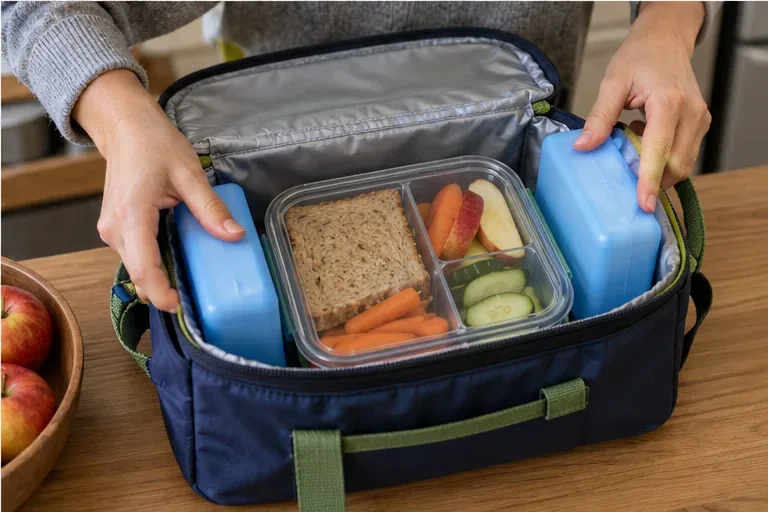
For a lunch containing items such as meat, eggs, dairy, or other perishable foods, Jordan uses an insulated lunch bag with at least two cold sources, such as frozen gel packs or a frozen water bottle. The food should be cold when packed, and the lunch bag should go into the refrigerator overnight if it is packed the night before. An insulated bag by itself does not refrigerate food. USDA guidance says perishable food should not remain at room temperature for more than two hours, or more than one hour when the temperature is above 90°F (32°C). A hot car or a long trip home changes the calculation, so the family checks how lunch is transported and stored at school.
If the school has a refrigerator, Jordan confirms whether students may use it rather than assuming. If Sam carries a hot lunch, the family checks whether an insulated food jar is allowed and follows safe handling directions: heat the food thoroughly, pre-warm the container as instructed, and keep it closed until lunch. USDA’s back-to-school meal-prep guide describes cold sources for chilled lunches and an insulated container for hot food. A shelf-stable lunch may be simpler on a field trip, but choose foods that are suitable for the child and the school setting.
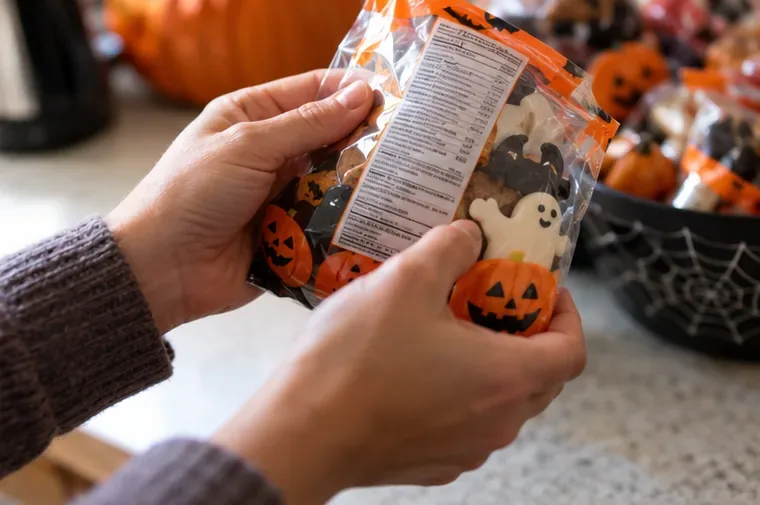
When there is a food allergy, label checks are part of prep, not a last-minute extra. Read the ingredient list each time a packaged item is bought, because products and labels can change; keep shared utensils and surfaces clean to reduce unintended contact. The FDA explains U.S. packaged-food allergen labeling, while the CDC describes school-based allergy plans. Rules differ internationally and school policies may be stricter than national labeling rules, so confirm the current plan with the school and the child’s healthcare team.
The plan is successful if weekday mornings need fewer decisions, the child will actually eat the food, and perishable items stay within safe temperature and storage limits. If lunches keep coming home untouched, ask Sam which part was unappealing and change one item at a time. If a component becomes soggy, store it separately or prepare it closer to lunchtime. If the school’s rules or schedule change, revise the menu before buying more ingredients. A flexible lunchbox routine is usually more useful than a perfect-looking set of five identical meals.
Learn why reheated sauce turns oily, watery, or grainy, which gentle fixes can bring it back together, and when food safety means you should discard it.
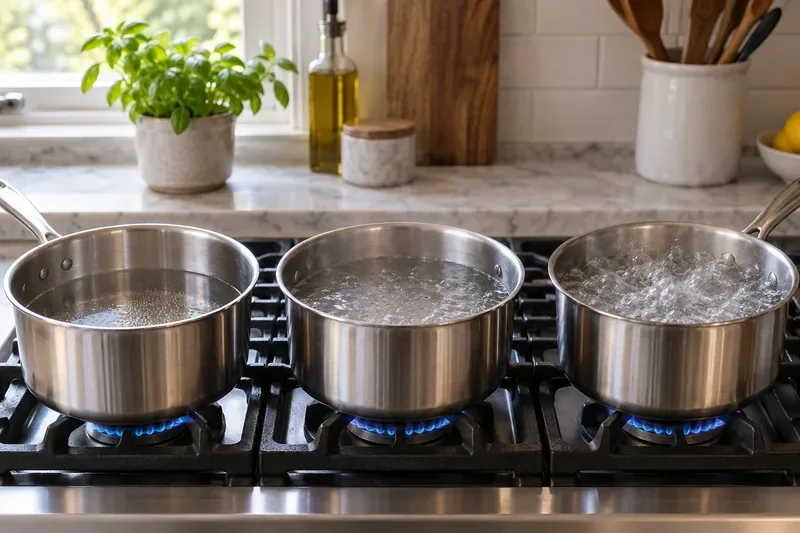
Learn how poaching, simmering, and boiling differ by bubbling, heat, texture, and best use—plus when to check food temperature for safety.
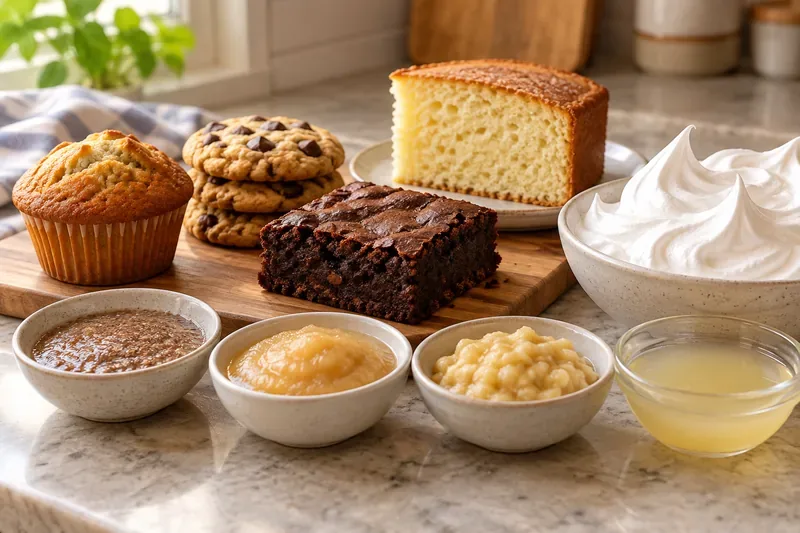
Find egg substitutes for muffins, cookies, brownies, cakes, meringues, and more. Compare flax, fruit purée, yogurt, tofu, aquafaba, and baking replacers.
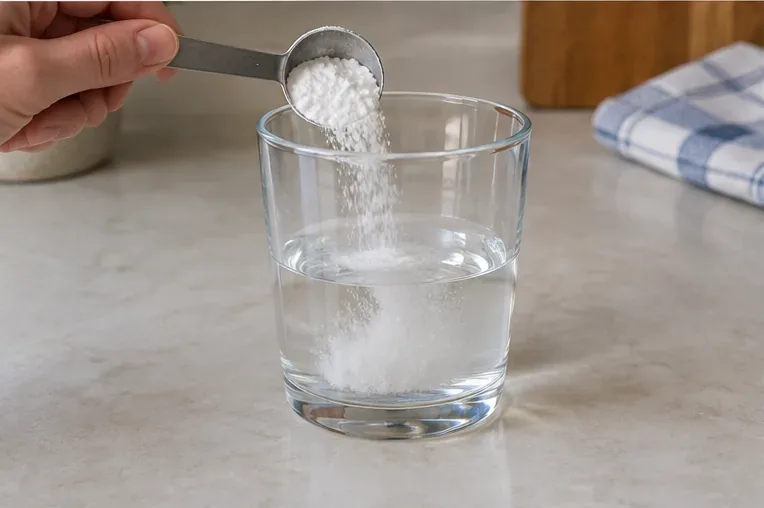
Test baking powder in minutes with warm water, learn what vigorous bubbling means, why powder loses strength, and when replacing it is the better choice.
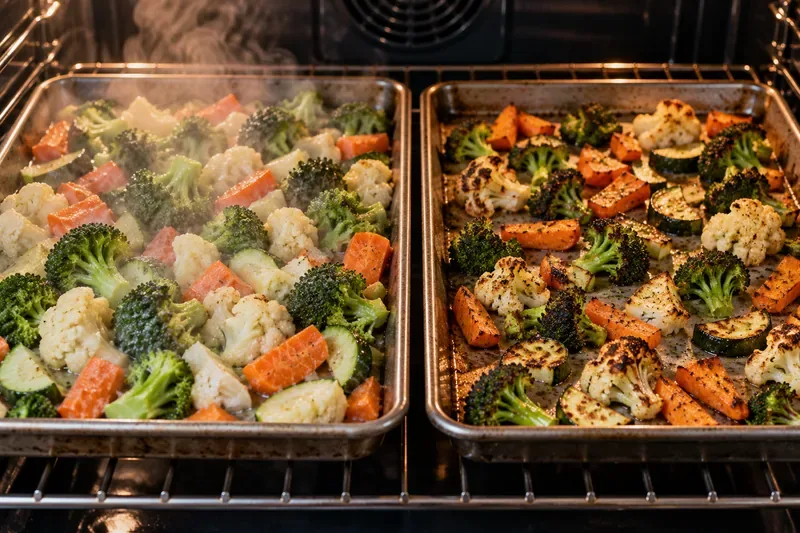
Learn why roasted vegetables turn soft and steamy instead of deeply browned, how to correct moisture, crowding, heat, and airflow, and how to judge the result.
Plan autumn school lunches with a hypothetical family example, flexible prep choices, storage timing, and safe ways to keep perishable food cold.
Plan an October kids’ party with a practical food allergy checklist for caregiver communication, labels, Halloween candy, cross-contact, and emergency readiness.