Why Does Sauce Separate After Reheating? How to Fix It
Learn why reheated sauce turns oily, watery, or grainy, which gentle fixes can bring it back together, and when food safety means you should discard it.
You are halfway through measuring ingredients for pancakes, biscuits, or a cake when you notice the baking powder has been open for months. The date on the can may still look acceptable, yet you are not sure whether it can produce enough lift. That matters because weak baking powder may leave a batter dense even when every other ingredient is measured correctly.
The quickest check is simple: mix a small amount of baking powder with warm water and watch what happens immediately. Active baking powder should release visible bubbles as its acid and bicarbonate components react and produce carbon dioxide. A weak or nearly flat reaction is a practical reason to replace it before committing a whole batch of ingredients.
Baking powder is a chemical leavener. It contains a bicarbonate base, one or more acids, and a dry carrier such as starch. When moisture reaches the reactive ingredients, they can begin producing carbon dioxide gas. That gas is what helps create and expand tiny air pockets in batter or dough.
Most retail baking powders are double-acting. According to the American Society of Baking's technical overview of double-acting baking powder, gas release occurs in stages: some activity starts after hydration, and additional activity occurs during baking as the mixture is heated. This staged action explains why a water test can reveal whether the powder still has useful reactivity even though it cannot reproduce every condition inside an oven.
The main enemy in storage is moisture. If humid air repeatedly enters an opened container, some reactive ingredients may be consumed before the powder ever reaches a recipe. Utah State University Extension likewise notes that moisture can cause baking powder to react and chemically change during storage. Heat and poor storage conditions can add to deterioration, but keeping the powder dry and tightly closed is especially important.
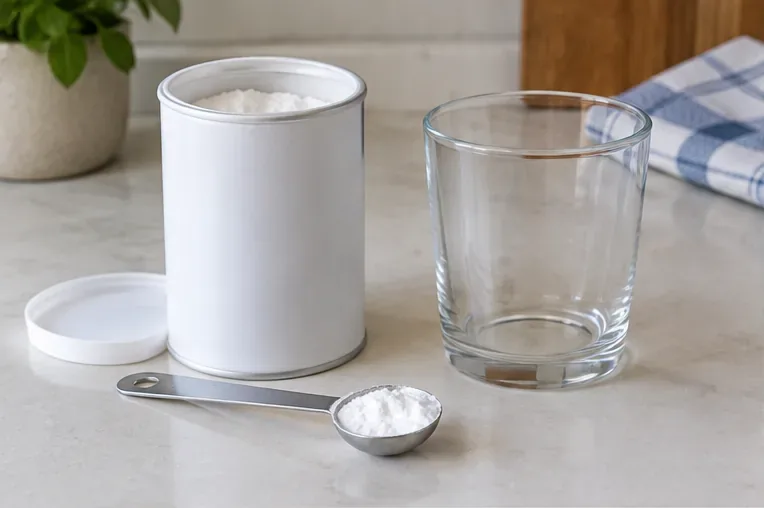
Before doing a freshness test, look at the package. Check the manufacturer's best-by or use-by date, and think about how the container has been stored. A date is useful context, but it is not a direct measurement of current leavening performance.
Storage recommendations are not identical across all sources and brands. For example, the USDA Food Safety and Inspection Service shelf-life guidance, updated September 18, 2024, lists a best-quality storage period of six months unopened and three months after opening at room temperature. Clabber Girl's current manufacturer FAQ gives a different product-specific guideline: up to 18 months unopened and about six months after opening for best rise. Because formulas, packaging, and quality targets can differ, follow the package directions for your specific product and use the activity test when performance is uncertain.
If the powder is damp, heavily clumped from moisture, contaminated by other ingredients, or has been stored with a wet spoon, replacing it is usually the simplest choice. Breaking apart a moisture-damaged clump does not restore chemical activity that may already have been lost.
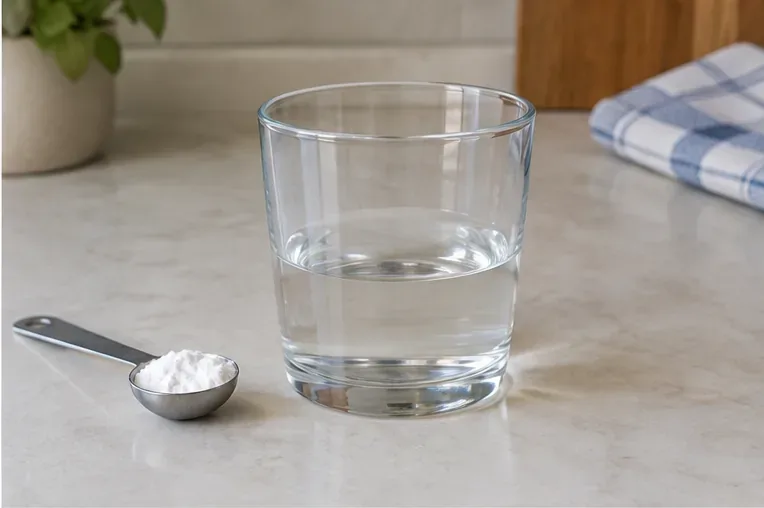
Use a clean glass or small bowl and add warm water. You do not need vinegar, lemon juice, or another acid for this test because baking powder already contains its own acidic component.
For a repeatable home check, the Clabber Girl manufacturer FAQ recommends stirring 1 teaspoon of baking powder into 1/3 cup of warm water. Utah State University Extension gives the same 1-teaspoon-to-1/3-cup warm-water test. Using measured amounts is better than sprinkling an unknown quantity into a random amount of water because it makes later comparisons more meaningful.
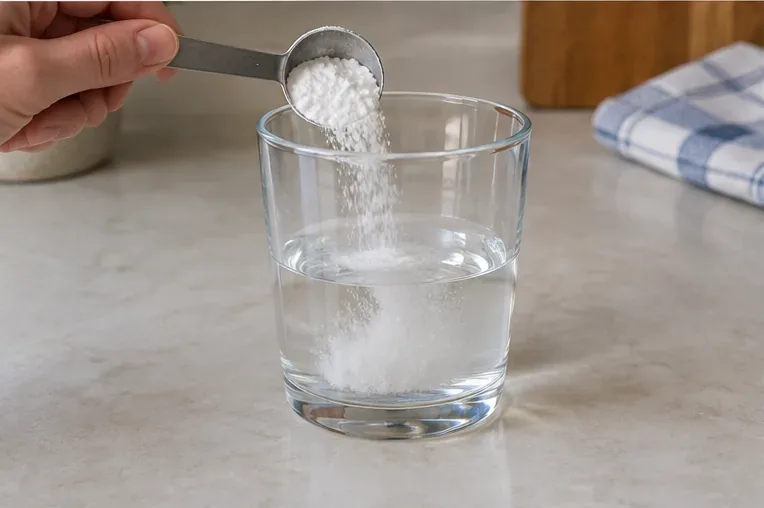
Add the baking powder to the water and observe it as soon as the powder gets wet. Fresh, active powder should begin bubbling promptly. The reaction may also create foam, depending on the exact powder, water temperature, quantities, and shape of the container.
Do not wait several minutes and then judge only by whether a few isolated bubbles remain. The useful signal is the immediate reaction. Baking powder that reacts decisively on contact with warm water still has chemical activity available for leavening.
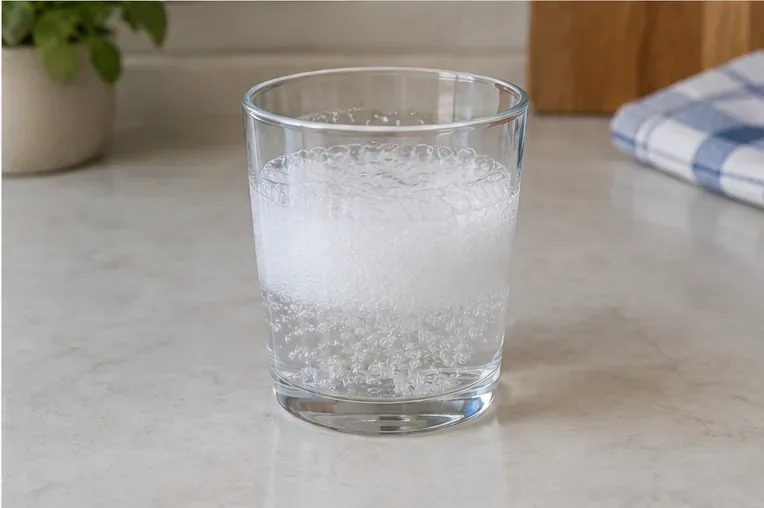
A strong result is easy to recognize: the water fizzes promptly, many bubbles appear, and the reaction is unmistakable. If you see little or no bubbling, replace the baking powder.
There is a gray area between those outcomes. A faint fizz means the powder is not completely inactive, but it may not provide the rise you expect in a recipe where leavening is important. If the bake matters, the ingredients are expensive, or the powder is old enough to make you hesitate, replacing a borderline can is lower-risk than trying to compensate with extra baking powder. Adding more weak powder can also change flavor, sodium, and the balance of a recipe.
The test answers one practical question: does this baking powder still react when hydrated? It does not measure exact gas production under standardized laboratory conditions, and it cannot guarantee how tall a particular cake or biscuit will rise. Final volume also depends on recipe formulation, mixing, batter thickness, oven temperature, pan size, and timing.
It is also important not to confuse baking powder with baking soda. Baking soda is sodium bicarbonate and normally needs an acid from the recipe or test liquid to release carbon dioxide. Baking powder already contains both alkaline and acidic components, which is why warm water alone can trigger a visible reaction.
If the powder bubbles strongly yet the finished food does not rise as expected, move to the next likely causes instead of assuming the test failed. Check these in order:
If you repeatedly get poor rise with several recipes despite a vigorous water test, try a newly purchased can under the same recipe conditions. That comparison is more informative than repeatedly increasing the amount of leavener.
Keep the original container tightly closed in a cool, dry pantry or cupboard unless the manufacturer specifies otherwise. Avoid storing it where steam is common, such as directly beside a boiling kettle or above a range. Use a dry measuring spoon, and close the lid soon after measuring.
Do not rely on refrigeration as an automatic upgrade. A refrigerator is humid, and condensation can be a problem when a cold container is repeatedly opened. Dry, stable storage is the more important goal.
Before using an older or questionable can, ask four questions: Is the package still within the manufacturer's recommended quality window? Has it stayed dry? Does 1 teaspoon in 1/3 cup warm water bubble promptly? And does the reaction look clearly vigorous rather than barely perceptible?
If the answer to all four is yes, the powder has passed a reasonable home activity check. If the water stays nearly flat, moisture has damaged the product, or the response is too weak to inspire confidence, replacement is the more predictable choice. The goal is not to prove that an old can is technically usable; it is to reduce the chance that a preventable leavening problem ruins the batch.
Learn why reheated sauce turns oily, watery, or grainy, which gentle fixes can bring it back together, and when food safety means you should discard it.
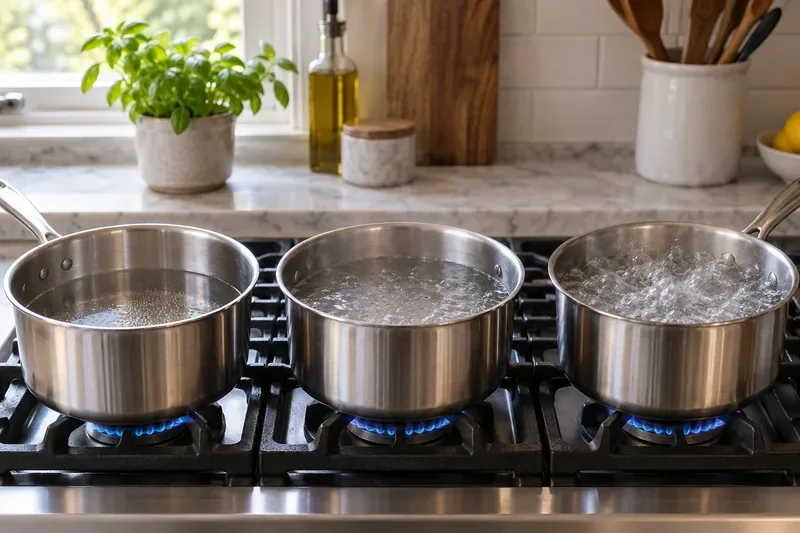
Learn how poaching, simmering, and boiling differ by bubbling, heat, texture, and best use—plus when to check food temperature for safety.
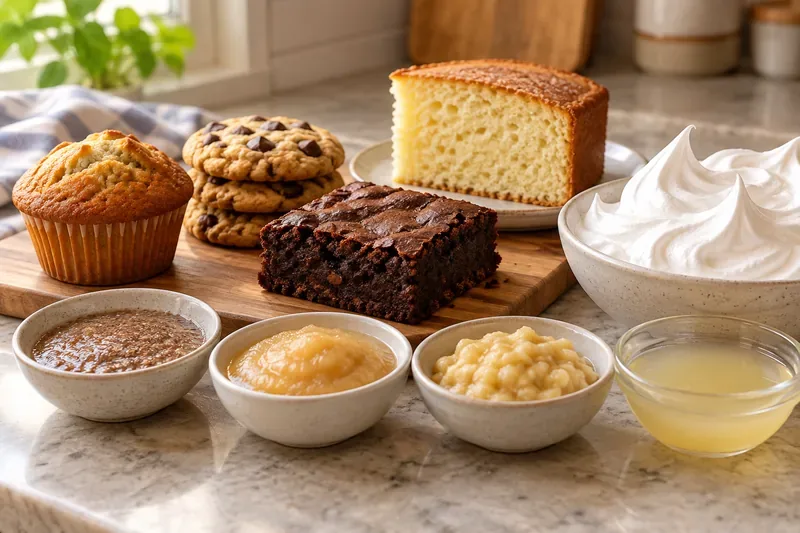
Find egg substitutes for muffins, cookies, brownies, cakes, meringues, and more. Compare flax, fruit purée, yogurt, tofu, aquafaba, and baking replacers.
Test baking powder in minutes with warm water, learn what vigorous bubbling means, why powder loses strength, and when replacing it is the better choice.
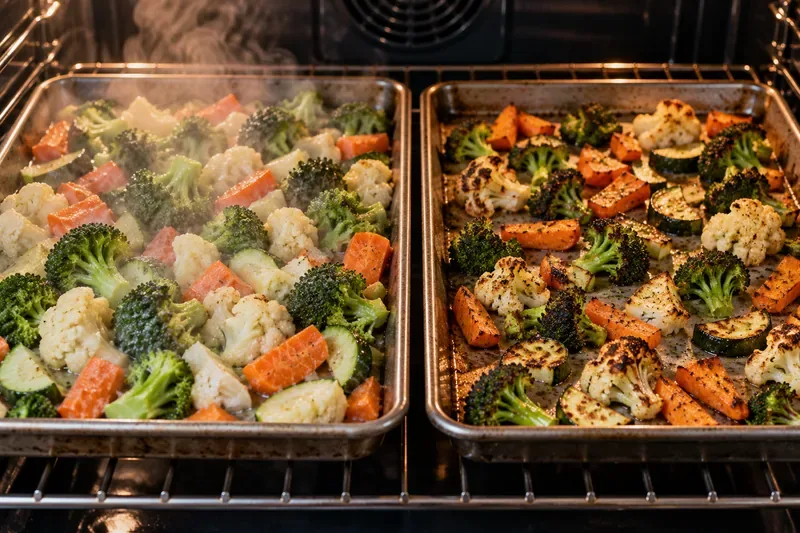
Learn why roasted vegetables turn soft and steamy instead of deeply browned, how to correct moisture, crowding, heat, and airflow, and how to judge the result.
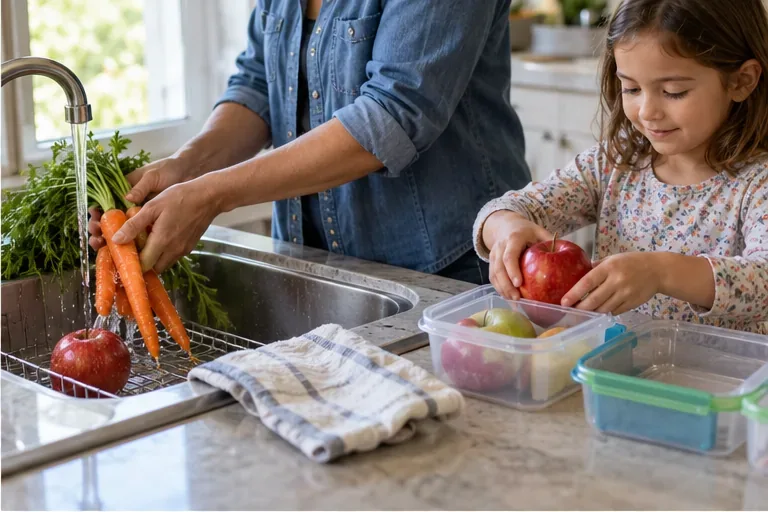
Plan autumn school lunches with a hypothetical family example, flexible prep choices, storage timing, and safe ways to keep perishable food cold.
Plan an October kids’ party with a practical food allergy checklist for caregiver communication, labels, Halloween candy, cross-contact, and emergency readiness.