How to Seal Salt-Dough Ornaments Against Humidity
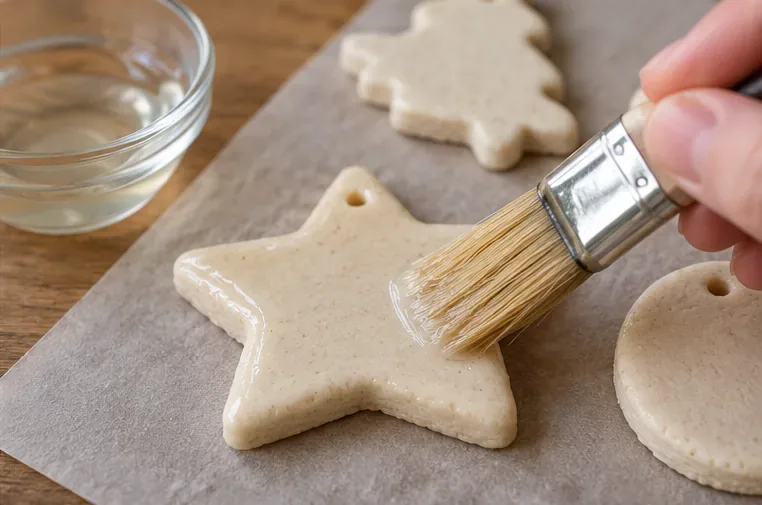
Learn how to seal fully dried salt-dough ornaments with clear acrylic varnish, cover both sides and edges, and store them indoors to reduce humidity damage.
World Children’s Day is a useful occasion to make room for children’s ideas at home. UNICEF marks it on November 20, the anniversary of the adoption of the Convention on the Rights of the Child. One family conversation cannot solve every concern a child raises, but it can show that adults are ready to listen, consider what they hear, and explain what happens next.
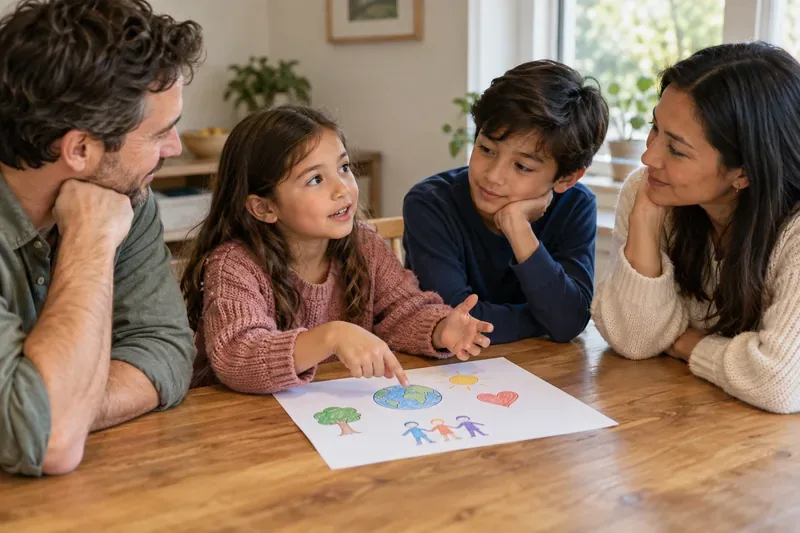
A simple activity called “One Idea for Our Family” can take about 20 to 30 minutes, with no special supplies beyond paper and something to write or draw with. Its goal is modest and observable: each child has a comfortable way to share one thought, an adult checks that they understood it, and the family agrees on a small next step or explains why a request needs more discussion.
There is no single best way for children to express an idea. A spoken round works well when everyone enjoys conversation; drawing or writing gives children more time and may feel easier for those who need it. A “question jar” adds playfulness, but can feel like a surprise quiz if a child is not ready. Let children choose, combine, or decline a format.
| Format | Works well when | Trade-off to consider |
|---|---|---|
| Talking round | Children like conversation and can take turns. | Fast talkers may dominate; adults need to leave quiet pauses. |
| Draw or build an idea | A child is young, enjoys making things, or finds a direct question difficult. | Adults should ask what the picture means rather than interpret it for the child. |
| Write or dictate a note | A child wants privacy or more time to find words. | Reading the note aloud should be optional; agree who will see it. |
| Pick a prompt from a jar | The family wants a playful, repeatable ritual. | Keep prompts gentle and let anyone pass or choose another. |
Broad questions such as “How can we fix everything?” can overwhelm a child and create expectations adults cannot meet. Try a question about something the family can discuss together: “What is one thing that would make our time together feel better?” or “What would help mornings go more smoothly?” For an older child who wants to think beyond the household, ask, “What is one change you wish adults would consider at school or in our neighborhood?”
Choose a time without rushing, such as after a snack on a weekend. Tell children in advance that there is no right answer, they may pass, and the family will decide together what is possible. This helps distinguish an invitation from a demand to share.
Place paper and pencils on the table. Invite each person to think quietly for a minute, draw, write, or simply speak when ready. Younger children may respond to a concrete choice—“What would make bedtime calmer?”—while older children may prefer a more open question. If siblings have very different ages, let them respond in different ways instead of requiring identical answers.
For children who do not want to speak in front of the group, offer a private note or a one-on-one conversation later. Accessibility matters too: a child can point to picture choices, use a communication device, or ask a trusted adult to help record their words. The method should support the child’s idea, not become a test of speaking or writing ability.
Take turns without interrupting. When a child shares, reflect the idea in plain words: “You’d like us to put away our phones during dinner—is that right?” Then ask one open follow-up, such as “What part of that matters most to you?” or “Can you tell me more?” UNICEF’s parenting guidance recommends showing attention and asking questions that invite a child to explain. Avoid correcting details, teasing, or immediately listing reasons the idea will not work.
Listening does not require agreeing to every request. It means giving the child a fair chance to express a view and considering it in light of age, maturity, safety, family needs, and practical limits. If an idea raises a serious safety issue or a child discloses harm, pause the activity and respond privately and calmly; a family game is not a substitute for appropriate support.
Review the ideas together and ask which one the family could try first. Keep the first step small enough to observe: test a phone-free dinner on one chosen evening, let a child help plan a weekend breakfast, or try a new morning checklist for a week. If the request is not possible, explain the specific reason in age-appropriate language and, where possible, offer an alternative. Do not promise a change just to end the conversation.
Write down the idea, the next step, who will do it, and when you will check back. A child might choose to keep the note or drawing; ask before displaying or sharing it. A visible record is useful only if it respects the child’s privacy.
Judge the session by the quality of the exchange, not by how many ideas children produce or whether adults accept every suggestion. A practical check is:
If one child spoke for most of the time, try written or one-on-one sharing next time. If children gave only quick answers, narrow the prompt, allow more thinking time, or make drawing optional. If the discussion turned into a debate, pause and return later to one idea at a time. The goal is not a perfect meeting; it is a dependable pattern in which children can speak and adults show what consideration looks like.
Choose a talking round when children enjoy conversation and the family can protect turn-taking. Choose drawing or building when a child expresses ideas more easily through images or play. Choose notes or individual conversations when privacy, shyness, or a large age gap makes a group discussion harder. A prompt jar is best for families that like rituals and can keep the activity voluntary. Each option can work; the useful measure is whether children can contribute without pressure and can see how their ideas were considered.
World Children’s Day can be the starting point for a short annual check-in, but children’s views matter throughout the year. A simple follow-up—“We tried your idea; what felt different?”—can make the conversation more meaningful than a one-day promise.
Learn how to seal fully dried salt-dough ornaments with clear acrylic varnish, cover both sides and edges, and store them indoors to reduce humidity damage.
Make watery washable paint work better for stamps: check the formula, use undiluted paint, load a thin even coat, and test before printing.
Learn why homemade stickers peel, curl, or lift and how surface prep, material choice, pressure, curves, and set time can improve adhesion.
Trace a simple pattern onto light fabric with a washable fabric pen and a bright window or light pad. Learn the four steps, when to use transfer paper, and how to test marks.
Compare craft glue by material: choose PVA for paper, flexible fabric glue for cloth, wood glue for bare wood, and a plastic-specific adhesive for each resin.
Compare reusable cardboard Halloween decorations kids can make: flat silhouettes, freestanding displays, and garlands, with practical storage and safety tips.
Celebrate World Children’s Day with a low-pressure family idea session. Compare talking, drawing, and writing options, then choose one small follow-up children can see.