Why Your Bathroom Mirror Still Has Streaks After Cleaning

Find out why a bathroom mirror streaks after cleaning and follow gentle checks for cleaner residue, hard-water spots, and possible mirror backing damage.
Brown, crispy leaf margins usually mean that the leaf has lost healthy tissue, but the color alone cannot identify why. Indoor plant leaves can brown at the edges after inconsistent watering, dry air, a sudden change in light or temperature, excess fertilizer salts, or—on sensitive species—certain minerals in the water. More than one factor can be involved.
Before changing care, compare the plant’s recent conditions with its own needs: check the potting mix, drainage, light and air around it, then look for a pattern across several leaves. Adjust one likely cause at a time. A plant kept too wet can wilt and develop brown edges just like a plant that is too dry, so adding water on sight may make the problem worse.
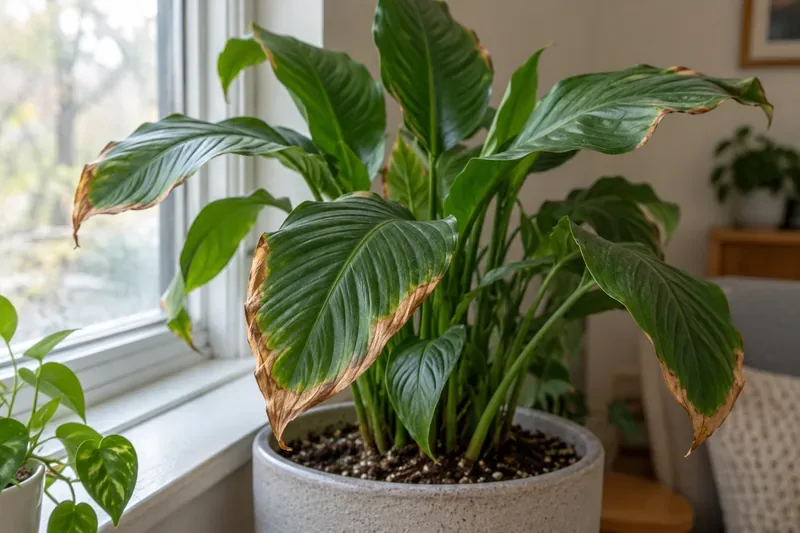
University of Illinois Extension lists improper watering, cold drafts, insect attack and excess fertilizer among causes of brown leaf tips. Its care guidance also notes that low indoor humidity can trouble some plants, while direct sun and abrupt changes in conditions can damage foliage. The table below helps you choose a low-risk first check; these patterns are clues, not a diagnosis.
| Possible cause | Clues to look for | First check or adjustment | Trade-off to consider |
|---|---|---|---|
| Watering too often or too little | Very dry mix, a pot that feels unusually light, or leaves that droop can point toward inadequate moisture. Persistently wet mix, a sour smell, or yellowing and soft growth can suggest the roots are staying too wet. | Check the mix and drainage before watering. Match the interval to the species and the pot, not a fixed calendar. | Watering more often may help a dry plant but can worsen poor drainage or root damage. Wilting alone does not tell you which condition is present. |
| Dry air, heat, cold, or a sudden light change | Damage may begin after a heater or air conditioner is used, a plant is moved beside cold glass, indoor humidity drops, or leaves receive stronger direct sun than before. | Move the plant away from blasts of hot or cold air. If light is the likely issue, shift it gradually to bright indirect light suited to the species. | A humidifier can raise room humidity more consistently than repeated misting, but it needs cleaning and is useful only for plants that benefit from higher humidity. A pebble tray has a smaller, local effect; pots should not sit in water. |
| Fertilizer or mineral salts | Brown tips or margins may appear after frequent feeding, a stronger-than-label fertilizer mix, or a long period without enough water draining through the pot. | Pause extra feeding and review the label and the plant’s growing season. If the mix drains well and the plant is otherwise stable, a thorough watering that drains freely can help move accumulated salts out. | Flushing a pot that has poor drainage or already stays wet can leave roots waterlogged. Do not add fertilizer to “fix” brown edges unless a specific deficiency has been identified. |
| Water quality or a species-specific sensitivity | Some indoor plants, including peace lilies and certain other sensitive species, can develop tip browning from fluoride exposure; the issue is not universal across houseplants. | Confirm the species and check a reliable care reference. If that plant is known to be sensitive, compare an alternative water source for new growth rather than changing every plant’s water at once. | Buying distilled or bottled water adds cost and may be unnecessary. A water softener is not the same as a filter; Illinois Extension advises avoiding softened water for houseplants. |
| Pests, disease, or normal aging | Look for visible insects, webbing, sticky residue, spreading spots, water-soaked lesions, or damage that is appearing on new leaves. One older lower leaf changing color while the rest of the plant grows normally can be natural aging. | Inspect both sides of leaves and the stems. Isolate a plant with suspected pests while you identify the problem; remove only fully dead foliage with clean scissors. | Brown areas will not turn green again. Treating for insects or disease without confirming the problem may stress the plant and affect nearby plants. |
Houseplants do not all want the same moisture level. Some prefer evenly moist soil, while others need the mix to dry between waterings. Illinois Extension recommends checking the mix rather than following a rigid schedule; pot size, potting medium, light, temperature, humidity and drainage all change how quickly it dries. For many pots, feeling the mix below the surface is more useful than judging only by the top layer.
If the plant needs water, wet the mix thoroughly and let excess water drain away. Empty the saucer. If the mix is still wet, wait and check drainage rather than watering again. A moisture meter can be convenient, but readings may not be reliable in every soil and pot, so compare them with the plant’s care needs and a direct check.
Cold drafts, hot air from a radiator, air-conditioning vents, and cold window glass can create stress even when the room feels comfortable. Direct sun through a window can also scorch foliage that was adapted to gentler light. Move the plant a short distance first and observe it; a sudden move from dim light into strong sun can create a new problem while you are trying to solve the first one.
Fertilizer is not a medicine for damaged leaves. Excess fertilizer can injure roots and contribute to salt buildup, especially when a plant is growing slowly. Review what you applied, how often, and whether you followed the label. Illinois Extension advises fertilizing actively growing plants and describes flushing a well-drained pot as one way to help limit salt buildup. Do not flush a pot that lacks drainage or is already saturated.
Water-quality changes are most useful when they fit a known plant sensitivity. Illinois Extension notes that fluoride can brown tips on plants such as ZZ plants and peace lilies. That does not mean every brown-tipped plant needs distilled water. Check the plant’s species-specific guidance first; if you test a different water source, keep other care steady so you can tell whether new leaves respond.
Dry, crispy margins on several leaves can fit water stress, low humidity, salts, drafts, or excess light. A sudden change affecting many leaves after a move suggests looking at the new temperature and light conditions. Discrete spots, wet-looking patches, visible pests, or damage spreading quickly deserve closer inspection for disease or insects. A single brown lower leaf on an otherwise vigorous plant may be older foliage reaching the end of its life.
These are practical comparisons, not definitive tests. Similar symptoms can have different causes, and the plant’s species, potting mix, container, season, and care history matter. If the problem keeps spreading, new growth is distorted, the plant wilts despite appropriate moisture, or you see insects or lesions, take clear photos and ask a local university extension service, qualified nursery professional, or plant clinic for help.
Do not use the old brown edge as the success measure: dead leaf tissue generally will not recover its green color. Instead, note whether new damage slows and whether new leaves emerge healthy. Make one change at a time and allow enough time for new growth to appear; growth speed varies by species and season. If the plant declines after an adjustment, reconsider that change and check the roots, moisture and light before adding another treatment.
For an easy record, note the plant’s name, when you first noticed browning, recent moves or temperature changes, how the soil feels before watering, and any fertilizer or water-source changes. A short record can keep you from repeatedly switching routines and makes it easier to compare what happened with the plant’s own care requirements.
Find out why a bathroom mirror streaks after cleaning and follow gentle checks for cleaner residue, hard-water spots, and possible mirror backing damage.
Compare small-entryway storage by floor space, capacity, rental limits, and daily use. Keep shoes, coats, and keys organized without blocking the door.
A warm refrigerator door frame can be normal, while poor gasket grip may signal dirt, obstruction, misalignment, or damage. Learn what to check.
Keep stored clothes dry, fresh, and pest-resistant without mothballs by controlling humidity, cleaning garments, choosing the right container, and checking storage regularly.
Learn why indoor plant leaves turn brown at the edges, how to compare watering, light, humidity, fertilizer, and water quality, and what to check first.
Use this family-friendly balcony checklist to decide what to bring indoors, cover, keep outside, or let go before the first frost in a small space.