Why Your Bathroom Mirror Still Has Streaks After Cleaning

Find out why a bathroom mirror streaks after cleaning and follow gentle checks for cleaner residue, hard-water spots, and possible mirror backing damage.
In a small home, keep entryway clutter under control by assigning a home to daily items and protecting the walking path before adding storage. Use the wall for coats, bags, and keys when floor space is scarce. Choose a shoe tray, rack, cabinet, or bench according to the space you can spare and how the household uses the entry. Move seasonal and rarely used items elsewhere, set a capacity for the things that stay, and keep the door and exit route clear.
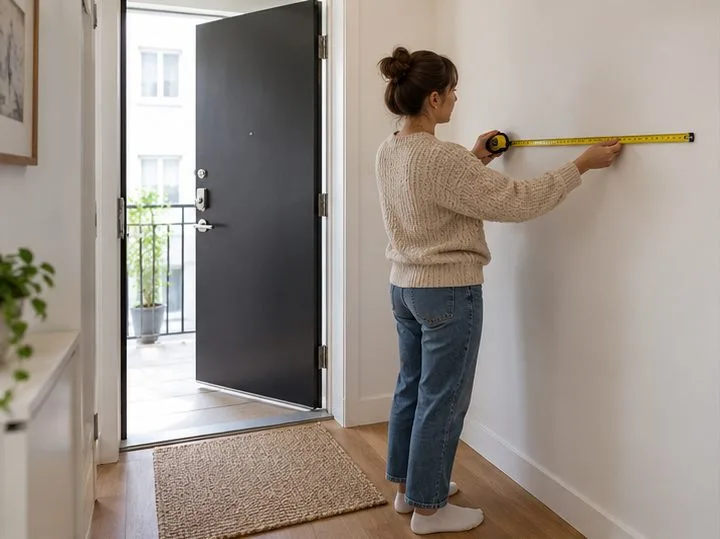
Open the entry door fully and notice where the door, shoes, bags, and people moving through the space overlap. A piece can look small against the wall and still make the doorway awkward if it sits in the swing area or at the narrowest point. Mark the door arc and walking line temporarily with paper or painter's tape, then compare furniture footprints against that outline.
Keep doors and windows unobstructed so they remain available as exits in an emergency. The U.S. Fire Administration's home escape guidance says to make sure doors and windows are not blocked. That is a practical safety principle, not a furniture dimension for every home. If someone in the household uses a wheelchair or walker, plan around their turning and maneuvering needs. The U.S. Access Board lists a 36-inch minimum clear width for walking surfaces that are part of an accessible route under ADA standards; those requirements apply where the standards require them, not as a blanket measurement for every private residence.
| Option | Floor space | Best fit | Trade-off |
|---|---|---|---|
| Wall hooks plus a narrow shelf | Very little when mounted above the floor | Coats, bags, keys, and a small amount of mail | Needs a suitable mounting surface; overloaded hooks become a pile |
| Open shoe rack or washable tray | Low to moderate, depending on width and depth | Frequently worn or damp shoes that need to air | Items stay visible and the rack can intrude into the walkway |
| Shallow closed shoe cabinet | Moderate, with extra space needed for doors to open | Hiding dry shoes and reducing visual clutter | Capacity and shoe height are limited; wet shoes should dry first |
| Bench with a basket or lower shelf | Moderate; combines seating with storage | People who need a place to sit while removing shoes | Uses floor area; open baskets can collect unsorted items |
| Portable basket or over-door organizer | Little furniture footprint | Renters or households needing flexibility | Can be overloaded; an over-door unit must not stop the door closing or latching |
These options solve different problems. A closed cabinet hides shoes but is less useful for wet boots that need to dry. A bench makes shoe changes easier but claims more floor area than wall hooks. Open racks are easy to reach and inspect, yet keep every pair in view. A tray is simple to move and clean, but should not stick into the path.
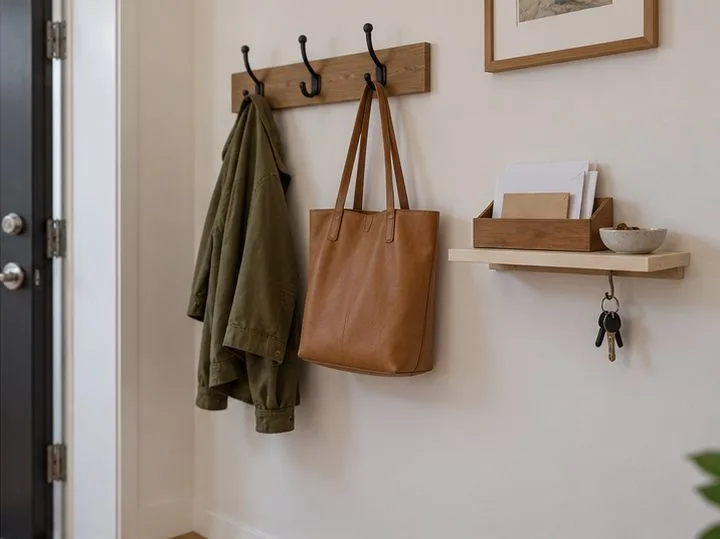
Favor vertical storage: a short row of hooks and a small key shelf. Keep only the current season's coat and daily bag at the door; store extra jackets in a closet or bedroom. If drilling is not allowed, use a freestanding tray or basket only where it will not narrow the passage. Adhesive hooks may suit light items, but check the manufacturer's wall-surface, load, and installation instructions rather than assuming every wall or weight is suitable.
Choose an open rack or tray for the pairs worn most often, then keep overflow elsewhere. A washable tray defines a landing spot for wet or muddy footwear. If you prefer a calmer look and shoes are dry, a closed cabinet may suit you better. Measure the cabinet depth and open-door clearance, and check that the shelves fit the shoes you actually wear. Do not rely only on an advertised pair count; bulky boots and children's shoes use space differently.
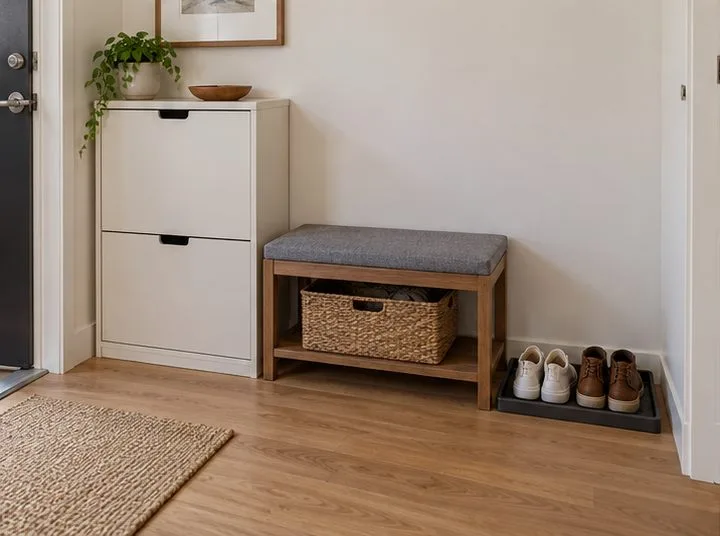
A bench can make the entry easier for someone who prefers to sit while taking off shoes. Give each household member a reachable hook or small bin, with lower placements for children when practical. If you choose a tall cabinet or bookcase-style unit, secure it as directed by its manufacturer. The Consumer Product Safety Commission recommends anchoring top-heavy furniture to help prevent tip-overs, particularly in homes with children who may climb.
Use a compact bench, stable portable basket, or shoe tray. Check that the door still opens and closes fully. Avoid a narrow, top-heavy tower in a high-traffic spot where it could be bumped. If you mount a shelf or hooks, follow the lease and use hardware suited to the wall construction and intended load.
Storage controls clutter only when the amount entering it is bounded. Set capacity by real use: a hook for each daily coat or bag, a tray for the shoes in current rotation, and one small container for keys or transit cards. If a hook or shoe area is full, move an item to longer-term storage instead of adding another basket.
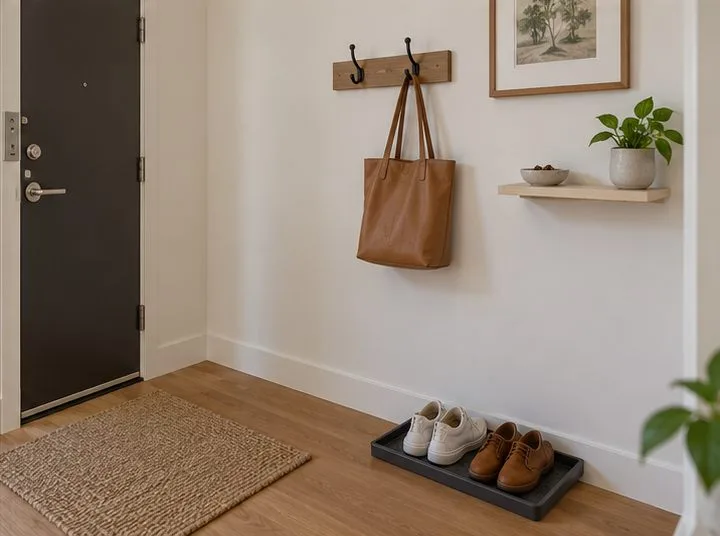
A large bench or cabinet may hide clutter while shrinking the usable path. Several small baskets add sorting decisions and more surfaces where items can land. Hooks without a capacity limit can turn into a coat stack that blocks access. A console table can become a mail shelf, package depot, and miscellaneous drawer unless its purpose is limited.
Try the smallest setup that handles the household's daily load for a week. If shoes still overflow, move pairs that are not in regular use. If bags pile up, add one assigned hook or bin rather than an entire organizer. If the floor gets wet, improve the tray or drying routine. Change one thing at a time so you can tell whether it solves the actual bottleneck.
A practical small-home entryway does not need to hold every belonging that might be used outside. It needs to handle daily essentials without blocking the door, creating a trip point, or demanding constant sorting. Review the arrangement after a week and when the season changes. Information reviewed September 30, 2026.
Sources: U.S. Fire Administration, Home Fire Escape Plans; U.S. Consumer Product Safety Commission, Anchor It!; U.S. Access Board, ADA Chapter 4: Accessible Routes.
Find out why a bathroom mirror streaks after cleaning and follow gentle checks for cleaner residue, hard-water spots, and possible mirror backing damage.
Compare small-entryway storage by floor space, capacity, rental limits, and daily use. Keep shoes, coats, and keys organized without blocking the door.
A warm refrigerator door frame can be normal, while poor gasket grip may signal dirt, obstruction, misalignment, or damage. Learn what to check.
Keep stored clothes dry, fresh, and pest-resistant without mothballs by controlling humidity, cleaning garments, choosing the right container, and checking storage regularly.
Learn why indoor plant leaves turn brown at the edges, how to compare watering, light, humidity, fertilizer, and water quality, and what to check first.
Use this family-friendly balcony checklist to decide what to bring indoors, cover, keep outside, or let go before the first frost in a small space.