Why Your Bathroom Mirror Still Has Streaks After Cleaning

Find out why a bathroom mirror streaks after cleaning and follow gentle checks for cleaner residue, hard-water spots, and possible mirror backing damage.
When the first cold nights approach, a small balcony can become a decision puzzle: which pots should come inside, which can stay out, and which are not worth squeezing into an already crowded home? The most useful approach is not to treat every plant the same. Instead, sort balcony plants by cold tolerance, indoor value, available space, and how much work each option creates.
The National Weather Service distinguishes frost from a freeze: frost can develop even when the measured air temperature is in the mid-30s Fahrenheit, while a freeze means temperatures at or below 32°F over a broader area. That is why families should watch the forecast rather than wait for a calendar date. A Frost Advisory signals risk to sensitive vegetation, while a Freeze Warning means a more serious cold event is expected.
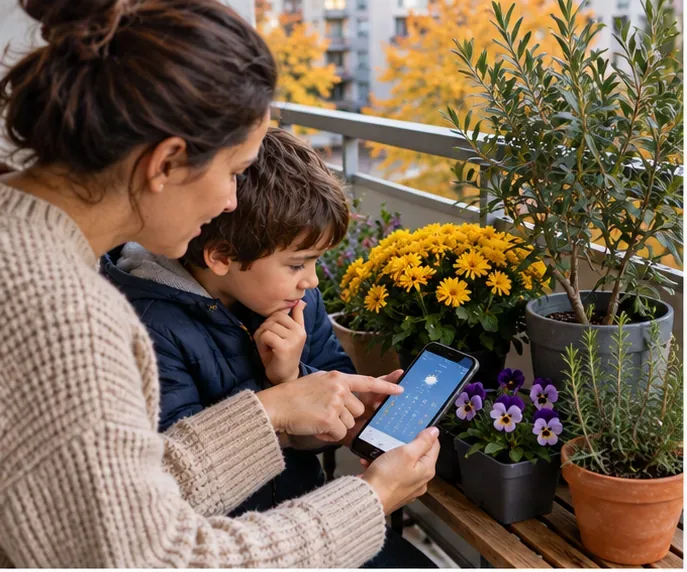
Before moving anything, make four mental categories. This keeps a small balcony from turning into a last-minute pile of pots by the door.
| Plant situation | Usually the practical choice | Main tradeoff |
|---|---|---|
| Tropical houseplants that spent summer outside | Bring indoors before cold nights arrive | Takes indoor space and requires pest inspection |
| Cold-tolerant fall flowers such as pansies or mums | Often leave outside through light cold, depending on species and forecast | Less indoor clutter, but blooms may decline after harder freezes |
| Perennials or shrubs intended to remain outdoors | Protect the container and root zone as needed | Protection helps, but a pot is still more exposed than garden soil |
| Annuals already finishing for the season | Compost or discard if appropriate | Frees space, but ends the display sooner |
Penn State and University of Minnesota Extension both advise moving most houseplants indoors before temperatures fall deeply into the 40s or lower. Penn State notes that many tropical, subtropical, and arid houseplants can be damaged as temperatures approach 40–50°F, while Minnesota Extension gives a similar rule of thumb for most houseplants. See Penn State Extension's fall houseplant guidance and University of Minnesota Extension's houseplant guidance.
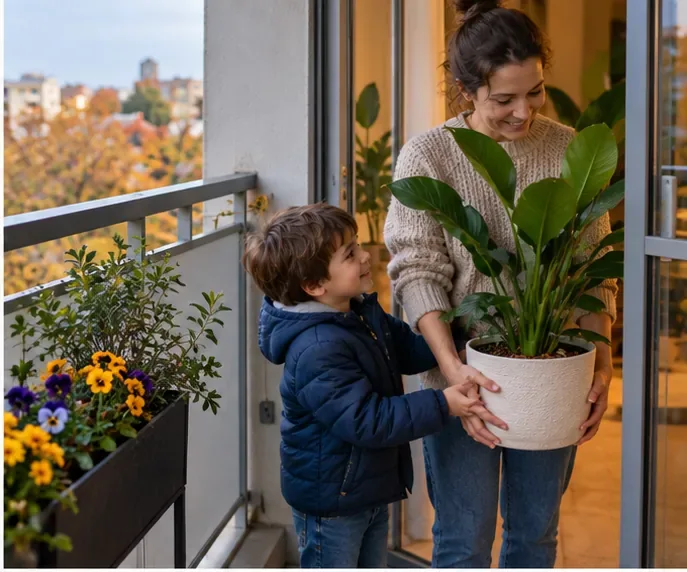
This makes the most sense for a favorite tropical plant, a houseplant that merely vacationed outdoors, or a specimen that would be costly or difficult to replace. The downside is obvious in a small apartment: every pot uses floor, shelf, or window space.
Do not carry outdoor pots directly into a cluster of indoor houseplants. Inspect leaves, stems, and soil for insects or disease first. Penn State recommends removing damaged or infested material, cleaning plants, and considering a period of isolation before mixing them with established indoor plants. Also expect the watering routine to change indoors; lower light and slower growth often mean less frequent watering.
For plants that tolerate cool weather but may be injured by an isolated cold night, temporary covering can buy time. Utah State University Extension notes that row-cover materials can provide frost protection, with heavier fabrics generally offering more protection but allowing less light through. See its row-cover guidance.
On a balcony, the most practical version is usually a breathable frost cloth or other plant-safe covering secured so it does not blow away. Avoid pressing heavy material directly onto delicate foliage if it could crush stems. If the covering is temporary, put it on before the coldest part of the night and remove or vent it when conditions warm.
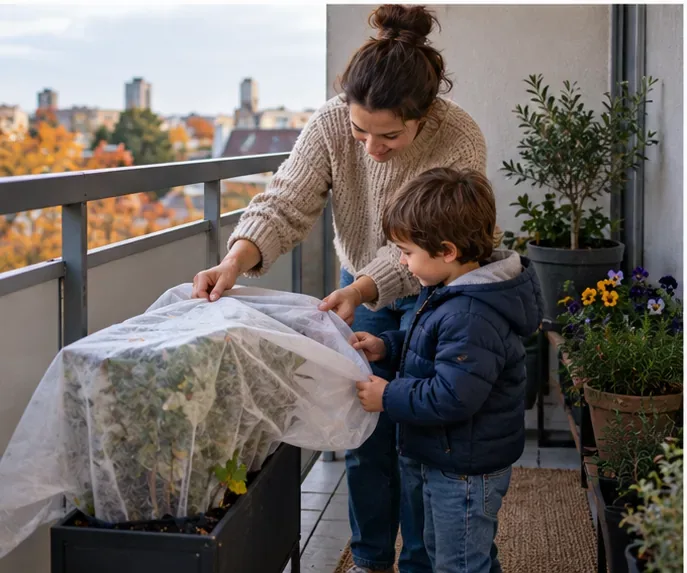
Covering keeps floors and windowsills clear indoors, but it requires attention to weather and wind. It also does not turn a tender tropical plant into a cold-hardy one. If a true freeze is forecast and the plant cannot tolerate freezing temperatures, moving it to a protected location is usually the more dependable choice.
Not every cool night requires action. Minnesota Extension notes that pansies and mums tolerate light frost better than typical houseplants. That makes them useful for small balconies where families want fall color without moving pots in and out every evening.
The key is to distinguish “tolerates light frost” from “safe through any freeze.” Species, cultivar, pot size, wind exposure, moisture, and the duration of cold all matter. A protected balcony wall may be warmer than an exposed corner, but do not assume the building will prevent freezing.
For annuals that are already declining, saving every pot is not always a good use of limited space. If the plant is inexpensive, nearing the end of its natural season, or badly stressed, clearing it out may be the most practical family decision. Healthy, non-diseased plant material may be compostable where local rules and facilities allow; diseased material is better kept out of home compost unless you know your composting system can handle it.
This choice can feel less satisfying than “rescuing” everything, but it creates room for fall flowers, a compact evergreen, or simply a safer, less crowded walking path.
Some National Weather Service offices note that moist soil can retain more heat than dry soil during a frost event. That does not mean every container should be saturated. Waterlogged pots can create different root problems, and indoor-bound houseplants generally need less water once growth slows. Use soil moisture as the guide rather than adding water automatically because the forecast is cold.
The move is not finished once the pot crosses the door. Indoor light is usually weaker than balcony light, humidity may be lower, and heating systems can create dry drafts. Penn State advises easing plants into reduced light when possible and adjusting watering to slower indoor growth. Some yellowing or leaf drop can occur during the transition.
If space is extremely limited, prioritize plants that have a realistic indoor location. A sun-loving plant placed permanently in a dark hallway may survive poorly even though it escaped frost. In that case, overwintering a smaller cutting, storing a dormant bulb or tuber when appropriate for the species, or simply replacing an annual next spring may be the more efficient choice.
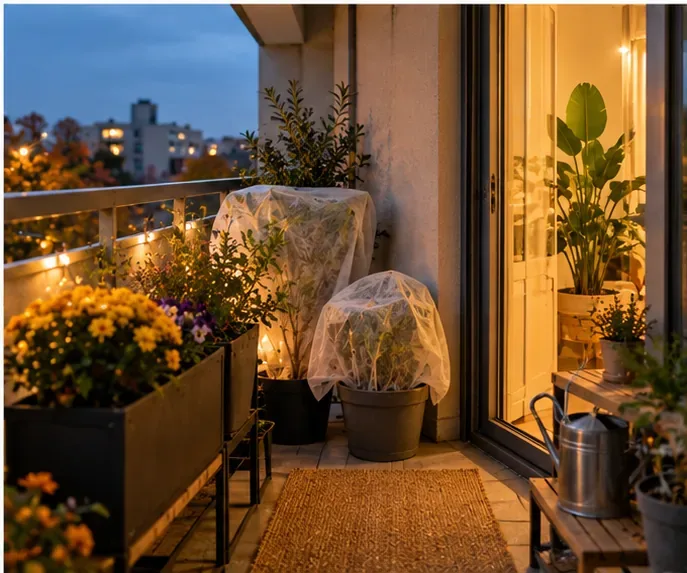
If a plant is tender and valuable to you, move it before the cold arrives. If it is reasonably cold-tolerant but the forecast is marginal, temporary protection may be worth the effort. If it naturally performs well in cool weather, leaving it outside may be the best use of limited indoor space. And if it is an annual at the end of its season, clearing it out is a valid choice.
The important point is that “first frost” is not one universal date and not one universal plant response. Forecasts change, balconies create their own microclimates, and species differ. A short family check the afternoon before a cold night is usually more useful than a rigid fall schedule.
Find out why a bathroom mirror streaks after cleaning and follow gentle checks for cleaner residue, hard-water spots, and possible mirror backing damage.
Compare small-entryway storage by floor space, capacity, rental limits, and daily use. Keep shoes, coats, and keys organized without blocking the door.
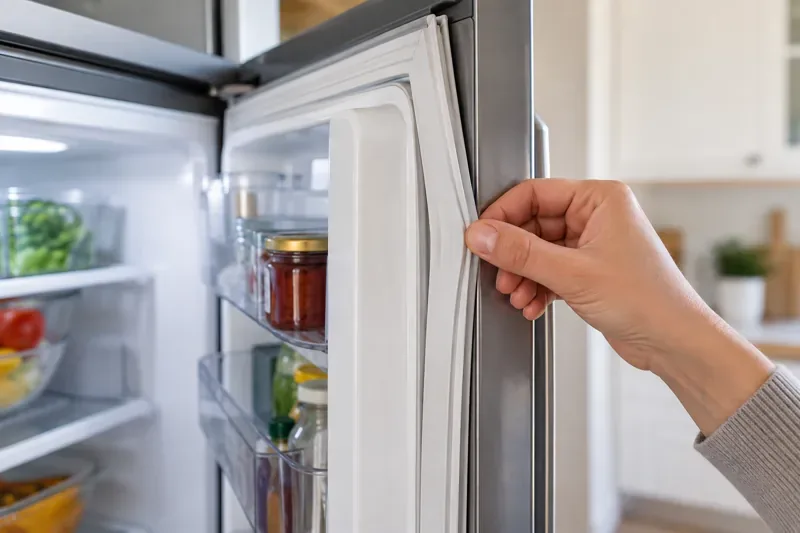
A warm refrigerator door frame can be normal, while poor gasket grip may signal dirt, obstruction, misalignment, or damage. Learn what to check.
Keep stored clothes dry, fresh, and pest-resistant without mothballs by controlling humidity, cleaning garments, choosing the right container, and checking storage regularly.
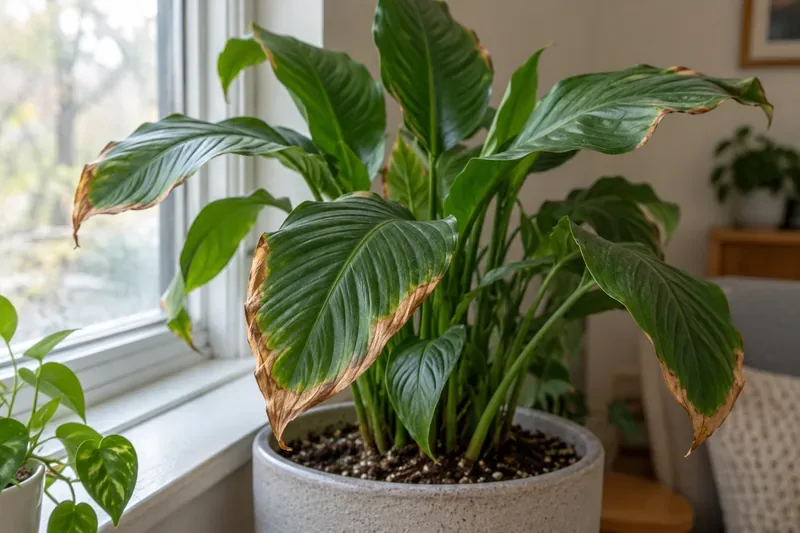
Learn why indoor plant leaves turn brown at the edges, how to compare watering, light, humidity, fertilizer, and water quality, and what to check first.
Use this family-friendly balcony checklist to decide what to bring indoors, cover, keep outside, or let go before the first frost in a small space.