Home
» Babies
»
How to Dress a Baby for Sleep Without Guessing the Room Temperature
How to Dress a Baby for Sleep Without Guessing the Room Temperature
You do not need to hit one exact bedroom temperature to dress a baby safely for sleep. Use the room as context, start with light sleep clothing, and check the baby’s chest for signs of being too warm. The American Academy of Pediatrics (AAP) advises keeping the room comfortable for an adult and dressing a baby in no more than one additional layer than an adult would wear. A room thermometer can show whether the room is changing, but one number is not a universal clothing prescription.
The practical goal is a baby who feels comfortably warm, not hot or sweaty, while sleeping on a safe, clear surface. After each check, make one small clothing adjustment if needed; do not add loose blankets or a hat indoors to solve uncertainty.
What should you check before choosing sleep clothes?
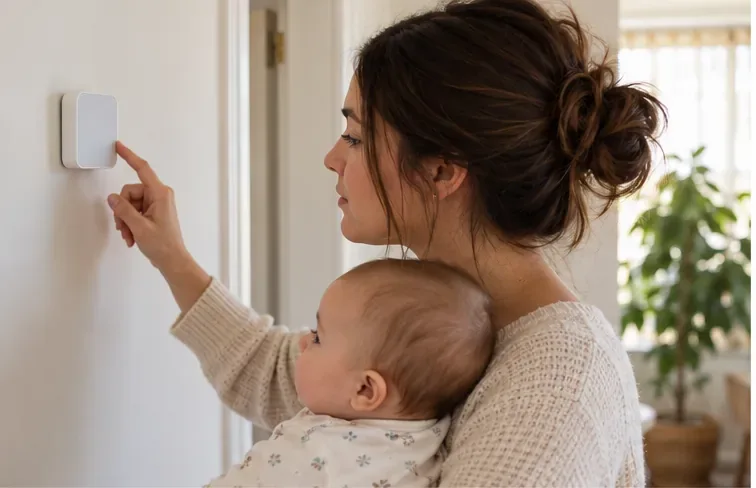
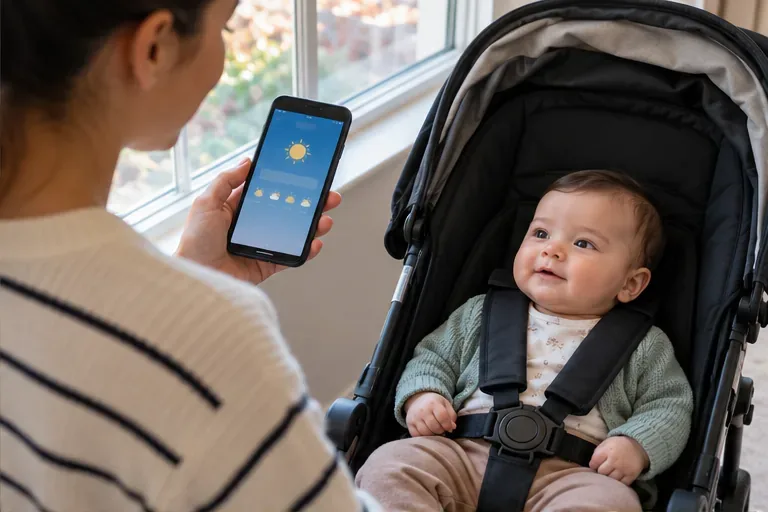
A caregiver checks a room sensor for context; the reading is only one part of deciding what the baby should wear.
Start with the conditions where the baby will sleep: the nursery or bedroom, not the outdoor weather report or the temperature in another room. A small room thermometer is useful if the room tends to heat up, cool down, or change overnight. It can help you notice a pattern, such as a sunny room warming after bedtime. It cannot tell you whether your baby is overheating, and it does not replace checking the baby.
Guidance can differ by country. For example, the UK National Health Service gives a room range of about 16–20°C for babies, while U.S. AAP safe-sleep guidance says to keep the room at a temperature comfortable for an adult and focuses on clothing layers and overheating signs. These are not numbers to average into a new target. Follow local pediatric guidance, especially if your baby was premature or has a medical condition. If you use a thermometer, note the reading when you notice a clothing issue, then use it to understand your room’s pattern rather than chasing a single figure.
How do you choose between a sleeper and a sleep sack?
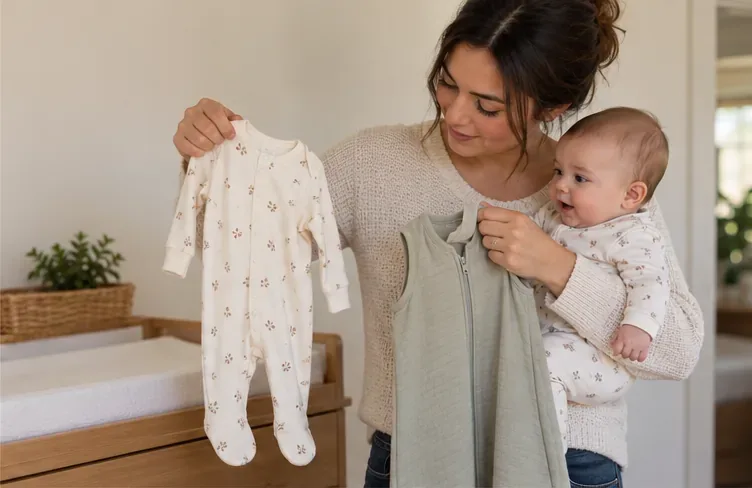
A caregiver compares a light one-piece sleeper with a wearable layer before dressing the baby.
For many healthy, full-term babies, a simple one-piece sleeper is an easy base. If the room feels cooler, a properly sized wearable blanket or sleep sack can add warmth without putting a loose blanket in the sleep space. In a warmer room, a lighter one-piece may be enough. The AAP’s rule of thumb—no more than one layer beyond what a comfortable adult is wearing—is a starting point, not a reason to keep adding garments whenever a baby’s hands feel cool.
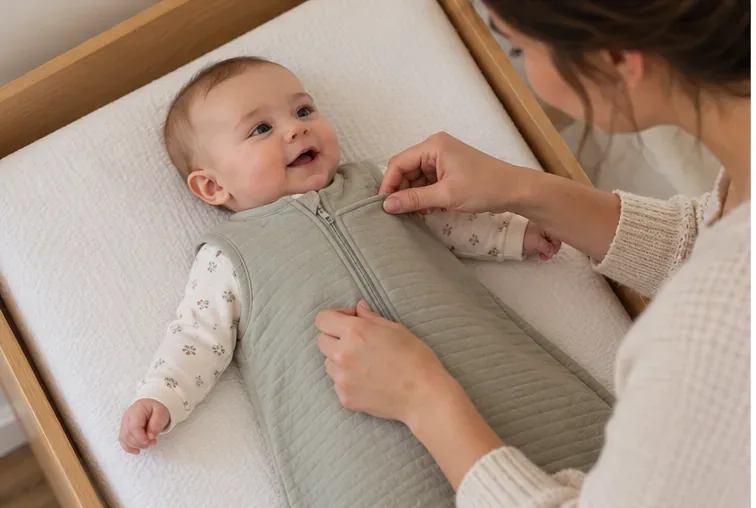
The choice has practical trade-offs. A footed sleeper is simple and stays in place, but may feel too warm if it is thick or fleece-lined in a warm room. A sleep sack adds a removable layer and replaces loose bedding, but it must fit the baby’s size and should not cover the head. Check the product’s current label and instructions; fabric thickness and product designs vary, so a chart for one sleep sack cannot automatically be applied to another.
If the room feels comfortable to you: choose light sleepwear and, if needed, one wearable layer. Start with the least bulky option that keeps the baby comfortably warm.
If the room feels warm: use a single light layer as a reasonable starting point, keep the head uncovered, and check for sweating or a hot chest.
If the room feels cool: add a wearable sleep sack or another light clothing layer rather than a loose blanket. Check again after the room has settled at its nighttime conditions.
If your baby was born early, has a low birth weight, or has a health condition: ask the baby’s clinician for individualized advice; a general layering rule may not fit every infant.
Choose the simplest option you can adjust safely. Keep a light sleeper and a wearable layer available, then change one layer at a time as the room or the baby’s comfort changes.
How can you tell whether your baby is too warm?
A wearable sleep sack adds a removable layer while the baby is awake and supervised during dressing.
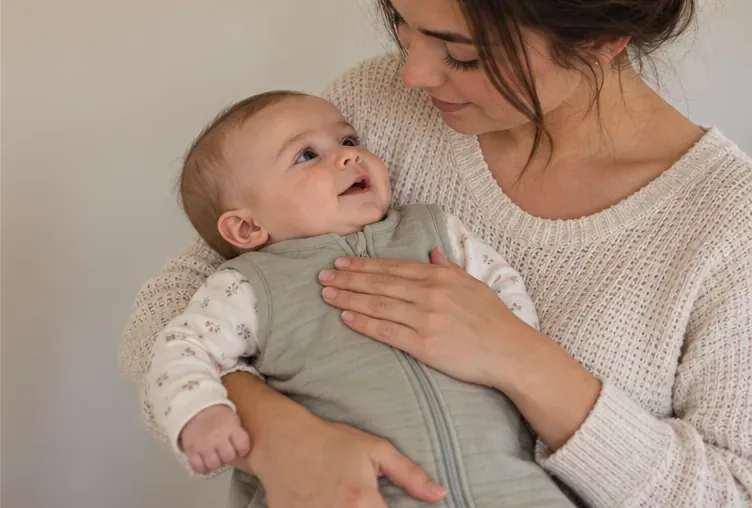
Feel the baby’s chest or upper back, not just the hands or feet. Cool hands and feet can be normal and do not, on their own, show that the baby needs more clothing. Look for sweating, damp hair, flushed skin, or a chest that feels hot. These are reasons to remove a layer and reassess. Do not wait for a baby to become visibly distressed before making an adjustment.
When checking, place your hand gently on the chest or back over the clothing. If the skin feels comfortably warm and dry, leave the outfit as it is. If it feels hot or damp, take off one layer; if it feels cool at the chest, consider adding one light layer and check again. Repeat the same quick check when you change rooms, turn heating or cooling on, or notice a warm or cold spell. If your baby seems ill, unusually sleepy, difficult to wake, or has a measured fever, contact a healthcare professional rather than treating the problem as a clothing issue. Touch is a comfort check, not a reliable way to measure fever.
The NIH Safe to Sleep program identifies sweating, flushed or hot skin, and a hot-feeling chest as signs that a baby may be overheated. The AAP also advises against indoor hats except during the first hours after birth or in a neonatal intensive care unit. Take a hat off indoors unless your baby’s care team has given you a specific instruction. After checking the chest, act on what you find: remove a layer if the baby is hot, and avoid adding bedding.
Which sleepwear choices create avoidable risks?
A gentle chest check helps a caregiver look for warmth or dampness without relying on cooler hands and feet.
Keep the sleep space free of loose blankets, quilts, pillows, stuffed toys, and other soft items. Use a firm, flat, level, approved crib, bassinet, or play yard with only a fitted sheet, and place the baby on their back for every sleep. Warmth should come from the baby’s clothing, not added bedding. If the baby is cold, change the clothing layer rather than tucking a blanket around the baby.
Do not use weighted sleep sacks, weighted swaddles, or weighted blankets. The AAP, NIH, and U.S. Consumer Product Safety Commission advise against weighted products for infant sleep. Also avoid clothing with loose strings, ties, or accessories that could wrap around the neck. For a sleep sack, follow the size and use instructions and make sure the opening cannot ride up over the baby’s face.
Swaddling is optional and does not need to be used to keep a baby warm. If you swaddle, stop as soon as the baby shows signs of trying to roll. A wearable blanket that compresses the arms or body should also stop when rolling signs appear; a non-swaddling sleep sack that allows free movement can still be used if it fits and is used according to its instructions. When changing away from a swaddle, choose a light sleeper or an arms-free wearable blanket, then check warmth in the usual way.
What is a simple bedtime decision routine?
Check the room where the baby will sleep. Use a thermometer if it helps you track changes, but do not treat one number as a universal safe cutoff.
Dress the baby in a light base layer. As a starting point, avoid more than one layer beyond what a comfortable adult would wear.
Add a properly fitted, unweighted wearable blanket if the room is cool or if the baby needs one extra layer. Leave the head uncovered.
Feel the chest or upper back and look for sweat, damp hair, flushed skin, or unusual heat. Remove a layer if the baby is hot or damp; adjust one layer at a time.
Place the baby on their back in a clear, firm, flat sleep space. Do not add a loose blanket to compensate for a cool room.
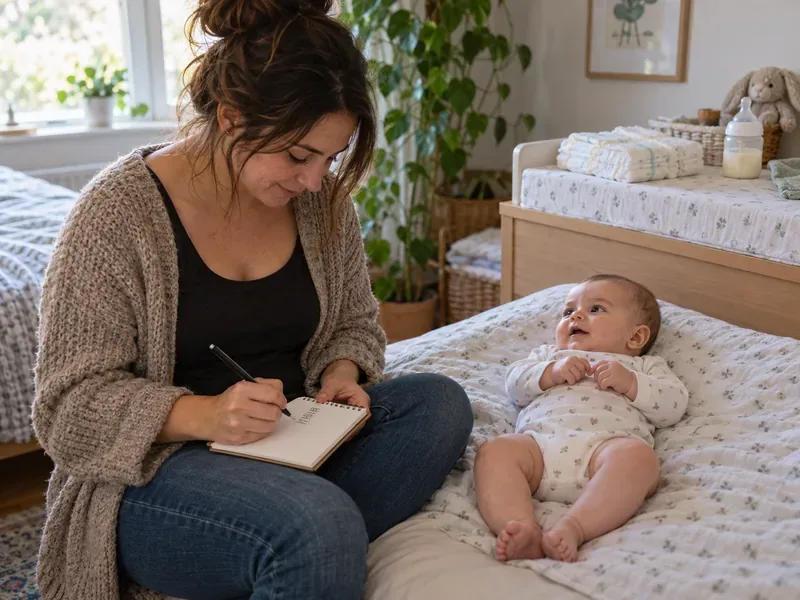
Keep a note of what the baby wore, the room conditions, and whether the chest felt hot, cool, or comfortable. That record can help you spot a repeatable pattern and talk with your pediatrician if you remain unsure. It is more useful than repeatedly changing several layers based on a temperature guess.
When should you ask your baby’s clinician?
Ask for individualized guidance if your baby was born prematurely, has a low birth weight, has a condition affecting temperature regulation, or seems persistently too hot or too cold despite reasonable clothing changes. Seek medical advice for a fever or if the baby is hard to wake, feeding poorly, breathing abnormally, or appears unwell. For young infants, fever can require prompt assessment; use a thermometer and follow the clinician’s instructions rather than relying on how the skin feels.
Sources and currency: The AAP safe-sleep advice cited here was last updated April 30, 2026. Other references include NIH Safe to Sleep and current NHS guidance. Recommendations may differ by country and by a baby’s health history; follow your pediatrician’s advice for individual concerns.