Home
» Babies
»
Baby’s First Fall Outing: Layers, Naps, and Weather Checks
Baby’s First Fall Outing: Layers, Naps, and Weather Checks
A baby’s first fall outing can feel harder to plan than the destination itself. The morning may be chilly, the afternoon sunny, and the stroller may turn a short walk into an unexpected nap. A practical plan keeps three things flexible: removable clothing, the baby’s usual sleep and feeding rhythm, and a weather-based way to shorten or change the outing.
There is no single temperature or outfit that fits every infant, climate, or health situation. The suggestions below are general U.S. planning guidance. Follow your pediatrician’s advice for a newborn, premature infant, or baby with a medical condition, and check the forecast for the exact place and time you expect to be outside.
Dress in light, adjustable layers
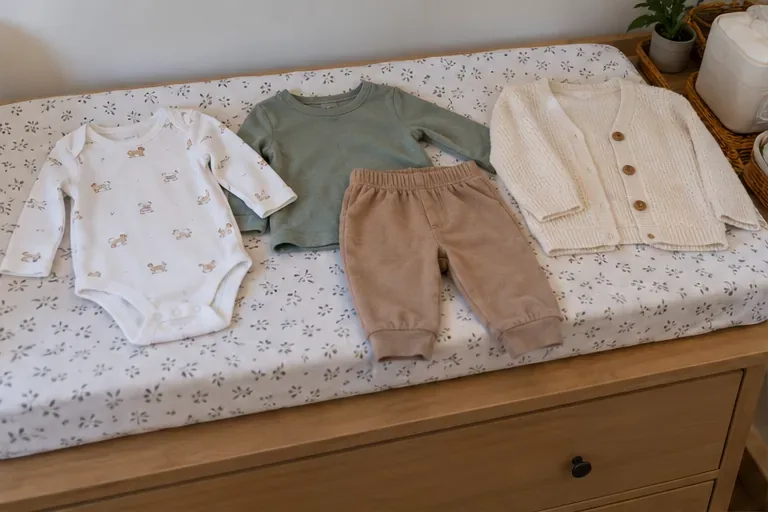
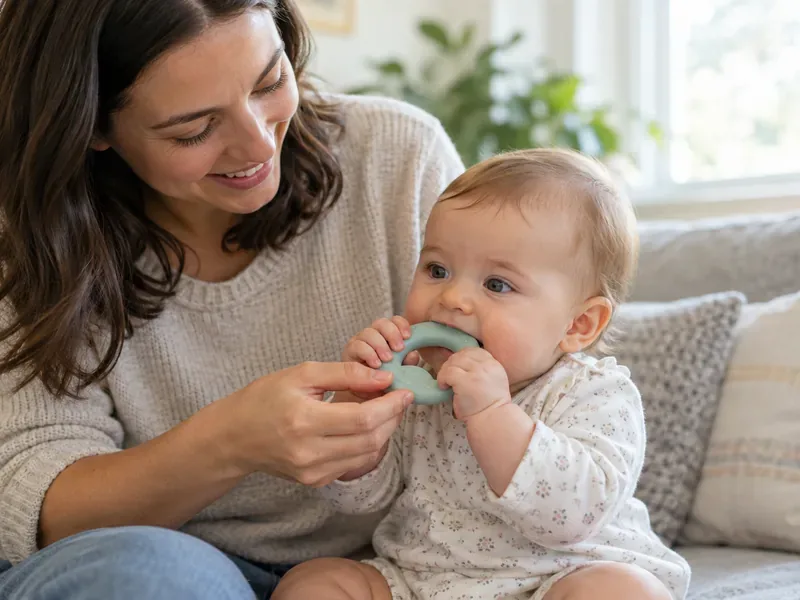
A useful starting point from the American Academy of Pediatrics (AAP) is to dress a baby in about one more layer than an adult would wear in the same conditions. Think in pieces you can add or remove: a base layer such as a cotton bodysuit, a long-sleeved top and pants, then a light cardigan or jacket for a cool start. A thin hat may help outdoors when it is cool, but take it off indoors; babies can overheat under too many layers.
Choose a simple base outfit and one removable layer so you can adjust as the day warms up.
Use the AAP’s layer rule as a starting point, then check the baby during the outing. Feel the chest or back rather than judging by cool hands alone. If the chest feels hot, the baby is sweating, or the skin looks flushed, move to a cooler place and remove a layer. If clothing becomes damp from rain, drool, or sweat, change it when possible. The AAP’s guide to dressing a baby and its safe-sleep guidance both emphasize avoiding overheating.
If you are driving, keep bulky clothing out of the harness
Thick coats and puffy snowsuits can compress in a crash and leave the car-seat harness too loose. Put the baby in thin, snug layers for the ride, buckle the harness according to the seat manual, and add a blanket or coat over the secured harness if needed. Remove extra coverings once the car warms up. Follow the instructions for your specific seat and vehicle; the National Highway Traffic Safety Administration’s rear-facing infant-seat guidance warns that bulky clothing or blankets can interfere with a snug fit.
Check the weather for the outing window, not just the daily high
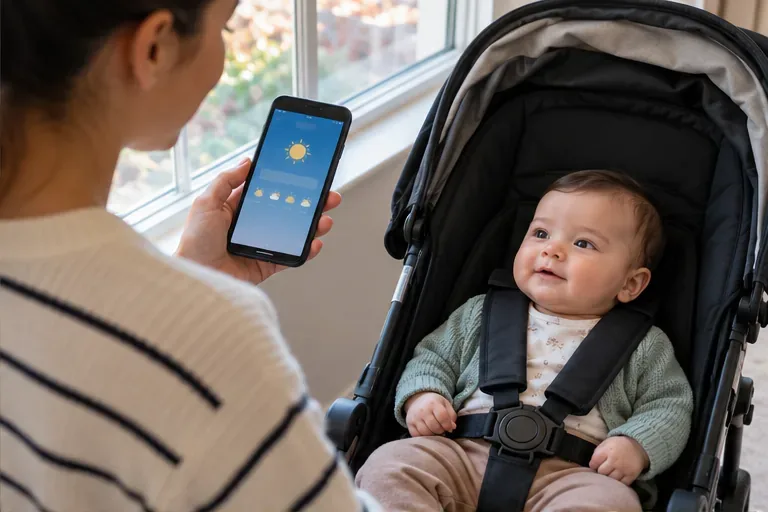
Autumn weather can shift during a walk. Before you leave, check conditions for the destination and the hours you will be there: temperature, wind, rain, and any weather alerts. A sunny high for the day does not tell you whether the stroller path will be windy at the time of your baby’s nap. Look at the expected conditions for both the trip out and the return home.
A location-specific hourly forecast helps you choose layers and decide whether to go, shorten the walk, or stay indoors.
The National Weather Service offers an hourly weather graph for local forecasts. Forecasts are estimates and can change, so check again shortly before leaving, especially when rain or strong wind is possible. If an alert is active, thunder is nearby, or the route has no sheltered option, postpone the walk or choose an indoor plan. For a mild day, shade and a light layer may be enough; for a cold, windy, or wet day, a short trip close to home may be more comfortable than a long park visit.
Weather check
What it changes
Practical response
Temperature by hour
How many removable layers to bring
Pack one light layer beyond the outfit the baby wears at the start.
Wind and exposed areas
How quickly a stroller ride may feel uncomfortable
Choose a sheltered route and keep the first outing short.
Rain or storm alerts
Whether the route is safe and manageable
Switch to a nearby indoor option or reschedule.
Conditions on the return trip
Whether the baby may need a warmer or drier layer later
Keep a spare outfit and layer accessible in the diaper bag.
Plan around the baby’s usual nap and feeding rhythm
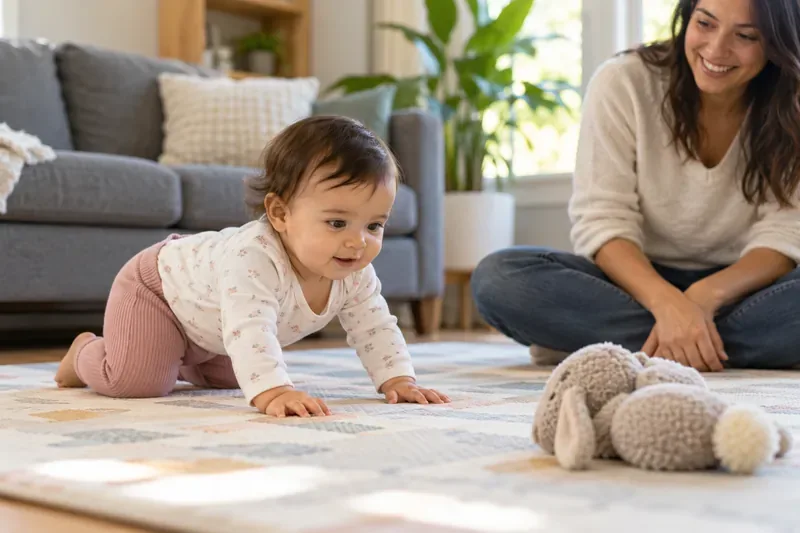
For a first outing, familiar timing is usually easier than trying to create a new schedule. If it works for your family, leave after a feed and diaper change, and choose a window that does not collide with the baby’s usual nap. That gives you time to walk, pause, and return before everyone is overtired. Keep the first trip modest; a nearby loop or a brief visit with a clear exit is enough to learn how your baby handles the stroller, the temperature, and the change in routine.
Bring the items you normally use for feeding and a diaper change, plus a clean spare outfit. Build in a quiet place to pause. If the baby becomes fussy, hungry, unusually sleepy, or uncomfortable, it is fine to head home early. A nap missed or shifted by a short outing does not need to be “made up” by stretching the day; return to the usual routine as the baby’s cues allow.
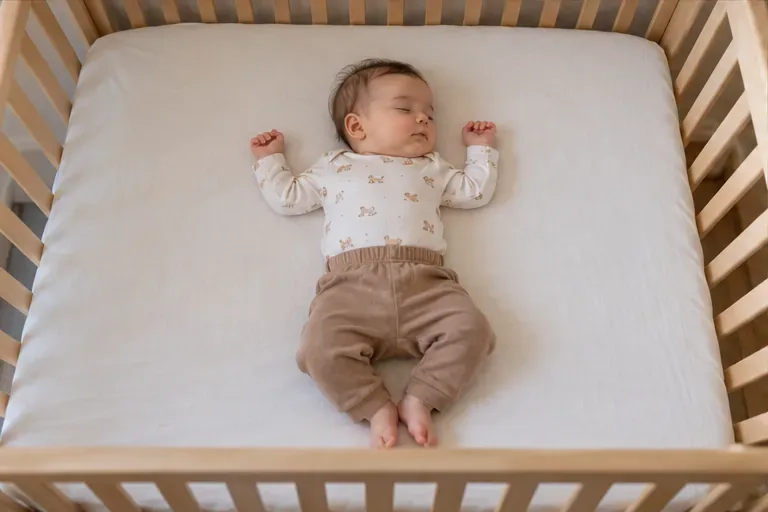
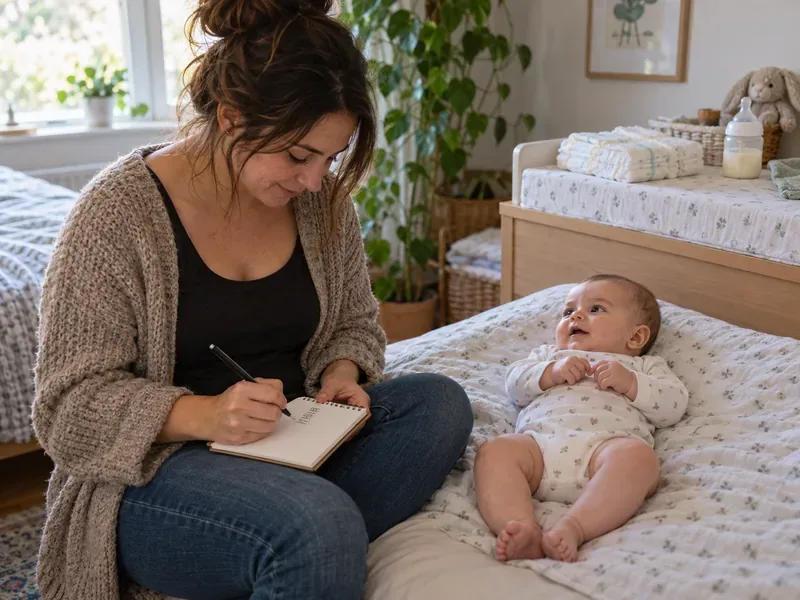
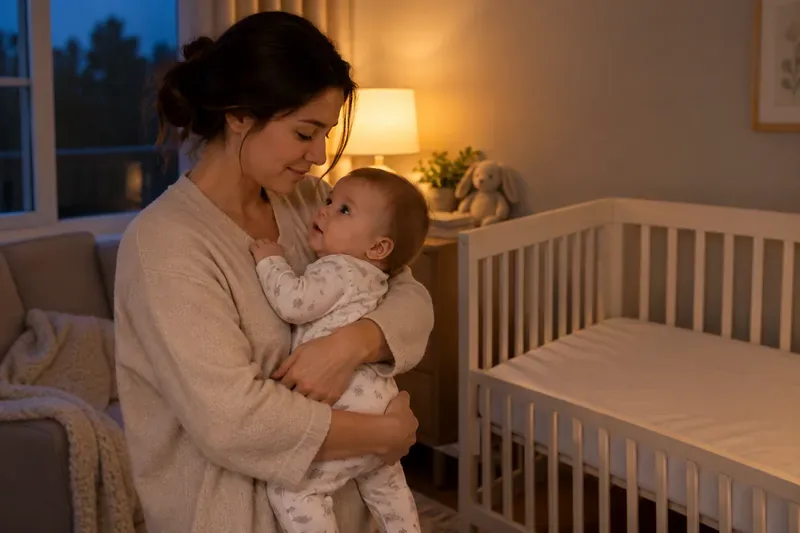
A familiar, safe sleep space at home is a useful part of the nap plan before and after an outing.
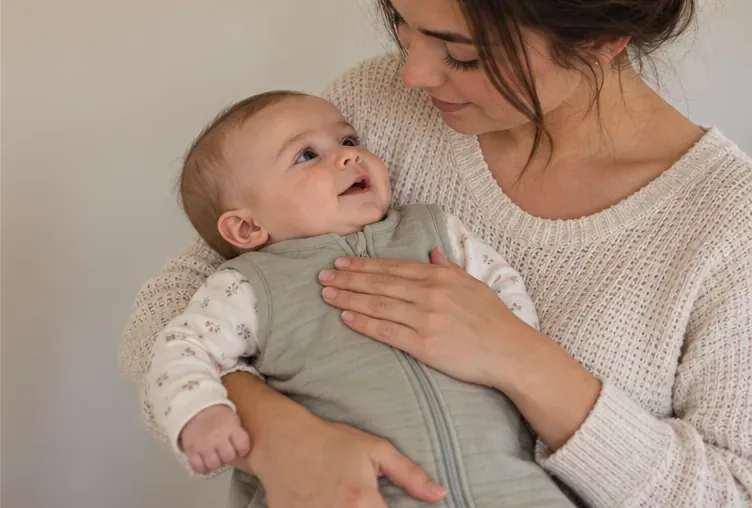
A stroller, car seat, swing, or carrier is not a replacement for a safe sleep space. The AAP’s current guidance says that if a baby falls asleep in a stroller or car seat, move them to a firm, flat, non-inclined sleep surface on their back as soon as possible. Use a crib, bassinet, or play yard that meets current safety standards, with no loose blankets, pillows, or toys. Read the AAP’s safe-sleep recommendations for the full details.
Pack for comfort without bringing the whole nursery
A small, prepared bag makes it easier to adjust the plan. Before leaving, check for:
Diapers, wipes, a changing pad, and one complete spare outfit.
Usual feeding supplies and a burp cloth, packed in a way that fits your feeding routine.
A light removable layer and a weather-appropriate hat for outdoor use.
Water and a snack for the caregiver; follow your baby’s usual feeding guidance.
A stroller rain cover only if it is designed for that stroller, fits correctly, and can be used as directed. Do not improvise a cover that blocks airflow or hides the baby from view.
Your phone, local forecast, and a simple route back to the car or home.
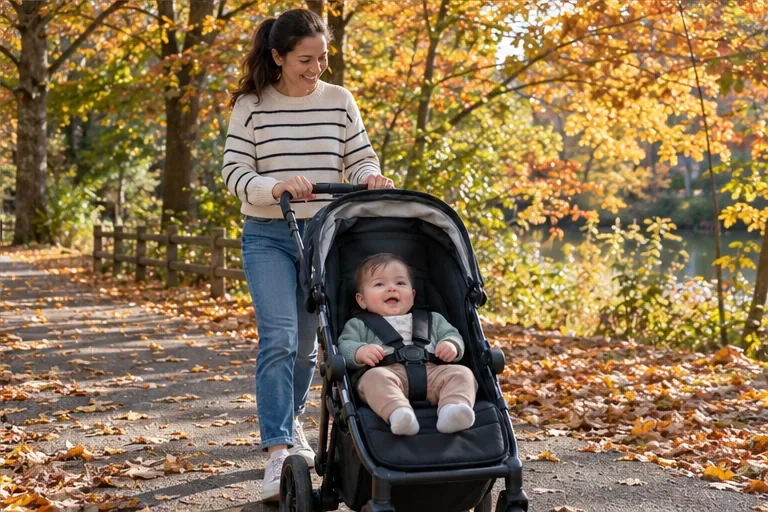
On the walk, keep the baby’s face visible, use the stroller harness, and make it easy to turn back if the weather or mood changes.
A simple first-outing plan
Start with a destination close to home, such as a quiet park path or a short neighborhood walk. Check the local hourly forecast the evening before and again before departure. Dress the baby in a base outfit plus a removable layer, then buckle the baby into the stroller according to its instructions. Keep the planned route short enough that you can return before the next usual feed or nap. Stop in a sheltered place if the baby needs a change or a pause, and head home if the weather turns or the baby seems uncomfortable.
For a car trip, take off bulky outerwear before securing the harness; once buckled, place a blanket over the harness if needed and keep it away from the baby’s face. In the stroller, use only accessories approved by its manufacturer and keep the baby’s airway and face unobstructed. These small checks make the outing more predictable without requiring a detailed schedule.
Use this final go/no-go checklist
Have I checked the forecast for the destination and the full outing window?
Can I add or remove a layer without taking the baby far from shelter?
Is the baby’s car-seat harness snug over thin clothing, if we are driving?
Does the plan fit around a likely feed and nap, with a way to leave early?
Do I have a dry spare outfit, diaper supplies, and the normal feeding items?
Is the baby’s face visible in the stroller, and do I know where the safe sleep space is after we get home?
If those checks are covered, the plan is ready. Success does not mean staying out for a set number of hours; it means the baby remained comfortable, the nap plan stayed safe, and your family could adapt when conditions changed. Guidance reviewed September 28, 2026. Forecasts are location-specific, and babies with special health needs may require individual advice from their clinician.