Home
» Pets
»
Why Your Pet Gets Restless at the Same Time Every Evening
Why Your Pet Gets Restless at the Same Time Every Evening
Your dog begins pacing just before dinner, or your cat tears through the hallway at nearly the same hour every night. The timing can make the behavior seem mysterious, but a repeated evening pattern often has a practical cue: a meal, a walk, a person coming home, less daylight, neighborhood noise, or a burst of energy after a quiet day. Cats are also naturally more active around dawn and dusk. Still, new restlessness can reflect discomfort or illness, so look at what else is changing before treating it as a routine problem.
A recent veterinary development is relevant for older dogs: in February 2026, the American Animal Hospital Association (AAHA) reported the first published guidelines for diagnosing and monitoring canine cognitive dysfunction syndrome. The guidelines describe a veterinary assessment of behavior and health—not a home diagnosis based on pacing. Evening restlessness by itself does not establish cognitive decline, and similar changes can have other medical causes.
Start by finding the pattern, not guessing at the cause
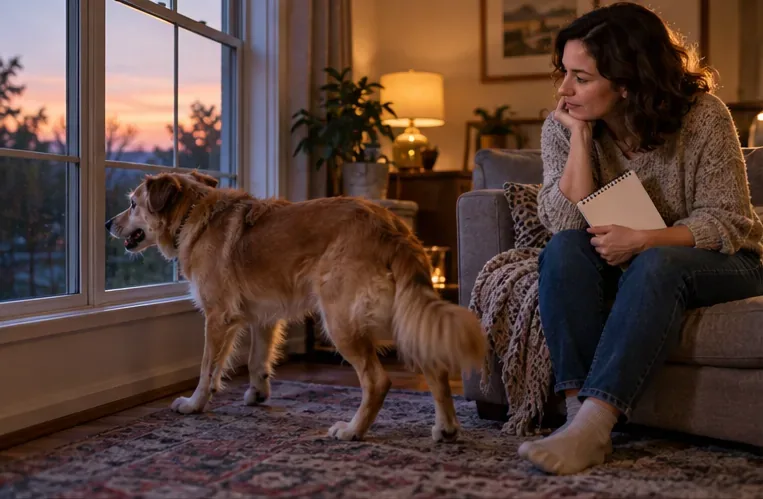
Watching when the pacing begins and what happens around it can reveal a cue, such as sunset, dinner, or a regular household activity.
For several evenings, note the start time, how long the restlessness lasts, and what your pet does: pacing, vocalizing, scratching at a door, following someone, panting, or repeatedly changing places. Also record the last meal, walk or play session, bathroom break, visitors, outdoor sounds, lighting changes, and whether your pet settles afterward. A short video can help a veterinarian understand a behavior that may not happen during an appointment.
Look for context. A dog who waits by the door before a usual evening walk may have learned the household schedule. A cat who becomes playful as daylight fades may be showing a normal activity rhythm. A pet reacting to a delivery truck, wildlife, or a neighbor’s routine may be responding to a cue you do not notice. The clock is useful evidence, but it does not identify the cause on its own.
Check basic needs before changing the whole routine
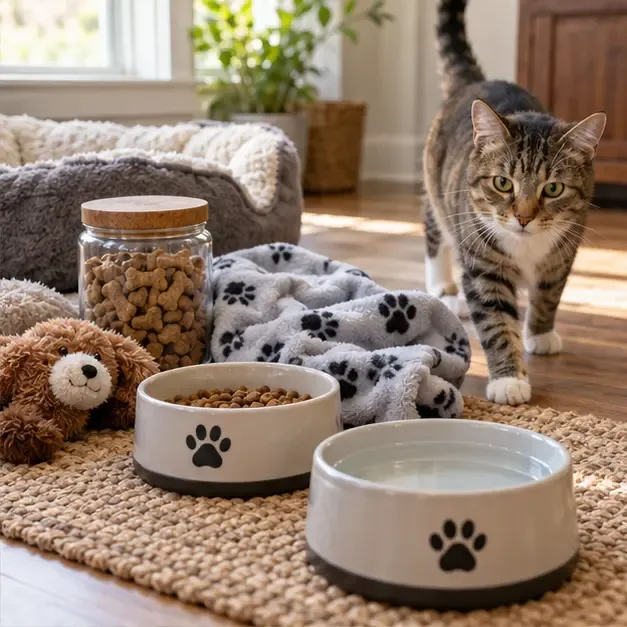
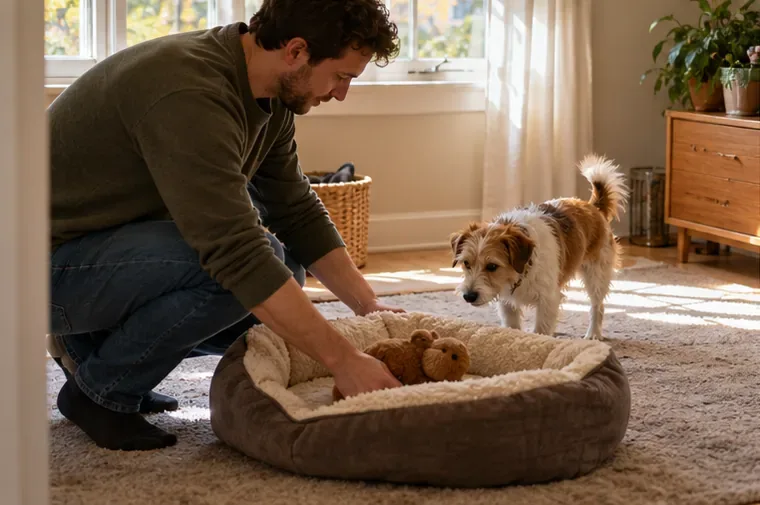
At the usual restless time, check for a simple need: access to fresh water, a comfortable place to rest, a chance to toilet, an appropriately timed meal, or a clean, accessible litter box. A dog may need a final bathroom trip; a cat may be waiting for play, food, or access to a preferred resting spot. Avoid adding extra food automatically—first consider the pet’s normal feeding plan and body condition.
Notice whether the home changes in the evening. A dark window can become reflective, outdoor sounds may be louder when the house is quiet, or a heating or cooling system may switch on. Try closing curtains or moving the resting place away from a window, reducing sudden noise, and keeping the evening sequence predictable. Make one change at a time so you can tell whether the pattern shifts.
Match activity to the animal and the time of day
A relaxed sniffing walk can add movement and exploration to a dog’s evening routine when it is safe and appropriate for that dog.
If a healthy dog has been quiet for most of the day, a suitable walk or sniffing activity before the usual restless period may help meet its need for movement and exploration. Adjust length and intensity for age, breed, health, weather, and the dog’s normal exercise plan. Do not suddenly add strenuous exercise, particularly for a senior pet or one with breathing, joint, or heart problems; ask the veterinarian what is appropriate.
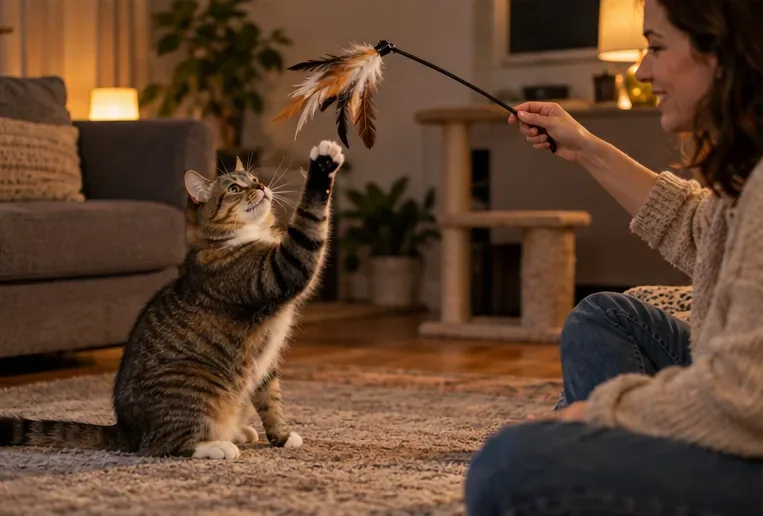
Supervised wand-toy play gives a cat a safe outlet for stalking and pouncing behavior before the household winds down.
For a cat, try a short interactive play session using a safe toy, or offer a food puzzle if it fits the cat’s diet and abilities. Cornell’s Feline Health Center notes that toys can encourage exercise and cognitive enrichment, while advising owners to avoid small pieces or loose strings that could be swallowed. Put wand toys away after supervised play. Some cats will still be active at dusk; enrichment can channel activity, but it cannot erase a natural rhythm.
Finish with a calm, consistent wind-down: lower household noise, offer a familiar resting area, and avoid rewarding demand barking or pawing with an exciting new activity every night. Respond to actual needs, but try to keep attention and activity predictable rather than making the restless moment the most stimulating part of the evening.
When should you contact a veterinarian?
A veterinary exam can help assess new evening restlessness alongside changes in sleep, mobility, or behavior.
Arrange a veterinary appointment if the behavior is new, steadily worsening, disrupting sleep, or paired with changes in appetite, thirst, urination, mobility, social behavior, or house-training. Restlessness can be a sign that a pet cannot get comfortable; pain may also show up as stiffness, reluctance to jump or climb, panting at rest, whining, or repeatedly shifting position. Older pets deserve particular attention when sleep-wake patterns, orientation, or interaction change. Do not assume these signs are simply aging or a behavioral habit.
For senior dogs, the 2026 canine cognitive-dysfunction guidelines give veterinary teams a structured way to consider sleep changes along with disorientation, altered social interaction, house-soiling or memory changes, activity changes, and anxiety. AAHA emphasizes that other medical causes can look similar. Share your notes and video with the veterinarian; do not start supplements or medication based only on an online checklist.
Seek urgent veterinary care for trouble breathing, collapse, sudden severe weakness, or other signs that your pet is acutely unwell. If a cat repeatedly strains in the litter box and produces little or no urine, treat that as an emergency: Cornell identifies urethral obstruction as a condition that needs immediate veterinary attention.
Check whether your changes are helping
After making a small routine adjustment, compare the next several evenings with your notes. Is the restless period shorter or less intense? Does your pet settle after a bathroom break, a suitable walk, supervised play, or reduced window activity? Is sleep, appetite, mobility, and toileting otherwise normal? A useful improvement means your pet can relax more comfortably without new symptoms—not simply that the clock-time behavior has been suppressed.
If there is no clear improvement, if the behavior spreads to other times, or if any health signs appear, stop adding more behavior changes and contact your veterinarian. A predictable evening routine can address cues and unmet needs, but it cannot diagnose pain, urinary disease, anxiety, or cognitive changes. The right next step depends on the pet’s species, age, medical history, and the full pattern you observe.