Home
» Pets
»
Pets and Halloween Visitors: Set Up a Quiet Room Before the Doorbell Rings
Pets and Halloween Visitors: Set Up a Quiet Room Before the Doorbell Rings
On Halloween, the doorbell may ring again before the previous visitor has left. A dog may rush toward the threshold; a cat may slip past costumes and bags. A quiet room prepared earlier in the day gives many pets a place away from the traffic. The ASPCA’s Halloween safety guidance recommends a separate, comfortable room away from the front door for all but the most social dogs and cats during peak trick-or-treating hours. The advice is about the pet’s comfort as well as escape prevention, and it remains more useful than a last-minute scramble when the first bell rings.
There is no single room layout that suits every pet. A cat that normally hides under a bed, a dog that settles with a familiar chew, and an animal that becomes distressed when separated from its person may need different arrangements. Start with what your own pet already finds reassuring; if confinement causes intense distress, ask a veterinarian about an individualized plan before Halloween rather than improvising medication or forcing a new setup that night.
1. Pick the room before the evening gets busy
Choose a space inside the home, away from the front door and the route guests will use. A familiar bedroom can be better than an unfamiliar storage area. Check that windows and screens are secure, the door closes reliably, and the pet will not be exposed to dangling cords, lit candles, costume pieces, candy, or accessible medications. Make sure it has suitable ventilation and a comfortable temperature. If several animals share a home, consider whether they usually rest together peacefully or need separate spaces.
Walk the route from the room to the front entrance as if you were bringing in a tray of candy while the bell rings. A room that visitors pass constantly may not provide much separation. The aim is a quiet, usable place with a dependable barrier, not a punishment space. Cats Protection specifically suggests a peaceful room and a place to hide when a cat may be unsettled by Halloween visitors; see its Halloween advice for cats.
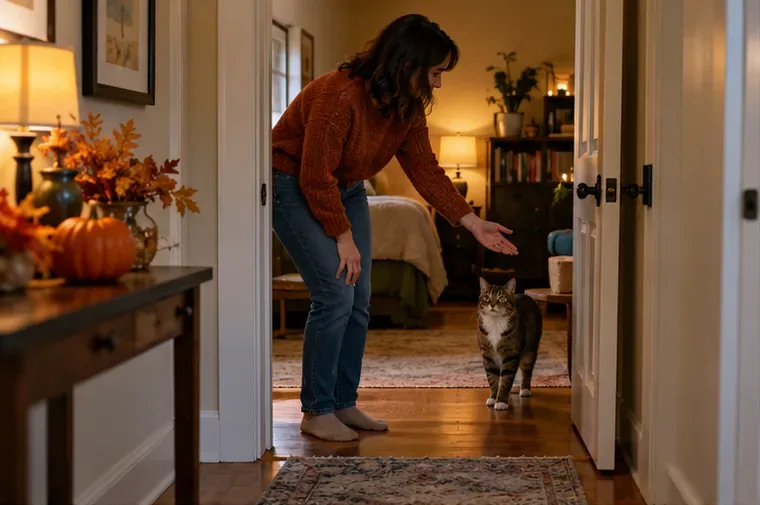
Choose a familiar interior room before visitors begin arriving at the front door.
2. Put the pet’s essentials inside
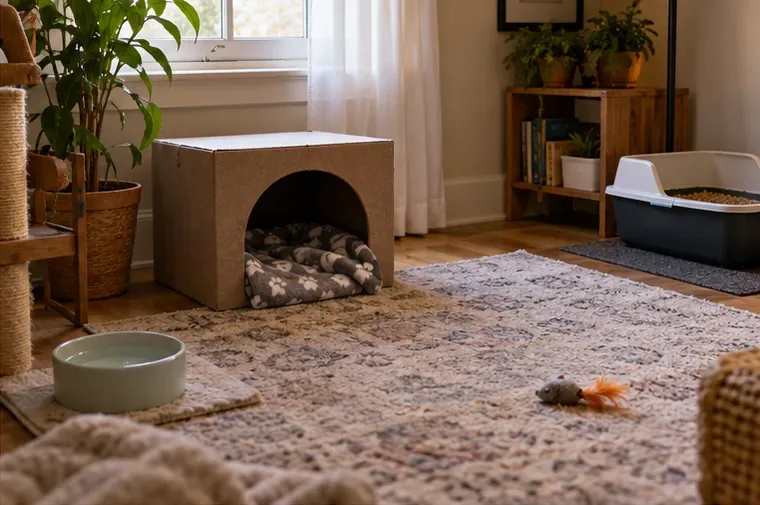
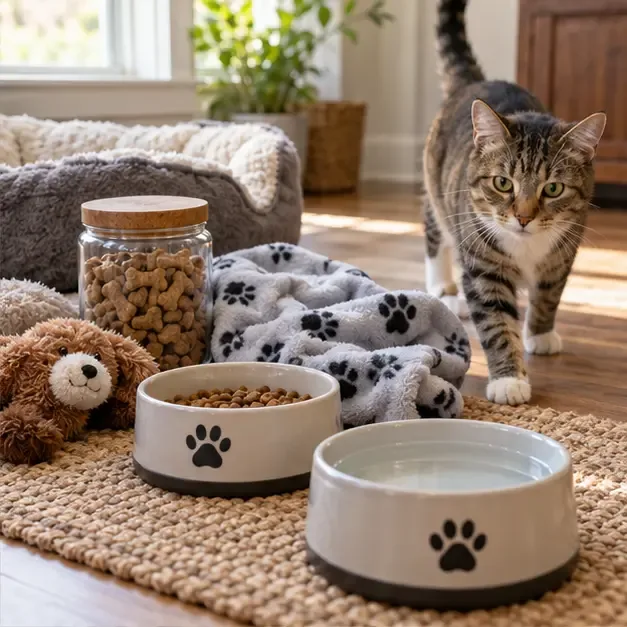
Use familiar bedding rather than filling the room with novel decorations. Add fresh water and an appropriate, known toy or activity. For a cat, provide a hiding place such as an open cardboard box, plus a clean litter tray placed away from food and water. Cats Protection explains that hiding is normal and recommends letting a cat choose a safe hiding place; its guidance on cats hiding also lists water, food, and a litter tray among the essentials for a quiet room.
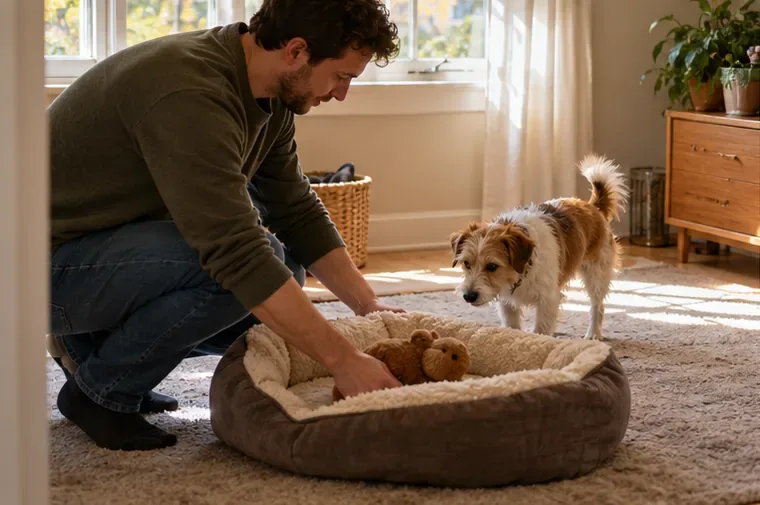
For a dog, a favorite bed and a familiar food puzzle or suitable chew may help occupy the time, provided it is appropriate for that dog and can be used safely under the level of supervision available. Offer a toilet break before the busiest period and plan another when needed. Do not use a crate as an emergency solution if the dog is not comfortable in one. The ASPCA suggests familiar toys or food puzzles in a separate room during Halloween activity; that is an option, not a guarantee that every animal will relax.
A cat’s retreat includes a hiding place, water, and access to a litter tray away from the busiest entrance.
3. Introduce the room while the house is still calm
Set the room up early enough for the pet to explore it without a crowd at the front door. Invite the animal in using its normal routine, offer a familiar activity, and let it settle. Do not drag a frightened cat out of a hiding place to show it a better one. If a dog repeatedly scratches, barks, or panics when the door closes, simply adding more toys may not address the problem. Stay aware of how the pet responds and change the plan before peak visitors.
Some pets do well with a caregiver sitting quietly nearby for a while; others prefer to be left undisturbed and checked at intervals. If you expect severe fear, a history of escape attempts, or aggression toward visitors, contact your veterinarian ahead of time. The ASPCA’s behavioral help guidance describes when professional support may be needed. Ask about any treatment well in advance, and use medication only under veterinary direction.
Let a dog inspect a familiar bed and enrichment item before the Halloween rush begins.
4. Manage the door and visitors, not just the pet
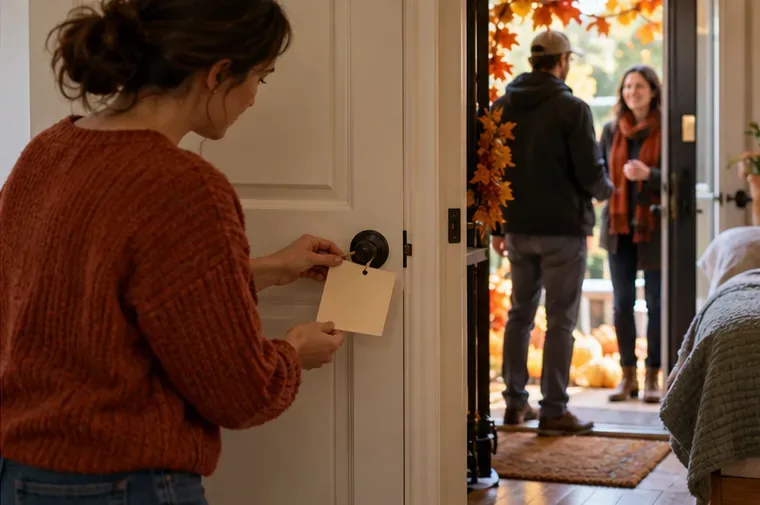
Place the pet in the prepared space before trick-or-treating starts, then close the interior door. Tell everyone in the household which room is reserved for the animal and ask guests not to enter or let the pet out. An adult can answer the front door while another knows when to check the pet. If you host a party, use a plain door reminder that visitors can understand; keep it free of the pet’s personal information. Be especially careful when bringing in deliveries or when children move between rooms.
A closed room is a management tool, not a reason to forget the animal. Check discreetly for water, toileting needs, and signs of distress without repeatedly exposing the pet to the noisy hallway. Avoid encouraging costumed visitors to greet the pet through the doorway. ASPCA notes that unfamiliar costumes and a stream of visitors can frighten pets, and recommends keeping candy out of reach because chocolate and sugar-free candy containing xylitol pose hazards. Store the treats securely outside the pet’s room, rather than on a reachable shelf inside it.
Agree on who answers visitors and keep the pet’s room closed to guests during the busiest period.
What if the pet is unusually social?
The ASPCA’s advice allows that the most social dogs and cats may be different. Even a pet that welcomes ordinary visitors can react differently to repeated ringing, masks, excited voices, or an open door. If you decide the pet can join part of the evening, provide a route back to the quiet space, supervise contact, and keep a second barrier between the animal and the street. Do not force interaction or treat a previous calm Halloween as proof that this one will be the same.
Check the pet’s identification before the evening. The ASPCA recommends proper ID because animals can bolt amid unusual traffic, and the American Veterinary Medical Association’s microchipping FAQ explains the role of a chip in reuniting lost pets. A microchip complements, rather than physically prevents, an escape. Verify that your contact details with the chip registry and on any tag are current.
After the last visitors leave
Let the noise subside, put candy and costume accessories away, and open the room when the household is calm. Allow the pet to come out at its own pace, then resume its ordinary walk, meal, or bedtime routine. If a cat remains hidden for a while, respect its choice and confirm it still has access to water and its litter tray. If a dog or cat shows persistent distress, injury, or possible ingestion of candy or another hazard, contact a veterinarian promptly. The ASPCA also lists its U.S. Animal Poison Control Center at 888-426-4435 for suspected toxic exposures; a consultation fee may apply.
Before the doorbell rings, the useful final check is simple: a familiar room is ready, the pet’s needs are inside, the entrance and hazards are controlled, and everyone knows who is responsible for the pet. That arrangement lets visitors enjoy the evening while giving the animal a quiet choice away from the commotion.