Home
» Pets
»
What Should You Pack for a Pet Sitter Beyond Food and Medicine?
What Should You Pack for a Pet Sitter Beyond Food and Medicine?
When a pet sitter arrives, the food and medicine may be ready, but small missing details can still make care stressful: the sitter cannot find the leash, does not know which door sticks, or is unsure whom to call if your pet acts differently. A useful handoff covers the things that help someone keep your pet safe, comfortable, and on their normal routine.
Pack or set aside a clearly labeled sitter kit, then leave a short written guide where it is easy to find. The best list depends on whether the sitter is staying in your home, making visits, or taking your pet to theirs. Confirm the plan together before you leave.
1. Put contact and emergency information where it is easy to find
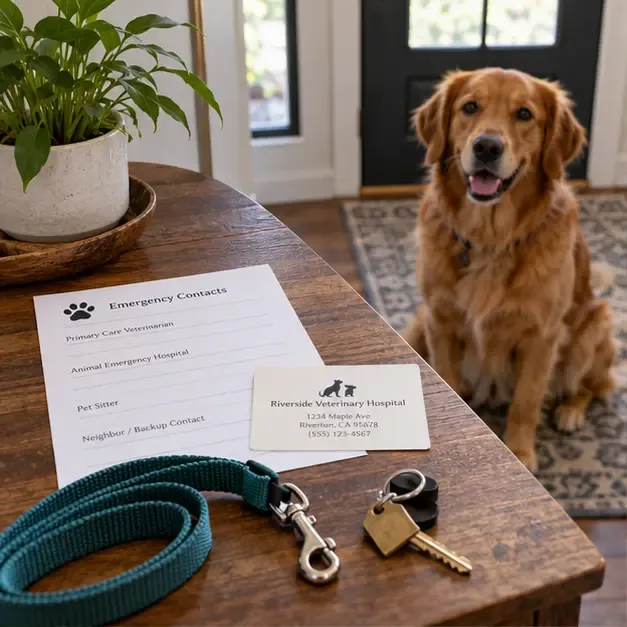
A printed contact sheet, veterinary details, leash, and key give a sitter the essentials for the handoff.
Do not rely on the sitter having to search old text messages in a stressful moment. Print one page with your mobile number, travel dates and time zone, and the best way to reach you. Add a backup person who knows your pet and can make decisions if you are unreachable. Include your regular veterinarian and the nearest emergency veterinary hospital, with current phone numbers and addresses. The ASPCA advises sharing an itinerary, emergency contacts, pet details, and veterinary information with a sitter.
Write your pet’s name, species, age, approximate weight, identifying features, microchip number if available, and any relevant health or behavior notes. A recent photo can help identify a pet if they slip out. Confirm the microchip registry contact details are current; a chip is useful only when its registration information can connect a finder to you.
Make the decision plan explicit: whom to call first, whether the sitter may transport your pet, which clinic to use, who can authorize care, and how you want costs handled. Call your veterinary clinic before departure to ask what authorization or payment arrangements it requires. Do not assume a note alone will satisfy every clinic’s policy. Put any agreed arrangement in writing and share it with the sitter.
Pack: printed emergency contacts, veterinary records relevant to the stay, a recent pet photo, and a backup key or access method. Keep personal details secure; give house access information directly to the sitter instead of leaving it exposed in a bag.
2. Make the daily routine easy to follow
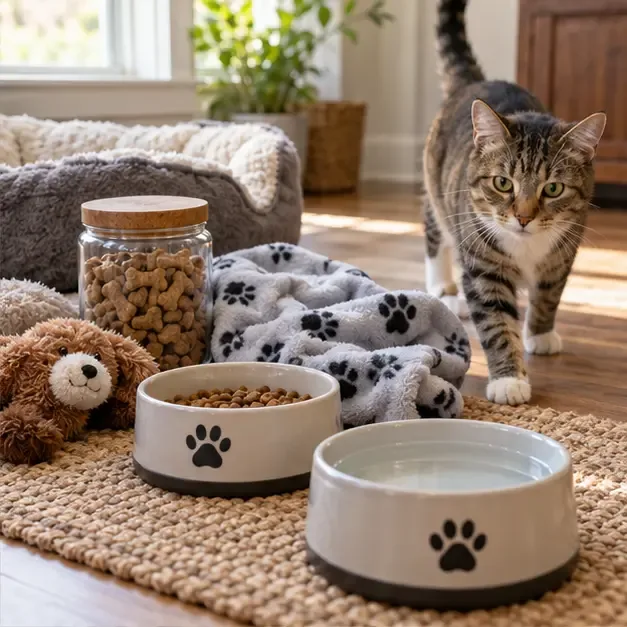
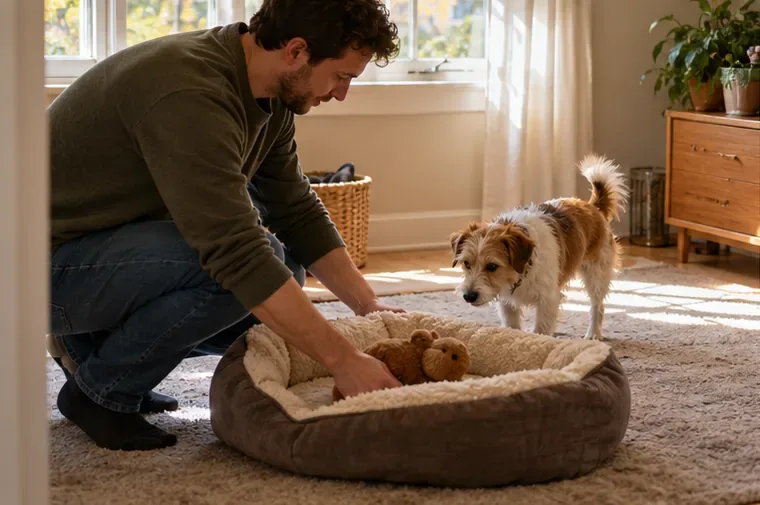
Familiar bowls, bedding, and a favorite toy help make the sitter’s setup recognizable to a pet.
Routine is more than meal time. Write down the usual schedule for walks, litter checks, play, rest, and bedtime. Note where supplies are stored, how much food is served, and which treats are allowed. If your pet has a particular hiding place or signals that they need to go outside, explain what the sitter should look for. Keep directions specific: “clip the leash to the front-clip ring before opening the door” is clearer than “be careful on walks.”
Set aside familiar, safe items such as the pet’s usual bowls, bed or blanket, and a favorite toy. A worn blanket may smell familiar; choose items that are clean enough for the setting but do not introduce a new object your pet might chew or swallow. Tell the sitter which toys need supervision and which treats are off limits. If your pet is anxious around visitors, children, other animals, loud noises, or handling, describe the trigger and the distance or routine that helps keep everyone safe.
For a dog, include a properly fitting harness or collar, leash, waste bags, and any permitted walking gear. For a cat, set out the litter box, familiar litter, scoop, and a safe carrier that is easy to reach. Small mammals, birds, reptiles, and fish need species-specific equipment and care instructions; ask your veterinarian or an experienced keeper to check any unusual temperature, lighting, feeding, or handling directions rather than improvising.
Pack: labeled bowls, the pet’s familiar bedding, approved toys and treats, leash or harness, carrier, and routine notes. Mark each item by pet if several animals share the home.
3. Prepare cleanup and household supplies
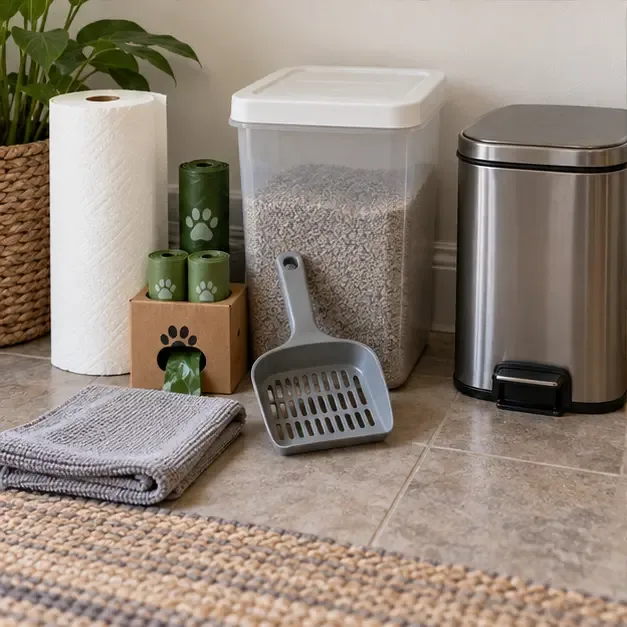
Keeping cleanup tools together lets the sitter handle routine messes without hunting through cabinets.
Accidents, muddy paws, spilled water, and litter tracking are ordinary possibilities. Put the tools for routine cleanup together: paper towels or washable cloths, waste bags, a litter scoop and spare litter, and a small trash container or clear directions for where waste goes. Include pet-safe cleaning instructions for the surfaces in your home. Store cleaners and other household chemicals securely; do not ask the sitter to use a product around your pet unless you have explained how and where it may be used safely.
Give the sitter a quick household map in words: where the pet may go, which rooms or furniture are off limits, how doors, gates, and windows latch, and where to find a flashlight. Explain whether the pet can be left alone and for how long, who may enter the home, and what to do if a smoke alarm, leak, power outage, or severe-weather alert occurs. If the sitter is making visits, say exactly how to secure the pet before opening an exterior door.
Leave enough ordinary consumables for the agreed care period, plus a modest backup if a visit is delayed: waste bags, litter, cleaning cloths, and any paper products the sitter needs. Avoid making the sitter guess whether a nearly empty package is the only supply. Label storage locations instead of moving everything into a travel bag.
Pack or set aside: waste bags, litter supplies where relevant, paper towels or washable cloths, a designated waste bin, and clear directions for the home’s cleaning products and trash.
4. Check safety equipment and special instructions
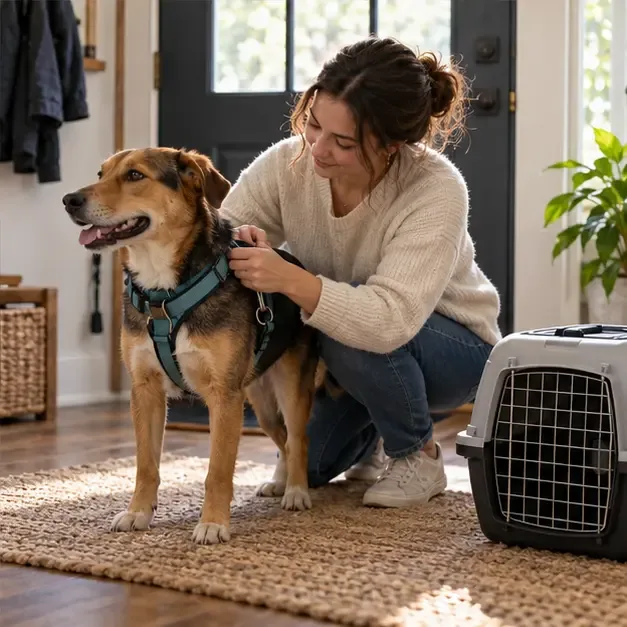
A secure, familiar harness and an accessible carrier make planned outings and urgent transport easier to manage.
Before leaving, test the equipment the sitter will actually use. Check that the leash clips securely, the harness or collar fits, the carrier closes properly, and gates latch. Demonstrate how to use any crate, baby gate, mobility aid, or feeding device. If your pet resists handling, is a door-dasher, or may react to unfamiliar animals, tell the sitter plainly and agree on a safe routine.
Leave written instructions for anything that could change the plan: weather limits for outdoor time, areas to avoid, mobility restrictions already advised by your veterinarian, or signs that mean the sitter should call you or seek veterinary help. Keep emergency numbers visible. The American Veterinary Medical Association’s pet first-aid guidance emphasizes contacting a veterinarian or emergency hospital; first aid is not a replacement for veterinary care. The sitter should not give an unapproved medicine or try a home remedy based on guesswork.
If you are leaving multiple pets, note whether they can be fed, walked, or housed together. Explain any separate bowls, rooms, gates, or litter boxes they need. For a sitter bringing your pet to another home, ask in advance about other animals, secure separation, transport, and where your pet will rest; pack only equipment that fits the agreed arrangement.
What should go in the sitter kit?
Information: your contact details, trip schedule, backup contact, veterinarian and emergency-clinic details, pet photo, and concise routine and safety notes.
Familiar essentials: usual bowls, bed or blanket, approved toys and treats, and species-appropriate leash, harness, carrier, litter, or habitat equipment.
Cleanup: waste bags, litter scoop and spare litter if needed, paper towels or cloths, and a clear waste-disposal plan.
Home access: keys or agreed entry instructions, alarm and gate directions, approved rooms, and a plan for household problems.
Emergency plan: the clinic to call, transport plan, decision-maker, and any arrangements confirmed directly with the veterinary clinic.
Do a final handoff check before you leave
Walk through one normal visit with the sitter. Ask them to show where they will find the leash, carrier, cleaning supplies, and emergency sheet. Have them describe how they will secure the door, follow the feeding and walk routine, and contact you if something seems wrong. Check that phone numbers work, the backup contact has agreed to help, access instructions are understandable, and special rules are written down rather than left to memory.
Finally, ask what still feels unclear. A successful pack is not the biggest one; it is the setup that lets a capable sitter care for your particular pet without guessing. If a detail depends on a health condition or species-specific need, confirm it with your veterinarian before departure.