Home
» Parenting
»
How to Feed a Picky Eater Without Making a Separate Dinner
How to Feed a Picky Eater Without Making a Separate Dinner
A useful update for parents: the CDC’s picky-eating guidance, dated April 14, 2026, says a young child may need 8 to 10 exposures before being willing to try a new food. An American Academy of Pediatrics (AAP) page gives a wider estimate of 15 to 20 tries. These are rough guides, not a required count or a promise that a child will eventually like every food. The practical point is that one refusal rarely settles the question—and you can offer food again without cooking a second dinner.
For most family meals, aim for one shared menu with flexible parts: serve at least one familiar food your child usually accepts, offer the rest of the meal without pressure, and let the child decide whether and how much to eat from what is available. This approach can reduce nightly short-order cooking while preserving a calm, predictable table. It is general guidance for children eating family foods; medical diets, allergies, swallowing problems, and feeding support needs call for an individual plan.
1. Plan one meal that has a familiar option
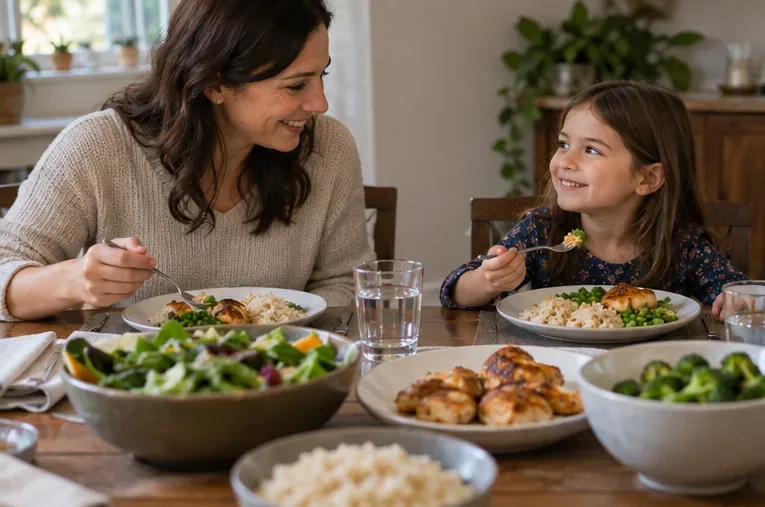
A parent and child share the same dinner, with a familiar food available alongside vegetables and other family dishes.
Before cooking, think of the meal as a set of foods rather than one finished dish. Include something the child often eats, such as rice, bread, pasta, beans, fruit, or a plain part of the family entrée. It can be an ordinary component of dinner; it does not need a special recipe. If nothing on the menu is familiar, add a simple, low-effort item from the family’s usual foods.
For example, if dinner is roasted chicken, potatoes, and green beans, a child who prefers plain starches can have a small serving of potato or bread, chicken if accepted, and a few green beans on the side. The rest of the family eats the same meal. Keep disliked ingredients separate when that makes the meal more workable, but do not prepare an entirely different entrée after refusal.
The goal is not to guarantee that the child eats a certain number of foods at dinner. It is to make a reasonable meal available without turning refusal into a negotiation. The AAP recommends including at least one food a child likes while continuing to offer a balanced family meal.
2. Use components to make one meal flexible
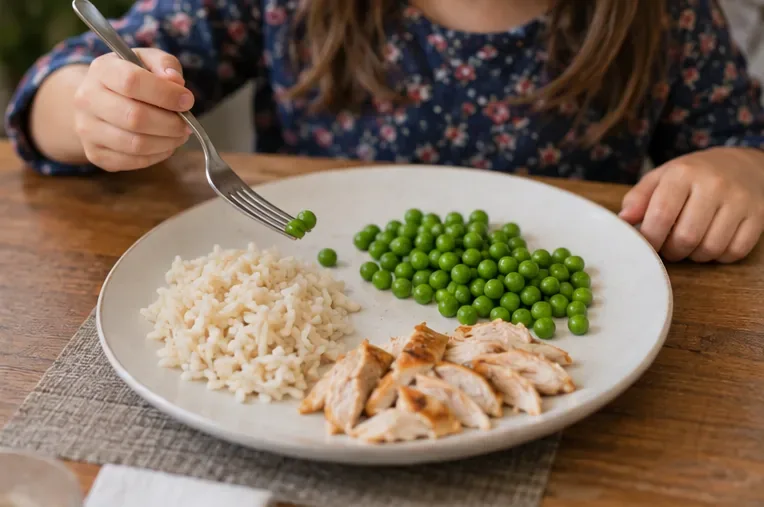
Serving the parts of one meal separately lets a child choose what to eat without requiring a second cooked dish.
Separate components can help children who dislike foods touching, mixed textures, sauces, or strong flavors. It also gives adults an easy way to adapt a meal for different preferences. A taco dinner, for instance, can be served as tortillas, beans, chicken, cheese, and chopped vegetables in bowls. Each person assembles a plate from the same ingredients. Pasta sauce can be served on the side; a stew can be deconstructed into a familiar starch plus the stew components.
Keep choices modest. Two or three options from the meal are often easier to manage than a buffet of substitutes. A child can choose between the vegetables already being served or choose whether to take a small taste-sized amount or leave them on the plate. Choices should shape how the shared food is served, not reopen the menu for a separate meal.
Family dinner
Flexible shared version
Tacos
Tortilla, beans or meat, cheese, and toppings in separate bowls
Pasta
Pasta with sauce and vegetables offered separately or on the side
Soup and bread
Soup in a small bowl, bread, and any familiar soup ingredients served separately
3. Set a calm routine and let the meal end
Predictable meals and snacks can make dinner less of a battle. Choose a routine that fits the household, offer age-appropriate meals and snacks at regular times, and avoid filling the stretch before dinner with constant grazing. This is not a strategy to make a child “hungry enough” to comply; children still need appropriate food and fluids through the day.
At the table, adults decide what foods are offered, when the meal happens, and where it is eaten. The child decides whether to eat and how much from those foods. This division keeps the adult responsible for providing food while allowing the child to notice hunger and fullness. Avoid requiring a “clean plate,” insisting on a bite, using dessert as payment, or criticizing the child’s choices. Pressure can make the meal more stressful and does not reliably create liking.
When dinner is over, end it neutrally. If the child eats little, do not immediately make a preferred replacement or keep offering snacks until bedtime. Continue with the family’s normal next meal or planned snack. Keep that next eating opportunity ordinary and nourishing rather than framing it as a consequence. If you are unsure whether the child is getting enough overall, look at the pattern across days and discuss growth and diet with the pediatrician instead of judging by one dinner.
4. Repeat exposure without making tasting a test
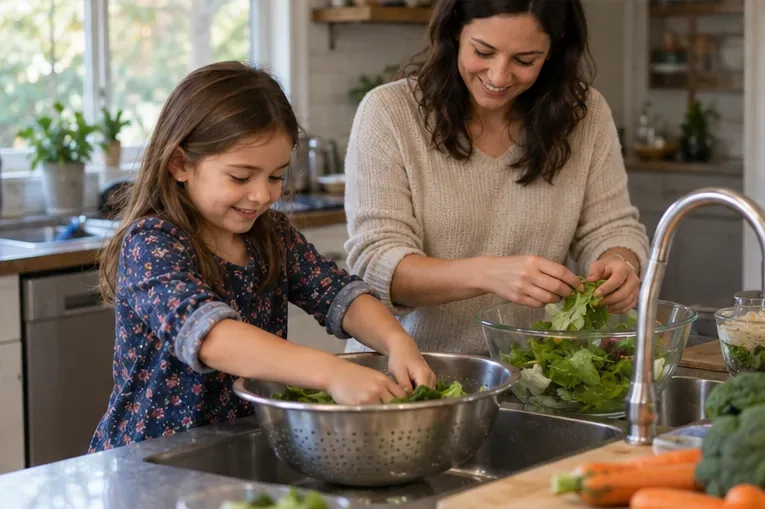
A child helps wash vegetables before dinner, building familiarity with a food before it reaches the table.
Offer a small amount of a less familiar food alongside the meal, then let the child ignore it, touch it, smell it, or taste it. Repeated, low-pressure exposure can help a child become more comfortable. It does not need to happen every night, and tasting is not the only useful interaction. A child helping rinse vegetables, choosing which fruit to serve, seeing a parent eat a food, or noticing its smell may be part of learning about it.
Try a food again in a different but recognizable form: roasted carrots instead of steamed, a new shape of pasta, or a familiar dip beside raw or cooked vegetables that are safe for the child’s age and chewing ability. Keep offering foods the child already accepts, too. A new food can sit next to familiar choices without being hidden in them or announced as a challenge.
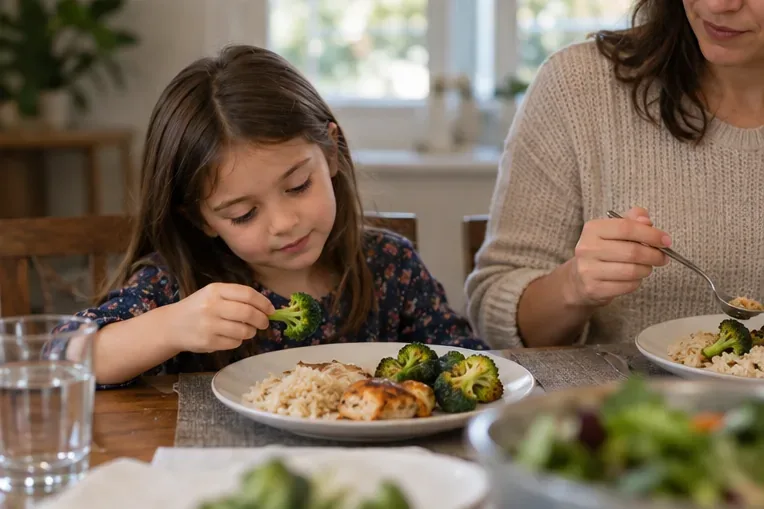
A child explores broccoli beside familiar chicken and rice while the adult eats; interaction can count as a low-pressure exposure even if no bite follows.
How can you tell whether the approach is working?
Measure the routine and the child’s comfort, not just the number of bites. After several dinners, ask:
Did the family eat one shared meal without a second entrée?
Was at least one familiar food available, and was a range of other foods offered over time?
Did the child have room to decline without pressure, arguing, or being punished?
Is the child gradually tolerating more foods on the plate or engaging with them, even if tasting is inconsistent?
Is the overall pattern of eating and growth something the child’s clinician considers appropriate?
If meals remain tense, simplify the menu, offer smaller portions of foods likely to be rejected, and return to predictable meal and snack times. If the child’s accepted food list is shrinking, nutrition or growth is a concern, or the family cannot meet a medical diet safely with one menu, ask the pediatrician or a registered dietitian to tailor the plan. A shared meal is a practical framework, not a rule that overrides health needs.
When should you ask for professional help?
Talk with the child’s pediatrician if you are worried about weight gain or growth, the range of foods is extremely limited, meals cause intense distress, or your child avoids whole textures or food groups for a sustained period. Ask promptly if eating involves coughing, choking, pain, frequent gagging, food held in the mouth, or difficulty chewing or swallowing. These signs may need a feeding or swallowing assessment; they are not problems to solve by increasing pressure at dinner. A pediatrician can review the child’s health and growth and, when appropriate, coordinate with a registered dietitian or a feeding and swallowing specialist.
For most picky-eating phases, the achievable result is simpler than a sudden appetite transformation: one reasonable family meal, one familiar food on the table, a routine that ends without a fight, and repeated chances to encounter other foods. The child may still refuse dinner sometimes. You can keep the boundary—one meal for the household—while making the table calm enough for eating skills and preferences to develop over time.