Home
» Pregnancy
»
What to Pack When Hospital Storage Space Is Limited
What to Pack When Hospital Storage Space Is Limited
Example scenario (hypothetical): Alex is scheduled for an overnight hospital stay. The admission instructions say to bring one small bag because bedside storage is limited and the assigned bed space may change. Alex does not need to predict every possible comfort or pack for an entire week. The practical goal is to bring the items needed for check-in, safe communication, basic comfort, and the trip home, while leaving valuables and “just in case” extras at home.
Hospital rules differ by facility, unit, and procedure. Follow the instructions in your own admission letter first. If the size limit is unclear, call the unit before packing. An official Cambridge University Hospitals day-surgery page, for example, asks patients to bring one small holdall because storage is very limited and bed spaces may change. That is a local rule, not a universal bag-size standard. Read the hospital’s day-surgery packing instructions.
Start with the bag limit, not a long checklist
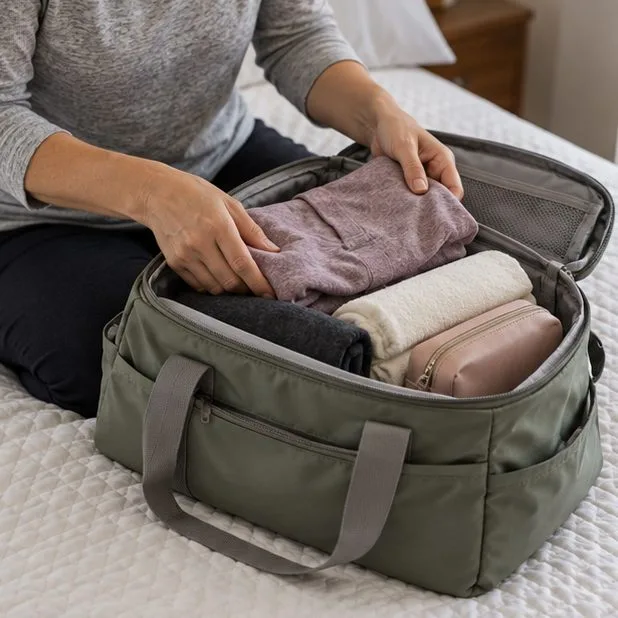
A compact bag makes it easier to keep the essentials together if the bed space changes.
Before choosing items, find out what “small” means at that hospital: one tote, one overnight bag, or a specific size. Ask whether a coat, mobility aid, or medical device counts toward the limit. Then put the empty bag on a bed or table and create a short “must bring” pile. Add only what fits without forcing the zipper or needing a second bag.
For Alex, the first layer is the admission letter and any requested forms, identification, insurance details if applicable, and the care team’s requested records. Keep papers together in a slim envelope or folder that can be reached quickly. Bring only records that have not already been sent or that the team specifically asked for; a thick binder can usually stay home.
Keep medication information easy to find
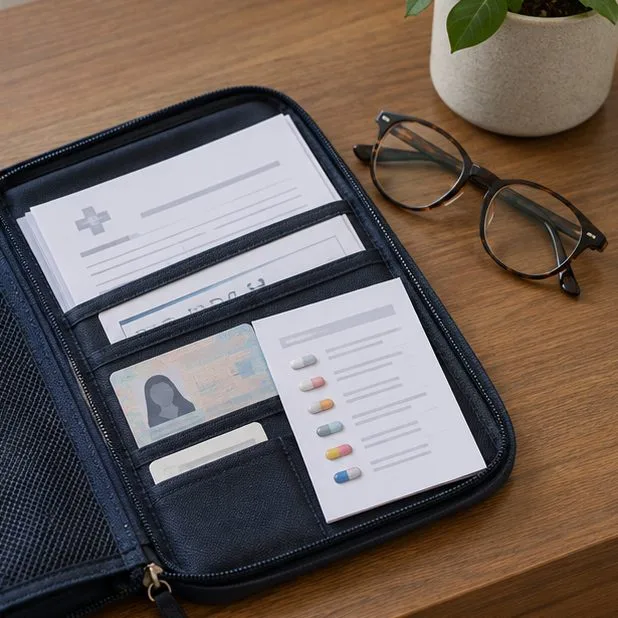
Place requested paperwork and an up-to-date medication list in one easy-to-reach pouch.
Pack a current medication list rather than relying on memory. Include prescription medicines, over-the-counter medicines, vitamins, supplements, the dose, and why each is taken. Note allergies and the name of the preferred pharmacy if useful. MedlinePlus recommends bringing a medication list to a hospital stay and reviewing it with clinicians. Mayo Clinic also says patients may bring original medication bottles to a first appointment or photograph the labels. Ask your own hospital whether it wants medication containers; do not assume you should take or use your own medicines during admission without the care team’s direction.
For Alex, the list is a paper copy in the document pouch, with a second copy saved on a phone. The phone copy is a backup, not a substitute if the device battery dies or staff need to see the information quickly. If the patient uses an inhaler, insulin, an injectable medicine, or another time-sensitive treatment, call the unit for specific instructions before arrival.
Choose a small set of clothes and personal-care items
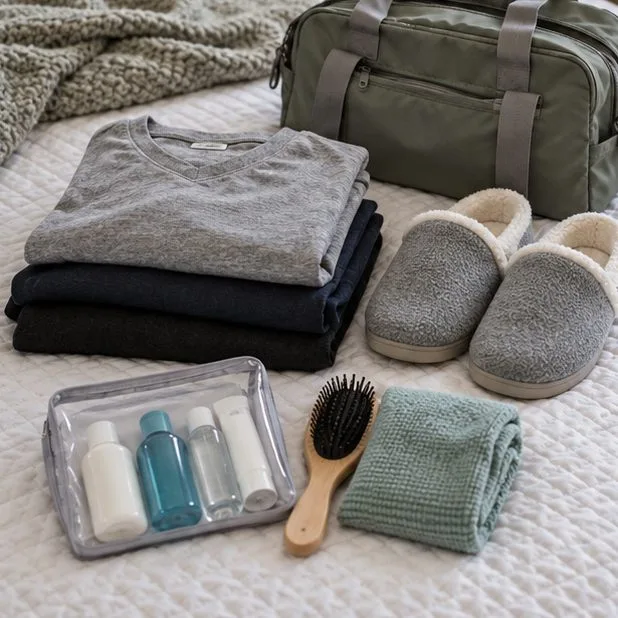
One simple change of clothes, secure footwear, and a few compact toiletries cover common comfort needs.
For a short stay, one loose, comfortable outfit for going home is usually a better use of space than several fashion choices. A small set of sleepwear or underwear may help if the hospital asks patients to bring them. Choose comfortable, easy-to-change clothing and secure footwear. Some hospitals provide gowns, towels, or toiletries; others suggest patients bring a dressing gown, slippers, a hand towel, and basic toiletries. Check the facility’s list rather than packing duplicates.
Put small toiletries in a leak-resistant pouch: toothbrush, toothpaste, comb, and any permitted skin-care item you use regularly. Travel sizes save room. Avoid glass containers and strongly scented products if the hospital’s rules or your care needs make them unsuitable. For surgery, special instructions may prohibit cosmetics, nail polish, jewelry, or certain lotions. Follow those directions exactly; the general packing list does not override preparation instructions.
Alex packs one change of loose clothing, glasses in a case, a toothbrush, and a small comb. If an item is used to communicate or move safely—such as hearing aids, dentures, a cane, walker, or wheelchair—do not leave it behind merely to save space. Ask the unit how to label or store it. Mayo Clinic’s checklist includes assistive devices used in daily life; the specific hospital can explain what to bring and where it will be kept.
Bring only the technology and comfort items you will use
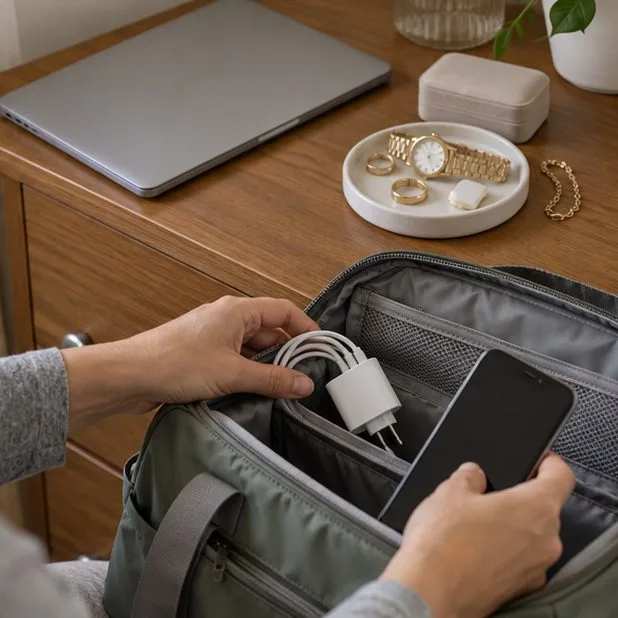
A phone and its charger may be useful; valuables and bulky electronics can often stay at home.
A phone and charger can help with practical calls, updates, and access to digital information. Keep the charger compact and use a label or distinctive cable tie so it is easier to identify. Add a headset only if you expect to use audio and the hospital permits it. One small reading item, earplugs, or a sleep mask may be worthwhile if you know you will use it; multiple entertainment devices and chargers take up space quickly.
Leave jewelry, large sums of cash, sentimental items, and expensive electronics at home when possible. Hospitals may not accept responsibility for every personal item, and belongings can be moved as patients change rooms or go for tests. Official Mayo Clinic guidance specifically suggests leaving valuables and expensive technology at home; Cambridge University Hospitals also tells day-surgery patients not to bring valuables such as jewelry, laptops, or large sums of money. If you must bring an essential valuable, ask staff about the facility’s safekeeping process rather than assuming the bedside locker is secure.
Make room for medical equipment and the return home
Medical or accessibility equipment is different from an optional extra. If you rely on a CPAP machine, mobility aid, hearing-device charger, prosthesis, or other equipment, ask the hospital whether to bring it, how it should be labeled, and whether it needs inspection or setup. MedlinePlus advises surgery patients to bring special medical equipment they use, such as CPAP or a cane, but local handling rules can vary. Do not leave essential equipment at home just because a general checklist says to pack light.
Think about the discharge trip, too. Put the home outfit where it can be reached without unpacking everything. If a support person will bring or collect items, agree in advance on what they should bring later and confirm visiting or drop-off rules. Do not rely on a family member being allowed onto the ward or assume there is space for a second bag.
A quick space-saving packing method
Read the admission instructions. Note the bag limit, any procedure-specific preparation, what the hospital supplies, and any restricted items.
Call with unresolved questions. Ask about medications, medical devices, food or drink, electrical equipment, and storage for valuables. Fasting and medication instructions must come from the care team.
Pack essentials first. Add requested paperwork, ID and insurance information if applicable, medication list, necessary assistive devices, glasses or hearing aids, and a phone charger.
Add one compact comfort layer. Choose a change of clothes, basic toiletries, and at most one or two quiet activities you expect to use.
Remove duplicates and valuables. Take out extra outfits, bulky toiletries, spare gadgets, jewelry, and anything that can safely remain at home.
Label and test the bag. Mark personal items with your name where appropriate, close the bag, and confirm you can lift or manage it safely. Keep essential mobility aids accessible rather than buried inside.
Use this final checklist
Pack if requested or needed
Usually leave at home
Admission letter, requested records, ID, insurance details if applicable
Jewelry, sentimental keepsakes, large amounts of cash
Medication list; medication containers only if the hospital asks
Extra bottles, duplicate toiletries, bulky comfort items
Essential glasses, hearing aids, dentures, mobility aids, or medical equipment
Expensive laptop, tablet, or spare electronics you do not need
One comfortable outfit, basic toiletries, phone and compact charger
Second suitcase or items that do not fit the stated limit
When Alex finishes, there is still enough room to close the small bag and keep the document pouch near the top. The example is only a way to apply the checklist: a real patient may need different clothing, devices, or support. The best final check is the hospital’s own current instruction sheet and a call to the unit when a health or equipment question is not answered.