Home
» Pregnancy
»
Frequent Urination During Pregnancy: Stay Hydrated Without Constant Bathroom Trips
Frequent Urination During Pregnancy: Stay Hydrated Without Constant Bathroom Trips
Frequent bathroom trips can make it tempting to drink less, especially when you are already waking at night. But restricting fluids throughout the day is not a safe way to manage urination in pregnancy. A better approach is to keep drinking regularly, shift larger drinks earlier when practical, and contact your prenatal care team if urinary symptoms suggest an infection or dehydration.
Needing to urinate more often is common during pregnancy and can begin early or continue until birth. Later in pregnancy, pressure from the growing uterus and baby can contribute. The goal is not to stop normal urination; it is to stay hydrated while making the routine easier and knowing when a change deserves a call.
Keep water available and drink regularly during the day instead of cutting back because bathroom trips have increased.
Quick reference: what to do
Situation
Practical next step
Frequent urination without pain or other new symptoms
Continue regular fluids; try the timing and bladder habits below.
Waking often at night
Move larger drinks earlier in the day and reduce large drinks close to bedtime, while still drinking if thirsty.
Burning or pain, blood in urine, or new urgency
Contact your obstetric clinician promptly; urinary infection can resemble normal pregnancy symptoms.
Fever or chills, pain in the back or side, vomiting, or feeling very unwell
Seek urgent medical advice. These symptoms need prompt assessment during pregnancy.
Very little urine, dark urine with thirst, dizziness, or inability to keep fluids down
Contact your care team promptly about possible dehydration, especially if symptoms persist or worsen.
How much should you drink?
There is no single amount that fits every pregnancy, climate, activity level, or medical history. The American College of Obstetricians and Gynecologists (ACOG) gives a general target of 8 to 12 cups of water daily during pregnancy. Treat this as a broad reference, not a personalized prescription. If your clinician has given you a fluid plan because of a medical condition, follow that plan and ask before changing it.
Drink consistently rather than trying to make up for a low-fluid day with a large amount at once. Water is a straightforward choice; other suitable drinks and water-rich foods can also contribute. Needs may rise in hot weather, with exercise, sweating, fever, vomiting, or diarrhea. The CDC guidance on heat and pregnancy advises regular, consistent fluid intake during heat and lists thirst, dizziness, fatigue, dark urine, and infrequent urination among possible dehydration signs. Pregnancy may increase vulnerability to heat-related dehydration.
Frequent urination alone does not mean you are dehydrated. Pay attention to the whole picture: whether you are thirsty, whether you can drink and keep fluids down, whether your urine output has dropped markedly, and whether you feel dizzy or weak. Urine color can be one clue, but it does not diagnose dehydration by itself.
If nighttime trips are disruptive, shift more of your fluid intake earlier instead of restricting drinks throughout the day.
Build a daytime hydration routine
Spread drinks across waking hours
Have a drink with meals and keep water within reach between meals. Smaller, regular drinks may feel easier than large amounts at once, particularly if you have nausea. Do not force excessive water; use your prenatal clinician’s guidance if you are unsure about your own needs.
Move larger drinks earlier if nighttime urination is the main problem
The NHS pregnancy guidance suggests reducing drinks in the late evening for people who need to urinate at night, while still getting plenty of nonalcoholic, caffeine-free fluids during the day. In practice, shift most planned drinks toward morning and afternoon and avoid a large drink just before bed. Keep water available and take a few sips if you are thirsty; do not go to bed deliberately dehydrated or follow a strict cutoff without clinician advice.
Notice whether particular drinks worsen urgency
Some people find that coffee, tea, cola, or other caffeinated drinks make urgency or sleep disruption worse. If you notice a pattern, try having less or choosing a lower-caffeine option, while staying within pregnancy caffeine guidance from your care team. Do not replace water with sugary drinks or energy drinks as a hydration strategy.
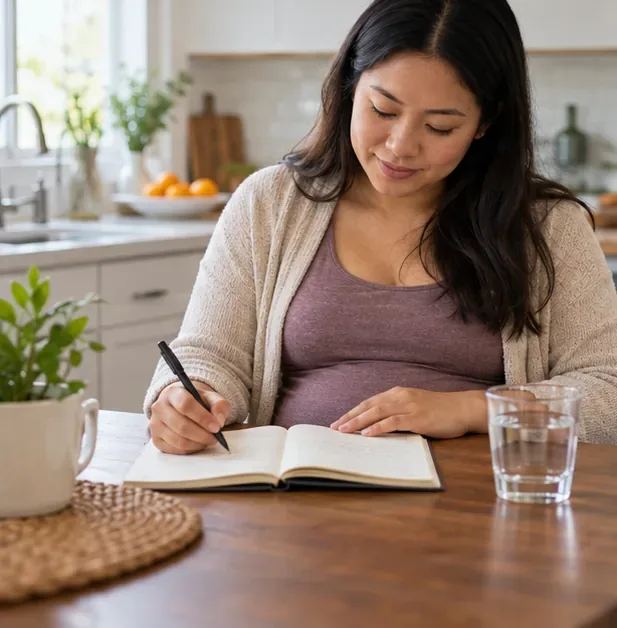
A brief fluid and bathroom log can reveal whether nighttime trips follow late large drinks or whether a new symptom has appeared.
Make each bathroom trip more comfortable
Go when you feel the urge. Regularly holding urine can be uncomfortable and is not a hydration strategy.
Take time to empty your bladder. Avoid rushing. In later pregnancy, the NHS notes that gently rocking forward and backward while seated on the toilet may help reduce pressure and empty the bladder more fully.
Plan access. On a commute or outing, notice restroom stops in advance and carry water. Having bathroom access can make it easier to drink enough without anxiety.
Use a short log if the pattern is disruptive. For one or two days, note approximate drink times, nighttime trips, and any pain, fever, unusual urgency, or leakage. The log is for discussion with your care team, not a diagnostic test.
Pelvic floor exercises may help some pregnancy-related leakage, but they do not eliminate the need to urinate and should not be used to suppress a normal urge. Ask your clinician or a pelvic health physical therapist for guidance if you are unsure how to do them or if leakage is affecting daily life.
Tell your prenatal team about painful urination, blood, fever, or a major change in your usual pattern rather than assuming it is pregnancy-related.
When is frequent urination a reason to call?
Ordinary pregnancy-related frequency is usually not accompanied by burning or pain. However, urinary tract infections (UTIs) can also cause frequent or urgent urination, so frequency by itself cannot distinguish a UTI from a normal pregnancy change. A clinician may need a urine test. ACOG advises contacting an ob-gyn right away if you have UTI symptoms during pregnancy; do not wait for a routine visit to mention them.
Contact your maternity or obstetric care team promptly if urination burns or hurts, you see blood, or you develop new urgency with pelvic discomfort. Seek urgent advice if you also have fever or chills, pain in your back or side, nausea or vomiting, or feel significantly unwell. These symptoms can signal a more serious infection that needs timely assessment. Do not self-treat with leftover antibiotics, supplements, or urinary remedies; ask a clinician or pharmacist what is safe in pregnancy.
Call your care team if you cannot keep fluids down, have very little urine, feel faint or persistently dizzy, or notice worsening thirst and weakness. If symptoms are severe, rapidly worsening, or you feel unsafe, use local emergency services. The CDC’s pregnancy heat guidance lists infrequent urination, thirst, darker urine, dizziness, fatigue, and nausea among possible dehydration signs, but only a clinician can assess your situation.
Daily checklist
Have I been drinking regularly during the day instead of restricting all fluids?
Have I shifted larger drinks earlier if nighttime trips are disrupting sleep?
Am I drinking when thirsty, including in hot weather or when ill?
Do I have burning, pain, blood, fever, chills, back or side pain, vomiting, dizziness, or unusually low urine output?
Do I have a personalized fluid instruction from my prenatal clinician that should take priority over general advice?
If the only issue is needing to urinate more often, steady daytime fluids, modest timing adjustments, and unhurried bladder emptying may make the pattern easier to manage. Do not try to solve it by becoming dehydrated. If pain, blood, fever, chills, back or side pain, difficulty keeping fluids down, or a sharp change in urine output appears, contact your prenatal care team for individualized advice.