Home
» Kiến thức y khoa
»
How to Check Online Medical Claims Without Self-Diagnosing
How to Check Online Medical Claims Without Self-Diagnosing
Use online medical information to prepare better questions, not to diagnose yourself or replace care. A claim deserves extra skepticism when it promises a fast or guaranteed cure, relies on testimonials instead of traceable research, hides who is selling it, or tells readers to stop prescribed treatment. Skepticism means “check before relying on this,” not “this must be false.”
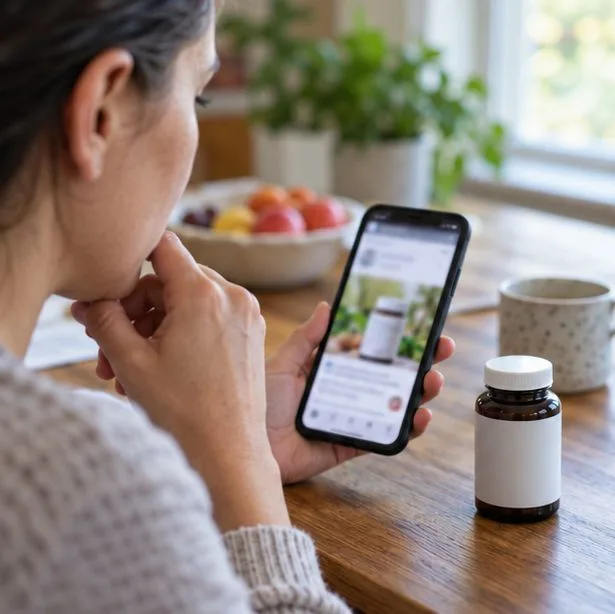
For a running example, imagine a fictional social media post claiming that one herbal capsule cures several unrelated illnesses in days, has no risks, and should replace prescribed treatment. This is an invented example, not a real product or medical recommendation. The checklist below shows how to examine a claim safely and where to stop searching.
1. Pause when the claim sounds absolute, secret, or urgent
Pause before acting on a product post, especially when it promises a cure or pushes an immediate purchase.
The U.S. Food and Drug Administration (FDA) identifies “one product does it all,” personal success stories, quick fixes, “all natural” cures, miracle cures, and conspiracy claims as warning signs in health fraud. These patterns are reasons to investigate, not proof by themselves that every related claim is false. Testimonials can describe someone’s experience, but they cannot show that a product caused the change, would work for other people, or is safe.
Look closely at what the post asks you to do. A claim is especially concerning if it urges readers to stop medication, delay testing, buy immediately, keep the product secret from a clinician, or pay for a private “consultation” to unlock details. Do not change treatment on the basis of a post. Save the exact wording and ask a licensed clinician or pharmacist how it relates to your care.
2. Identify the source, author, date, and financial purpose
Check who published a page, when it was reviewed, and whether its publisher sells the treatment being discussed.
Before judging the medical claim, find out who made it. Look for the organization responsible for the page, the author’s relevant qualifications, an editorial or expert-review process, a publication or review date, references, and a way to contact the publisher. Check whether the page is patient education, news reporting, an opinion post, or an advertisement. A professional design, a white coat in a photo, or a “.org” address does not establish accuracy.
Next, check who pays. A site may earn money by selling the product it praises, accepting sponsorship, or collecting leads for a paid service. That conflict does not automatically make every sentence wrong, but it raises the value of confirming claims through an independent source. The National Center for Complementary and Integrative Health (NCCIH), part of the National Institutes of Health, recommends checking who runs and funds a site, whether the material is current, and whether evidence is clearly cited. Its online guidance was updated September 23, 2026.
For the fictional capsule post, suppose the seller’s page has no named medical author, no study links, and no date, but includes a checkout button and dramatic before-and-after stories. That does not answer whether the treatment works. It tells the reader that the post has not yet earned trust. Search for the same question on an independent government health site or a major medical institution’s patient information page.
3. Follow references back to the actual evidence
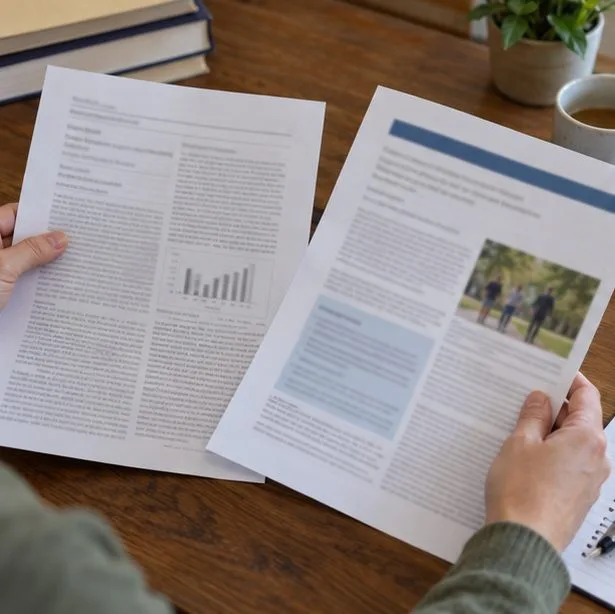
Follow a health claim to the cited research and compare what the study measured with what the post says.
A link to “a study” is only a starting point. Open the paper or its abstract and ask what was tested, in whom, at what dose, for how long, and against what comparison. Did the study measure the outcome the post claims to improve? Was it a study in people, animals, or laboratory cells? How many people took part? Were harms and side effects reported? Who funded the work? Does the post describe limitations, or only the most dramatic result?
One small study rarely settles a treatment question. A result in animals or cells does not establish the same effect in people. An observational study can find an association—two things appearing together—without proving that one caused the other. A randomized controlled trial can help compare treatments, but it still has limits: its participants, duration, and conditions may not match a reader’s situation. A systematic review or clinical guideline can summarize a broader body of research, yet readers should still check the date, methods, and whether it applies to the population in question.
MedlinePlus advises readers to compare study results with earlier research and ask whether study participants were similar to the people the claim addresses. The same page notes that small studies may need further confirmation. A headline that says a study “proves” a cure may be overstating what the paper actually found. Compare the post’s exact wording with the paper’s conclusion, not just the title or a quoted sentence.
In the fictional capsule example, the seller might link to a lab study about one ingredient, while the post claims a cure for several diseases in humans. That mismatch matters: the cited research would not, by itself, support those broader promises. If a reference is missing, broken, or impossible to locate, treat the claim as unverified rather than filling the gap with guesswork.
4. Cross-check with current guidance, while allowing for uncertainty
Search the condition and treatment on more than one independent, reputable source. Useful starting points include MedlinePlus, NIH institutes such as NCCIH, the FDA for product alerts and regulatory information, and professional health organizations that publish transparent clinical guidance. Check when the page was last reviewed: older guidance may have been updated, while a new study may not yet have changed recommended care.
Reliable sources can disagree or use cautious language for ordinary reasons. They may address different ages, pregnancy status, disease stages, doses, outcomes, or health systems. One guideline may be updated before another. Evidence can also remain mixed or incomplete. A disagreement is a reason to compare scope and dates and ask a clinician—not proof of a cover-up. Common symptoms can have more than one explanation, and a general web page cannot determine which explanation fits an individual person.
Do not use an online quiz, search result, or research paper to diagnose yourself. Use a source to write down the question it raises: “Does this information apply to someone with my condition and medicines?” Bring that question, the link, and any product label to a clinician or pharmacist. If a claim involves a supplement or nonprescription product, ask about interactions and safety before starting it.
5. Protect personal information and know when to stop browsing
Write down a claim and questions to bring to a clinician instead of trying to reach a diagnosis from search results.
Before entering symptoms, birth date, medication lists, photos, or lab results into a website or app, read its privacy policy and check what it collects, stores, or shares. A secure connection (HTTPS) helps encrypt data sent to the site, but it does not tell you how the company may use or retain that data. Do not upload sensitive health details to a service unless you understand and accept its data practices.
There is also a point when more searching is not the safest next step. If a person has severe or rapidly worsening symptoms, use local urgent or emergency services rather than spending time evaluating posts. For example, MedlinePlus advises calling 911 or the local emergency number for severe chest pain or pressure, severe shortness of breath, sudden inability to speak or move, or sudden one-sided weakness. The CDC’s current stroke guidance also says to call 911 immediately for stroke warning signs. These examples are not a complete list, and this article cannot determine whether a symptom is an emergency. When in doubt, contact emergency services or a qualified health professional promptly.
A quick evidence-check checklist
State the claim precisely. What condition, treatment, benefit, risk, time frame, and group of people does it describe?
Identify the publisher. Who wrote, reviewed, and funded the content? Is it news, education, opinion, or advertising?
Check the date and references. Are the sources accessible and current enough for the topic?
Match the evidence to the claim. Was the evidence in people? Did it study the same treatment, dose, population, and outcome?
Look for more than one study. Check whether later research or a guideline supports, narrows, or contradicts the claim.
Watch for pressure tactics. Guaranteed cures, secrecy, conspiracy language, testimonials, “no side effects,” and buy-now countdowns deserve extra scrutiny.
Protect care and privacy. Do not stop or start treatment because of a post; avoid sharing sensitive data on sites with unclear privacy practices.
Ask a professional. Take the link, exact claim, and questions to a clinician or pharmacist, especially before changing medication or using a supplement.
What skepticism can and cannot do
This process can help readers identify weak sourcing, unsupported promises, outdated pages, conflicts of interest, and evidence that does not match a claim. It cannot decide what diagnosis a person has, predict an individual treatment response, or replace an examination and medical history. MedlinePlus recommends discussing health information with a care provider before relying on it for decisions. If the content seems misleading, readers can also report a suspected health product scam to the relevant consumer or health regulator in their country.