Home
» Khỏe đẹp
»
How to Compare Beauty Product Claims When Studies Measure Different Things
How to Compare Beauty Product Claims When Studies Measure Different Things
One moisturizer is advertised as “clinically proven” to improve skin hydration. Another says a clinical study found fewer visible fine lines. If their studies measured different things, which claim should you trust? The first step is to stop treating “clinical study” as a single, comparable score. A study can be valid for the outcome it measured and still leave a different claim unanswered.
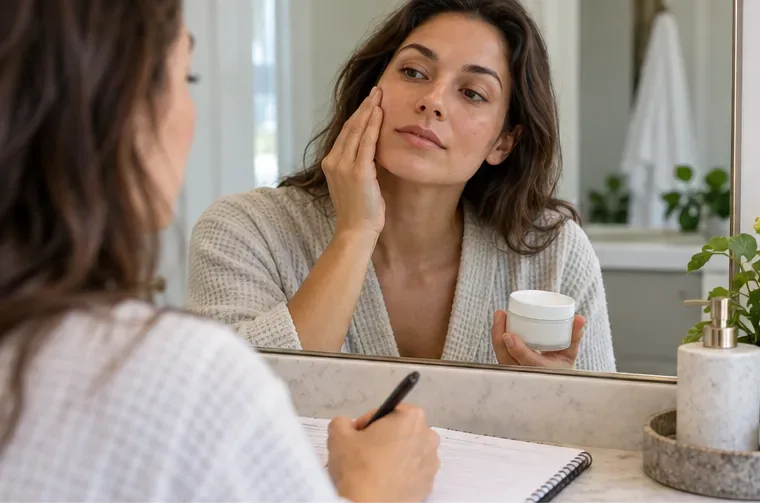
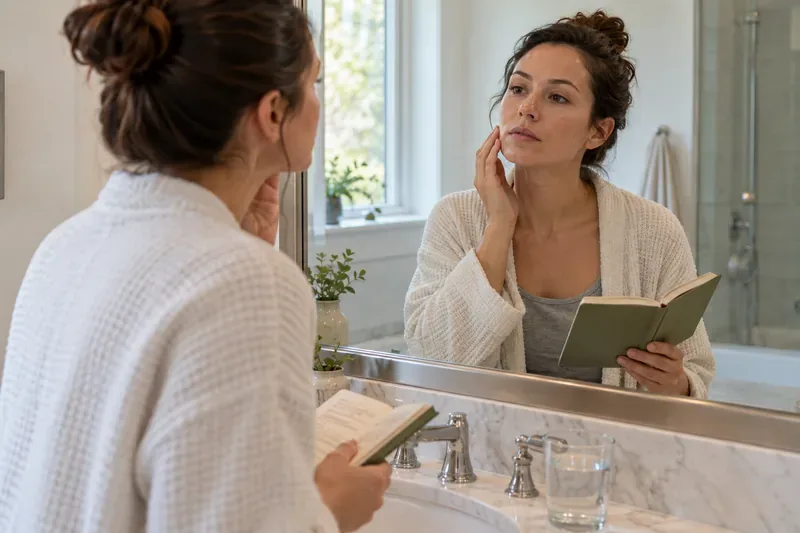
A shopper pauses to define the result she wants before comparing products.
Start with the result you actually want
Imagine Jordan, a hypothetical shopper—not a real testimonial—who wants a moisturizer that makes fine lines look less noticeable. Product A’s fictional study measured skin hydration with an instrument. Product B’s fictional study used standardized photographs that trained, blinded reviewers rated for the appearance of fine lines. These examples are invented to explain the method; they do not describe actual products or research.
Jordan should not conclude that the studies disagree. Hydration and visible wrinkle appearance are different outcomes. An outcome is the specific change researchers set out to measure. More hydration may support a moisturization claim, but it does not by itself establish that lines became less visible. A rating of appearance may be closer to Jordan’s goal, but it does not necessarily show that skin hydration increased.
Write down the outcome in everyday terms first: “less dry skin,” “fewer visible spots,” or “less noticeable fine lines.” Keep the question narrow. “Better skin” is too broad to compare well.
Get the study details before comparing headlines
Before choosing between claims, find the study summary, label, or linked research and record what was actually tested. A useful clinical comparison includes more than the word “clinical.” It tells you who participated, which finished formula they used, what it was compared with, how long they used it, and what was measured.
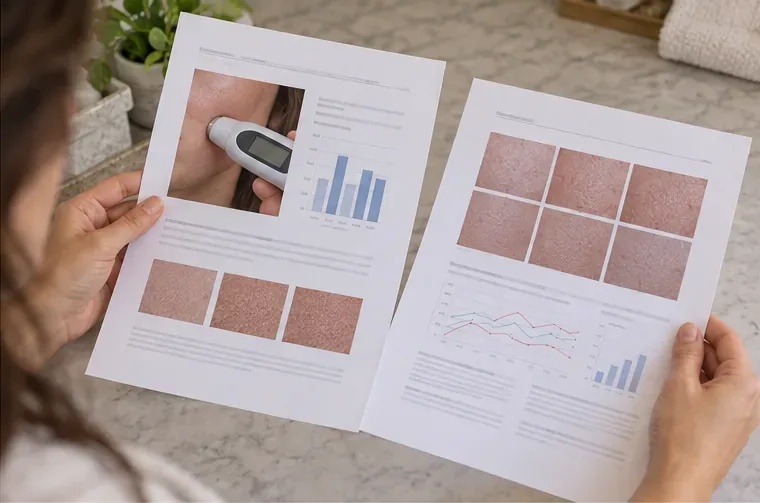
The pages represent different kinds of outcome measures; the pictured graphics are illustrative and are not results from a real study.
Outcome: Was it hydration, an instrument reading, a participant’s rating, a clinician’s rating, or a photograph-based appearance score?
Measurement method: Was the measure explained and suitable for the claim? A clinical outcome assessment is a structured measure of how a person feels, functions, or appears; the category and method should fit the question. FDA guidance on these assessments is written for clinical outcome measures, especially in drug development, so it should not be read as a cosmetics approval checklist.
Study group: Were participants similar to the people the claim addresses? Consider age range, skin characteristics, baseline concern, and any stated exclusions.
Comparison and timing: Was the formula compared with a vehicle, no treatment, or another product? At what time point was the outcome measured?
Exact product: Was it the finished product in its marketed concentration and routine, or only one ingredient, a different concentration, or a different formula?
Size and uncertainty: How many people completed the study? Were results reported as an absolute change or just a percentage? Were uncertainty and dropouts described?
These details matter because a moisturizer tested for one week in a small group does not answer every question about another formula or a longer-term appearance claim. A study of a single ingredient may help explain why a formula is being investigated, but it does not automatically establish what the finished product will do. The FTC’s guidance says health-related advertising should be supported by evidence that matches the specific claim; the strength of evidence should fit the nature of that claim.
Compare like with like—or mark the result “not directly comparable”
Put the claim and its outcome side by side. If two products both claim to improve fine-line appearance, ask whether their studies measured that same appearance outcome in a reasonably similar way and over a relevant period. If one measured hydration and the other measured fine-line appearance, label them “different outcomes.” Do not convert one into the other or create a single winner by ranking unlike measurements.
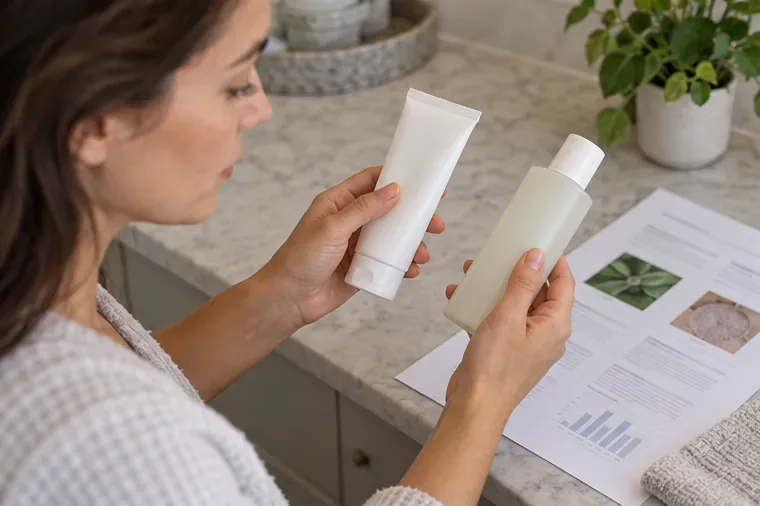
Compare the tested formula and the advertised result, not only the products’ front-label promises.
Even two studies of the same outcome may not be directly comparable. Researchers may use different instruments, photo lighting, rating scales, participant groups, or follow-up times. A formula can also differ in concentration, packaging, or instructions. Those differences are common explanations for different-looking results; they are not, by themselves, proof of misconduct. They do mean that a head-to-head comparison using the same population, outcome, and time point would be more informative.
Separate statistical significance from practical importance. A result can be statistically detectable without being large enough for a consumer to notice or care about. Look for the size of the change and whether the study explains why that change matters—not only whether a statistical test crossed a threshold. Also check whether the study names a primary outcome in advance and reports the other outcomes, rather than spotlighting one favorable result after measuring many. FTC guidance cautions that selective reporting and post hoc subgroup findings can give a misleading impression.
Recognize claim gaps and red flags
A mismatch is a reason to ask a better question, not automatically a reason to assume a claim is false. Some gaps are straightforward: a hydration result supports a hydration statement more directly than a claim to erase wrinkles. A product may also have several intended benefits, each of which needs evidence relevant to that benefit.
Be more cautious when a seller uses “clinically proven” but does not identify the measured outcome, study length, product tested, or comparison group. Before-and-after photos without consistent lighting, timing, or an appropriate comparison can be difficult to interpret. Watch for a study on an ingredient presented as proof for a different finished formula, a short-term measurement used to promise a lasting result, or a broad guarantee built from a narrow endpoint.
Regulatory language also matters. FDA does not generally approve cosmetics before they go to market, and a cosmetic claim is not an FDA certification of effectiveness. FDA explains that claims to treat disease or affect the structure or function of the body can cause a product to be regulated as a drug. For example, the agency distinguishes moisturizing skin to make lines less noticeable from claims to remove wrinkles or increase collagen production. The exact classification depends on the product and its claims. Consult FDA’s guidance on wrinkle and anti-aging products and FDA’s cosmetics labeling claims page for context.
Use safety information separately from effectiveness
A study showing an appearance benefit does not tell you that a product will suit every person. Likewise, irritation does not show that a product’s efficacy claim is true or false. When trying a new skin-care product, the American Academy of Dermatology suggests applying it to a small test area twice daily for seven to ten days and watching for a reaction. This kind of home test may help identify a problem before broader use; it does not diagnose an allergy, predict every future reaction, or prove that the product works. Follow product directions and ask a clinician if you have a history of significant skin reactions or questions about a specific ingredient.
Some active ingredients can cause temporary dryness or irritation for some users, but a worsening or unexpected reaction should not be dismissed as “the product working.” If a new product causes a rash, burning, or another unexpected reaction, stop using it and contact a health professional for advice. FDA also advises consumers to report adverse reactions through its cosmetics safety resources. See AAD’s product-testing guidance and FDA’s advice on using cosmetics safely.
Seek prompt medical care for a severe or rapidly spreading rash, blisters or open sores, significant pain, fever or feeling ill, or symptoms involving the eyes or mouth. Trouble breathing or swallowing, or swelling around the eyes, lips, or face, can require emergency care. These are general warning signs, not a way to diagnose the cause. The AAD’s rash guidance describes symptoms that warrant medical attention.
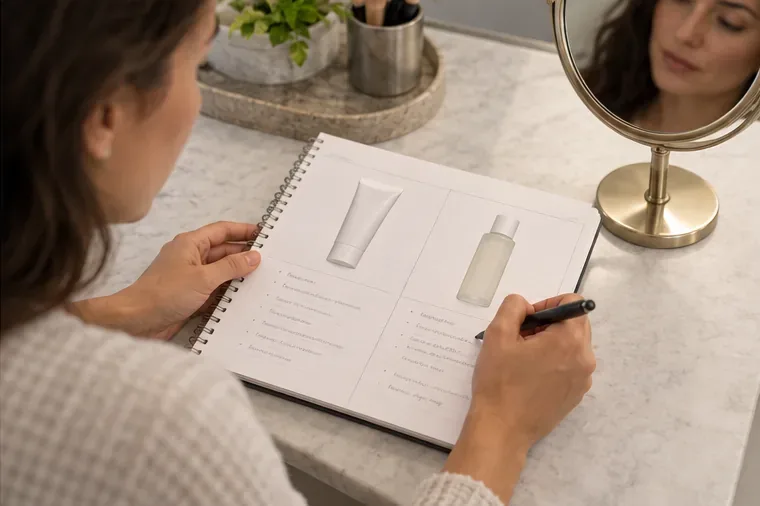
A simple comparison note can keep the shopper focused on the outcome, study details, and any unwanted effects.
Make a decision that fits the evidence—and its limits
Jordan can now make a practical choice. If the goal is hydration, Product A’s fictional instrument reading may be relevant, provided the formula and study details are clear. If the goal is less noticeable fine lines, Product B’s fictional appearance rating is closer to that question, though Jordan still needs to check the study quality and size of the reported change. If the evidence is weak or incomplete, the honest label is “uncertain,” not “proven” or “useless.”
Use this short checklist when claims rely on different outcomes:
Name the result you care about in measurable, everyday language.
Write down each study’s exact outcome, method, participants, product, comparator, and duration.
Decide whether each outcome directly matches the advertised benefit.
Check the size and practical meaning of the result, not just statistical significance.
Note safety information and stop if you have an unexpected reaction; seek care for red flags.
If outcomes do not line up, treat the studies as non-comparable and look for direct evidence or choose based on transparent uncertainty, cost, and personal preference.
This process cannot predict an individual result, replace clinical advice, or prove that a product is safe for everyone. It can help you avoid comparing unlike measurements, recognize when a claim outruns its evidence, and ask a retailer or clinician a more specific question. Guidance reviewed September 30, 2026.